


I switched to the Pixel 10 Pro XL on the power of Google’s splashy headline: 30+ hours per charge, driven by a more efficient Tensor G5 and bigger cell. The matter is ultimately this: after weeks together, the verdict is not comforting—as in, the endurance here is consistently inconsistent (averaging between excellent and mediocre without much warning). For a device that’s being positioned as the most dependable Pixel yet, that kind of inconsistency makes a difference.
The upgrade that didn’t fix it: battery life still varies
My starting point was a Pixel 9 Pro XL, which did not consistently get me through demanding travel days of navigation and photography. The 10 Pro XL was meant to address that with silicon improvements and a beefier power pack. On paper, it was supposed to be an easy victory. In reality, it’s a flip of the coin.
- The upgrade that didn’t fix it: battery life still varies
- Wild swings in real‑world use reveal shaky endurance
- Is the modem at fault again, especially on weak networks?
- Software and background sensors further muddy the picture
- What I tried and what really changed in daily use
- Context from broader testing and controlled lab results
- Bottom line for would‑be upgraders weighing battery life
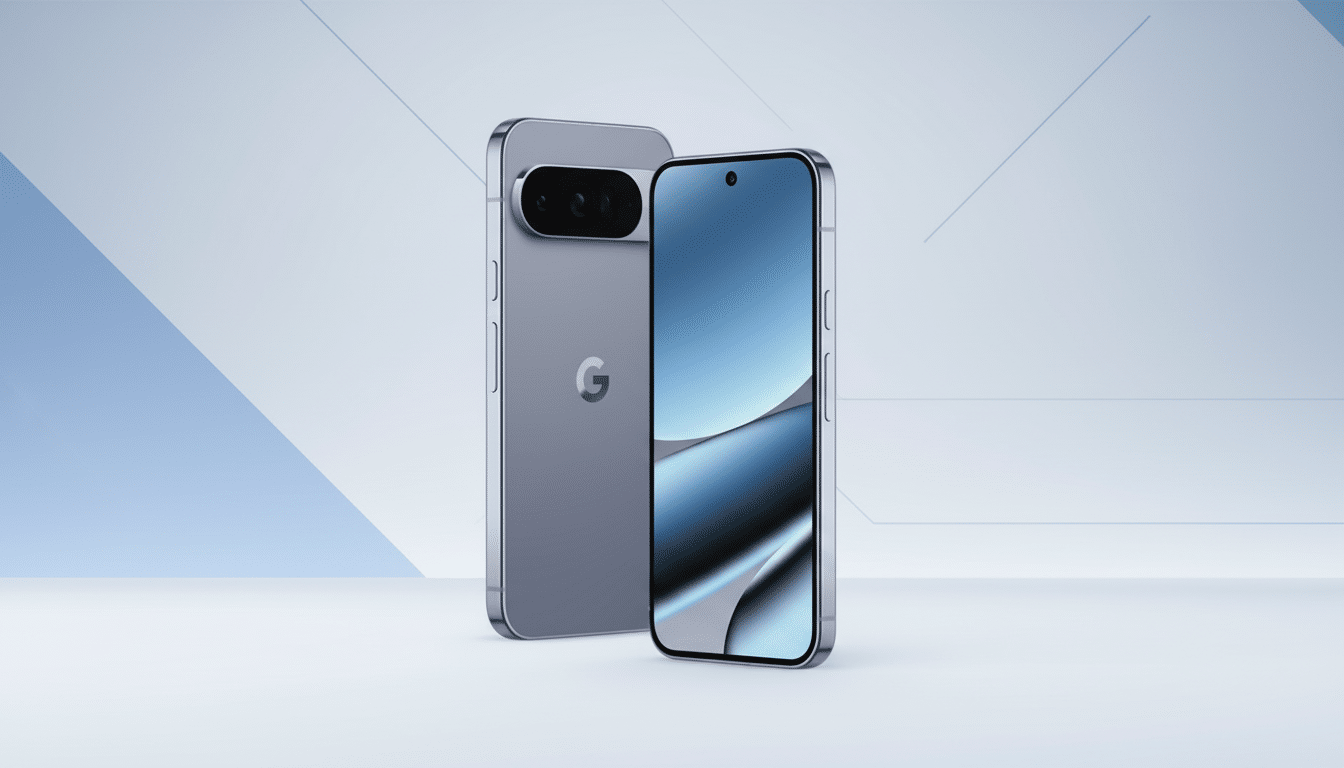
I am intensive in spurts: Google Maps transit directions on day trips, more than 100 photos when I’m out, then long stretches of Wi‑Fi at home. The phone is also always paired to a Pixel Watch 4 and an Oura Ring 4. I’ve also tried BLE trackers from Pebblebee, Moto, and Chipolo, as well as geofenced smart home apps (Nuki, Tado, Home Assistant). None of this is exotic for a power user—but it illustrates how flimsy the promise of better battery life can feel in the real world.
Wild swings in real‑world use reveal shaky endurance
On some days with the same Wi‑Fi setup and app mix, I ended up at nearly 50% remaining with only three hours of screen time; other days it was over five hours of screen‑on time and 42% left to tell me about it.
While traveling, I occasionally made it without a top‑up; other times, by early afternoon the battery plunged to 30% and I had to deploy a Qi2 power bank.
The phone’s own numbers underscore the whiplash. Even on a “good day,” Wi‑Fi and mobile network together made less than a 15% contribution to total use as I clocked close to 7 hours of screen time before Battery Saver came into play at 19%. A second day, with many of the same behaviors—WhatsApp, Photos, Camera, a couple Google apps, and the watch companion—the network share expanded to over 50%, and the phone looked like it would be done before bedtime (I got about six hours total). Why that swing? The phone doesn’t say—and that’s the problem!
Is the modem at fault again, especially on weak networks?
Cellular is the usual suspect. The Pixel 10 line relies on an Exynos 5400 modem, and independent testers have historically noted that radios based on Exynos are less power‑efficient than Qualcomm’s under marginal or changing signal conditions. For example, our network drive tests at PCMag have again and again shown higher drain on the fringe as devices ratchet up transmit power and juggle carrier aggregation. When I’m out and about or hopping between 4G and 5G, the 10 Pro XL line item for “Mobile network” rises dramatically.
That doesn’t solve the inconsistency at home on strong Wi‑Fi, though. It does make me suspect that the modem’s a floor on efficiency: The Pixel screams when it’s idling cleanly, the radio can get really chatty, and we all suffer.

Software and background sensors further muddy the picture
Android’s power management is complex and flawed. Geofencing and addressing for presence detection maintain the location stack. Bluetooth LE trackers also keep up regular handshakes. Wearable pals, cloud backups, and messaging apps rouse radios even when screens are dark. Google’s Adaptive Battery and App Standby buckets alleviate this, but brief, frequent sessions kick apps back into action and cancel out the gains.
Academic work supports this: In IEEE studies on 5G and app behavior, researchers find that, for intermittent networking with fast flows of small data packets, it can actually be less efficient than longer, contiguous sessions. That is, the things we actually do with phones (check quickly, switch contexts rapidly, run in the background) may be a worst‑case pattern for radios and schedulers even on an effective battery.
What I tried and what really changed in daily use
I had to play with dialing the phone down: locking to 4G in poor coverage, disabling 5G standalone where available, turning off Wi‑Fi and Bluetooth scanning, disabling background tracker apps, or using Adaptive Connectivity. The gains were incremental. On “bad” days, these adjustments changed the curve but didn’t flatten the slump. On those “good” days, they weren’t needed at all.
Charging and planning go a long way to achieving better health over the long haul rather than outlasting every single day. I turned on the charge caps and I don’t trickle‑charge at night, all while being aware that capacity will naturally degrade over several hundred cycles. With that kind of Google‑like longevity, lifespan is a consideration—but no software policy can conjure up consistency from a radio stack that changes based on the environment.
Context from broader testing and controlled lab results
Lab suites such as DXOMARK and GSMArena often reveal a disparity between controlled loops and real‑world mixed use. That can mean the difference between finishing a 20‑hour stream of Wi‑Fi video with, say, five hours to spare versus being an hour into map‑driven navigation and camera bursts, along with some 5G handoffs. Sustained mixed‑use draw in these scenarios is estimated at 3–5 W, and that burns through your battery (even a big one) in no time flat. That’s not an excuse for sloppy thinking—it is a reminder that ambitious goals usually represent best‑case scenarios, not the world we actually live in.
Bottom line for would‑be upgraders weighing battery life
The Pixel 10 Pro XL can be a battery gem, and sometimes is. The great thing about the Pixel 10 Pro XL is its incredible ability to bend time and stop running out of juice partway through your day. But it is also prone to diving into Battery Saver by the end of the day with no apparent cause. If you’re only looking to boost endurance, set your expectations accordingly and tote around a small charger or power bank. Google’s battery problem has not disappeared; it’s simply been obscured by the good days to make the bad ones feel worse.
