


Pinterest is eliminating about 15% of its workforce as it doubles down on artificial intelligence, shifting headcount and budget from legacy operations to teams building AI-driven products and infrastructure. In a regulatory filing, the company said it will shrink real estate commitments and take an estimated $35 million to $45 million in pre-tax restructuring charges as it pivots resources to higher-priority AI initiatives.
The company reported 4,666 full-time employees at the end of last year, implying roughly 700 roles are affected. Pinterest framed the move as a reallocation rather than a retreat, saying it will add AI-focused roles that accelerate development, deployment, and adoption across the product.

Why AI Sits at the Center of Pinterest’s Strategy
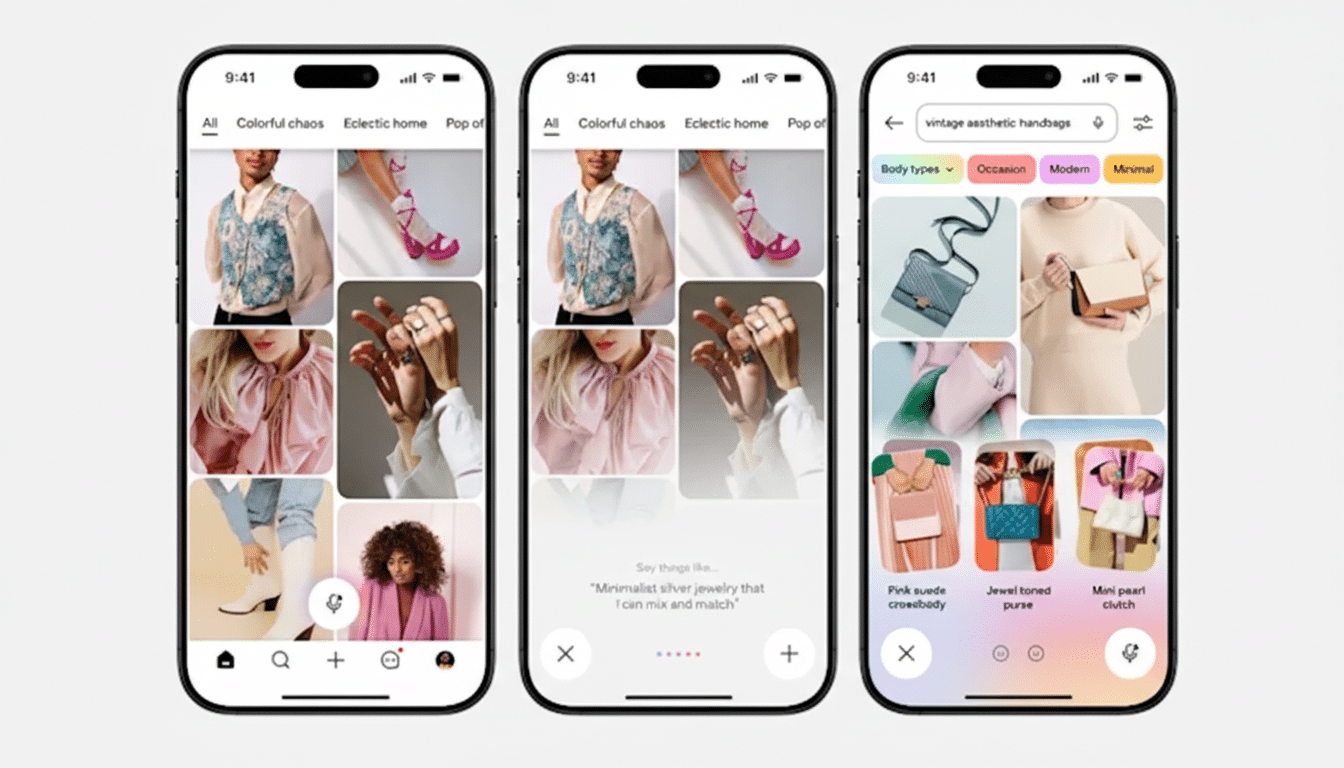
As a visual discovery platform, Pinterest is uniquely reliant on machine learning to understand images, rank content, and connect ideas to products. The company has rolled out features such as Pinterest Assistant, a conversational companion for shopping advice, and has been piloting AI-personalized boards that adapt to a user’s evolving tastes. These aren’t side projects—they are core to how users find inspiration and how advertisers reach intent-rich audiences.
Better models can tighten the loop between inspiration and purchase by improving object recognition, recommendation quality, and ad relevance. For merchants and advertisers, that can translate to higher conversion rates and more reliable measurement. For users, it means fewer dead ends and more accurate, shoppable results across fashion, home, beauty, and other categories where visual context matters.
Rebalancing Headcount Toward AI Execution
Pinterest indicated it is moving talent and budget toward roles that speed AI adoption and delivery, spanning model training, data engineering, and productization. On a recent earnings call, CEO Bill Ready highlighted the strategic value of open-source AI models to help manage cost while maintaining performance. That approach—mixing open-source systems with proprietary tooling—can reduce compute expense, create flexibility in model selection, and avoid vendor lock-in as the technology landscape evolves.
The facilities footprint reduction helps fund that shift. AI at scale is capital intensive, and the companies that succeed will be those that redirect nonessential spend toward model quality, inference efficiency, and rapid iteration. The reorganization signals Pinterest’s intent to tighten its build-measure-learn cycles around AI features that demonstrably move engagement and revenue.
What Changes for Users and Advertisers on Pinterest
Users should expect more conversational tools, smarter search, and deeper personalization across boards and shopping surfaces. Advertisers and retailers can anticipate enhancements to product matching, catalog ingestion, and creative generation, along with better safeguards to keep brand placements aligned with context—a longstanding priority on interest-driven platforms.
Generative and discriminative models can also streamline campaign setup by auto-suggesting keywords, visuals, and targeting cohorts based on real-time intent signals. Industry research from organizations such as McKinsey has underscored the outsized value AI can unlock in marketing and retail by compressing the path from discovery to purchase—precisely the journey Pinterest aims to own.
Competitive and Financial Context for Pinterest
Across the sector, major platforms are refocusing budgets toward AI infrastructure and features. For Pinterest, the calculus is clear: make the core discovery engine smarter and the ads marketplace more efficient, or risk ceding ground to rivals with deeper AI stacks. The planned restructuring charges are modest relative to the potential long-term margin lift from more automated operations and higher-yield ad products.
Execution will be the test. Consolidating teams, reshaping workflows, and deploying models into production at pace—without degrading user experience—is difficult. But if the company’s bet pays off, Pinterest could convert its vast corpus of visual data into a sustained advantage, turning inspiration into measurable commerce through AI that feels intuitive, fast, and trustworthy.
For employees, the transition is painful. For investors and partners, the signal is unambiguous: Pinterest intends to be an AI-first product, with its cost structure and talent map realigned to match that ambition.
