


Pebble announced the Index 01 this week, a $75 smart ring designed to do one thing that phones and watches still get wrong too frequently—capture ideas as soon as they come into your head.
With a small button and microphone, the ring allows you to whisper a quick thought and translate it into a note or reminder using on-device AI. This scrapes away the friction that erases fleeting ideas.
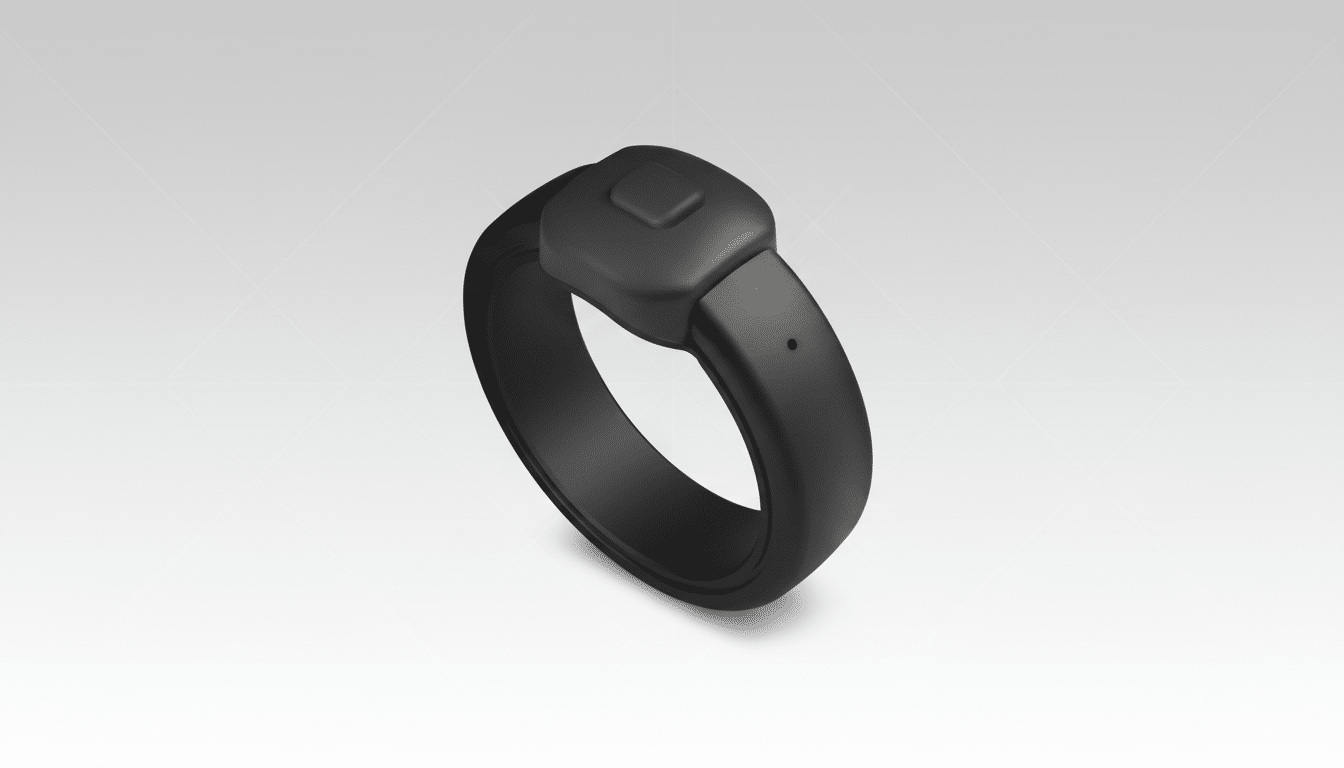
How the Index 01 ring records and organizes your thoughts
Tap the ring’s small button to record, speak a brief note, and then the Index 01 records it for playback locally before syncing to your phone. This explains why Pebble says the ring can store as much as five minutes of audio if you’re offline; when it syncs, recordings go to your phone, where an on-device large language model figures out intent and files it—“buy basil” becomes a to-do or “call Jamie about the deck” shows up on your calendar.
Crucially, Pebble emphasizes privacy. Recording triggers only after a button press, and speech-to-text plus AI processing occurs with open-source models running locally on your phone. So your brainstorms don’t even have to get wispy fingers onto the cloud to turn into actionable notes.
For now, the device is compatible with iPhone and Android devices; it’s also purposefully austere—no speaker, no fitness sensors, no interminable menus. That’s the point of simplicity: to capture in the now, sort wisely, and get back to whatever it was you were doing.
A Minimalist Gadget With Hackable Ambitions
Hardware is subtle: polished silver, gold, or matte black stainless steel with a liquid silicone rubber button. It’s waterproof to a depth of one meter and is available in US sizes 6 through 13. No sizing kit in the box; we are told by Pebble to 3D-print a tester if you need help determining your size.
Today, the Index 01 is merely a recorder, but Pebble sees it as customizable. The company has built hooks that will allow for a variety of features such as double-pressing to snap a phone camera shutter, toggling smart lights on and off, or triggering a voice assistant. The team has tossed around such tie-ins as voice AI modes offered by popular new technologies, which would make the ring a versatile remote control for everyday use.

Battery design and the e-waste issue for smart rings
Here’s how the Index 01 differs: it doesn’t recharge, which is unusual for a wearable. Pebble figures it will be good for about two years of life if you record 10–20 recordings a day at 3–6 seconds each, after which point you’d send the ring back to Pebble, where they’ll recycle and replace it. The logic: leaving out chargers and power management helps keep the gadget tiny, rugged, and always ready to go.
That design decision will split opinion. On the one hand, it means no end-user maintenance. To be fair, having no user-accessible components designed into the ring is nice and easy—but you’ll never be able to squeeze out just a little more at the end. On the other hand, single-life electronics are environmentally unfriendly. According to the UN Global E-waste Monitor, only some 22 percent of the world’s e-waste is collected and recycled properly, driving home why take-back programs and transparent materials disclosure are crucial. Pebble’s recycling program is a start, but the firm will have to show scale and transparency if it hopes to win over eco-minded buyers.
Why a dedicated capture tool matters for idea recall
We all know the brain is not kind to half-baked ideas. Cognitive psychology’s “forgetting curve,” first graphed by Hermann Ebbinghaus, illustrates how quickly memory degrades in the absence of reactivation; widely reported interpretations suggest we may forget in the neighborhood of 50 percent of new information within an hour. That’s why less capture friction—particularly when you’re biking, cooking, or in a meeting—matters more than raw processing power.
Voice snippets on a phone are great, but you still have to unlock it, open an app, and navigate file management. Wearable devices can help, but their voice capabilities typically rely on cloud services and may not categorize ideas so cleanly. Pebble is betting that a context-aware, local AI ring designed for one task in one market (no general-purpose garbage) will beat the not-design-first folly of “hardware” folks at other companies who have to force snaz into generic devices users won’t use well for even a single purpose like this: write it down.
Price and positioning in a crowded field of wearables
And at $75 for preorder ($99 retail price once the product ships), the Index 01 significantly undercuts most other smart rings. Health-centric rings like Oura or Ultrahuman, which cost a few hundred dollars, emphasize sleep and recovery metrics with an optional membership. Pebble’s ring is not trying to supplant them—or your smartwatch. It’s a note-taking device you can wear, not a health dashboard.
That clarity may be its superpower, and the chief reason for its victory. But if Pebble sticks to its privacy-first guns, ships solid developer hooks, and validates its battery and recycling plan, the Index 01 could be a go-to in those moments when phones or watches can’t cut it.
