


Peacock is getting a major picture-and-sound upgrade at no extra cost to subscribers, with Dolby Laboratories and NBCUniversal confirming the service will add Dolby Vision 2, Dolby Atmos, and the Dolby AC-4 audio codec across more programming, including live sports. That combination makes Peacock the first streamer to integrate Dolby’s full suite end to end, and it matters for anyone who has ever complained that streams look too dim or dialogue is too hard to hear.
Why This Free Dolby Vision 2 and Atmos Upgrade Matters
Dolby Vision 2 is designed to preserve brightness, contrast, and color accuracy scene by scene, even as lighting changes rapidly—think stadium floodlights, fireworks, or a camera cutting from a wide shot to a close-up. Dolby says the new generation brings expanded control over luminance and motion handling, reducing the crushed blacks and overblown highlights that plague standard HDR implementations. If you own a modern Dolby Vision TV, you should see cleaner gradients, more saturated team colors, and more stable brightness across different camera feeds.
- Why This Free Dolby Vision 2 and Atmos Upgrade Matters
- Atmos And AC-4 Tackle Dialogue And Dynamics
- Live Sports Lead the Charge for Peacock’s Dolby Upgrade
- How to Get It on Your TV, Streaming Box, and Sound System
- How Peacock Stacks Up Against Other Streaming Platforms
- The Bottom Line on Peacock’s Free Dolby Vision 2 and Atmos
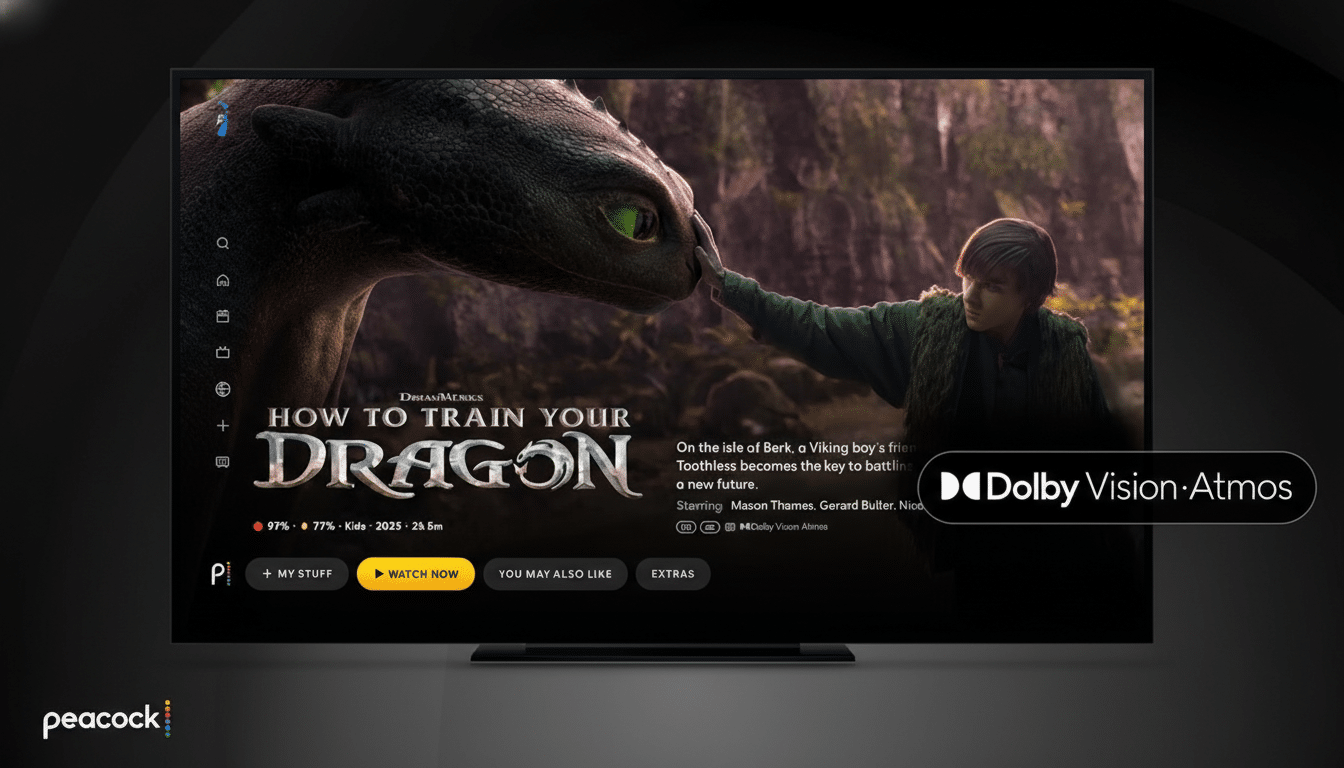
The technical lift is particularly meaningful for sports, where HDR pipelines are notoriously tricky. Live productions stitch together dozens of cameras and signal paths; maintaining consistent tone mapping across that workflow is hard. Vision 2’s dynamic metadata helps align those feeds so the white of a jersey or the green of a field looks consistent from angle to angle, while fast pans and high-contrast LED signage remain controlled rather than smeared or clipped.
Atmos And AC-4 Tackle Dialogue And Dynamics
Beyond the picture, Dolby Atmos brings height and spatial placement to the soundstage—crowd swells rise above you, while play-by-play commentary stays anchored at the center. That immersion is paired with Dolby AC-4, the company’s most advanced broadcast-ready codec. AC-4 is built for streaming efficiency and features tools like dialogue enhancement and metadata-driven mixes, so voices remain intelligible without cranking the volume or resorting to subtitles.
This addresses a real friction point. Research cited by audio engineers and broadcasters consistently ranks voice clarity among the top complaints for streaming video. AC-4’s design allows services to deliver more detail at a given bitrate and to personalize the experience—potentially letting viewers nudge commentary forward in the mix on compatible devices—while keeping bandwidth in check.
Live Sports Lead the Charge for Peacock’s Dolby Upgrade
NBCUniversal has already flirted with premium formats—Peacock was an early mover with Atmos on major football broadcasts—and the new rollout expands that approach to more live events. Expect NBA and MLB coverage to figure prominently as the Dolby toolset scales. For fans, that means brighter uniforms, more believable skin tones under harsh arena lighting, and directional audio that puts you closer to the action without muddying announcers or on-court effects.
The upgrade also aligns with a broader shift in viewing habits. Industry tracking from organizations such as Nielsen shows streaming’s share of TV time climbing steadily, and live sports have become a centerpiece for subscription growth and retention. Premium HDR and immersive audio are no longer perks reserved for prestige films; they’re becoming table stakes for big games.
How to Get It on Your TV, Streaming Box, and Sound System
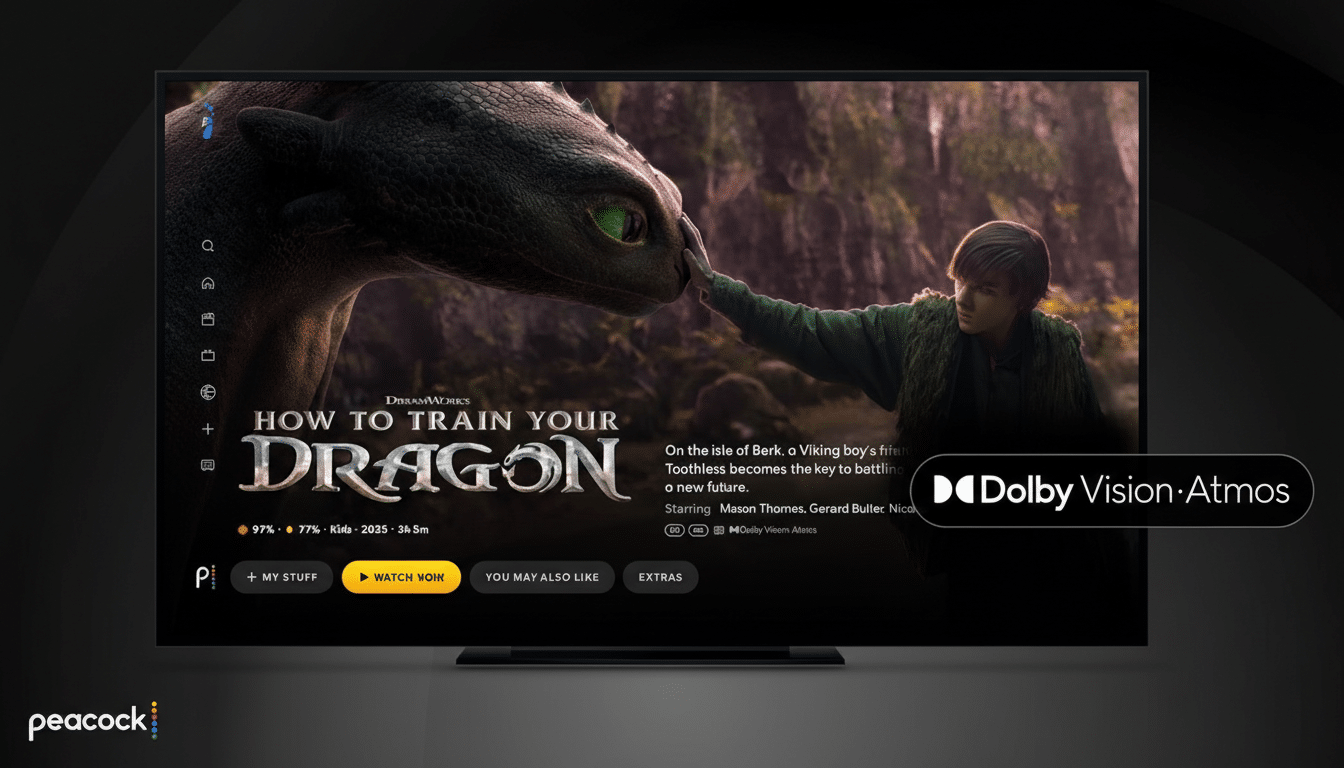
The rollout is included with eligible Peacock plans at no additional charge. To see and hear the difference, you’ll need a TV that supports Dolby Vision, a streaming device or smart TV app capable of Dolby Vision and Dolby Atmos, and either a soundbar or AV receiver that can decode Atmos. If your setup isn’t Atmos-ready, AC-4 will fall back gracefully to 5.1 or stereo, and if your display doesn’t support Vision, you’ll still get a standard HDR or SDR stream.
Availability will vary by title as the catalog and live feeds are upgraded. Look for badges in the app indicating Dolby Vision, Dolby Vision 2, Dolby Atmos, or AC-4 support. As with any high-end stream, a stable high-speed connection is recommended to maintain consistent quality.
How Peacock Stacks Up Against Other Streaming Platforms
Several competitors already offer Dolby Vision and Atmos on select movies and series, but applying Dolby’s latest picture and audio tech across live sports is where Peacock is pushing ahead. Dolby and NBCUniversal describe this as a full-stack integration—from capture through distribution—which should reduce the inconsistencies viewers often notice between live games and on-demand shows.
The free nature of the upgrade is notable in a market where some platforms reserve top-tier formats for higher-priced plans. For Peacock, the move increases perceived value without adding complexity, a tactic that can lift engagement while curbing churn as sports seasons ebb and flow.
The Bottom Line on Peacock’s Free Dolby Vision 2 and Atmos
Peacock’s Dolby Vision 2, Dolby Atmos, and AC-4 expansion isn’t just a spec sheet flex; it’s a practical fix for real streaming pain points. Brighter, more consistent HDR for live sports, clearer dialogue, and immersive sound—delivered at no extra cost—make this a meaningful upgrade for anyone with a modern TV and sound system. If you’ve been waiting for streaming sports to look and sound as polished as top-tier films, this is the leap you were hoping for.
