


A new browser-based project called Kami is turning the hinge on foldable phones into the main game mechanic, offering a playful proof of how flexible displays can unlock experiences you simply can’t replicate on a slab screen. Built by an indie developer known as “maxwase,” the open-source origami simulator asks players to fold virtual paper by physically folding their device, turning the crease into a tactile controller.
How Kami Turns A Hinge Into A Controller
At its core, Kami presents a flat sheet of paper on screen. You can rotate or position it freely, but every move hinges on that literal hinge. To make a crease, you align the paper with the midpoint of the display and then fold the phone. The game detects which direction you close the device and applies the fold accordingly, rewarding precise alignment and steady hands.
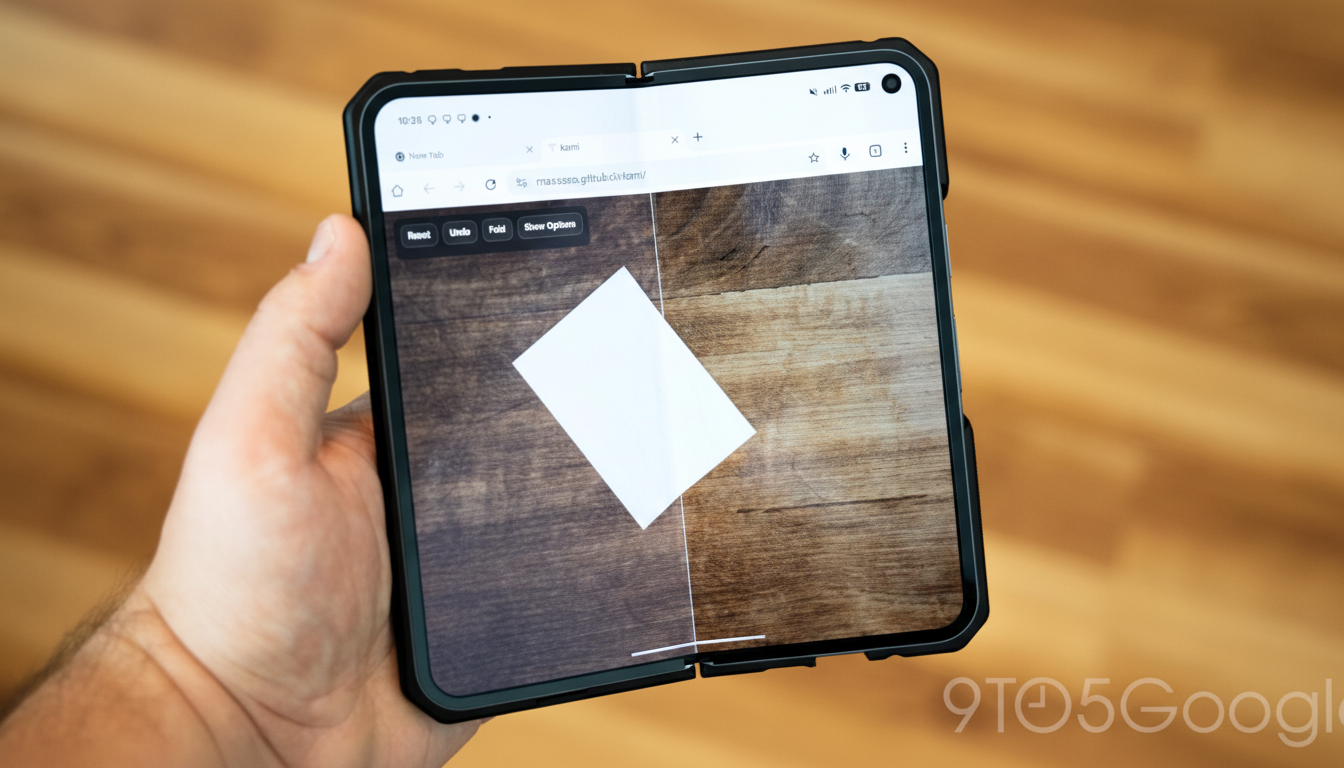
Because it runs in a mobile browser, there is no app install or sign-up hurdle. On non-foldables, Kami still works with touch controls, but the magic is unmistakable on a hinged device, where the satisfying snap of a partial close translates into a crisp digital crease. It is a design-in-your-hands moment that traditional touch targets cannot emulate.
Why Foldables And Origami Are A Natural Match
Origami is all about geometry, precision, and the kinesthetic feel of a fold settling into place. Foldables bring that physicality to software. The crease introduces a spatial cue that divides the canvas into meaningful halves, and the fold angle can act like an analog input. We have seen early experiments like the viral Foldy Bird, which used the hinge to flap, but Kami leans into paper logic, making the hardware feel native to the task.
This aligns with the direction platform owners have been nudging developers. Google’s Android 12L and the Jetpack WindowManager library expose posture data such as tabletop and book modes, while Samsung’s Flex Mode frameworks encourage apps to treat the hinge area and screen segments intelligently. Kami shows how those abstractions can become a gameplay mechanic, not just a UI layout trick.
Open Source Roots And How To Try The Game
Kami is free to play and open source, which matters for more than feel-good licensing. It means other developers can inspect how the experience maps device posture and orientation to on-screen folds, then remix the idea for puzzles, education, or accessibility. The creator shared the project with the community on Reddit, inviting forks and feedback rather than locking it behind an app store.
Because it is web-based, Kami sidesteps the fragmentation that still dogs foldable app development. Whether you are on a Galaxy Z Fold, Pixel Fold, OnePlus Open, or a dual-screen device, the prototype runs without waiting for a bespoke native build. If you are on a flat phone or desktop, you can still play by tapping and dragging to simulate folds, though you lose the delightful tactile cue.

The Bigger Picture For Foldable Gaming Experiences
Analyst firms like IDC and Counterpoint Research have tracked steady double-digit growth in foldable shipments over the past few years, and the category is maturing fast as prices come down and hinges improve. That momentum benefits game developers looking for fresh input methods. The hinge can serve as an axis for precision puzzles, a throttle for flight sims, a reload motion in shooters, or a tempo control in rhythm games.
On the technical side, Android’s posture APIs, along with web features such as window segment metrics and spanning-aware CSS, make it easier to reason about where the fold is and how the screen is divided. Kami’s approach is intentionally simple, but it points to richer possibilities like angle-sensitive challenges, multi-step crease sequences, and timed runs that scale difficulty with how far you bend the display.
Mind The Wear And Tear Of Frequent Folding
Frequent folding is part of the fun, but it is also a real mechanical action. Most mainstream foldables from Samsung are rated for around 200,000 folds in lab tests, enough for years of normal use. The OnePlus Open touts a TÜV Rheinland certification for 1,000,000 folds, signaling how far hinges have come. Still, marathon gaming sessions that repeatedly snap the phone open and closed will rack up cycles faster than casual scrolling.
Practical tips apply here. Keep the screen free of grit before folding, avoid aggressive snaps, and consider playing in tabletop mode when possible to reduce unnecessary full closes. Kami is gentle compared with fast-twitch hinge games, but being mindful can help preserve that crease for the long haul.
What Comes Next For Origami-Inspired Foldable Games
Kami feels like a demo with a point of view, and that is exactly what the foldable ecosystem needs. Expect to see variations that turn complex origami patterns into level packs, add speedrun leaderboards, or incorporate haptic feedback for “paper” resistance as you bend. If more indie projects like this show up, the hinge will graduate from a hardware novelty to a genuine input class—and foldable owners will have a growing library of games you simply cannot play the same way anywhere else.
