


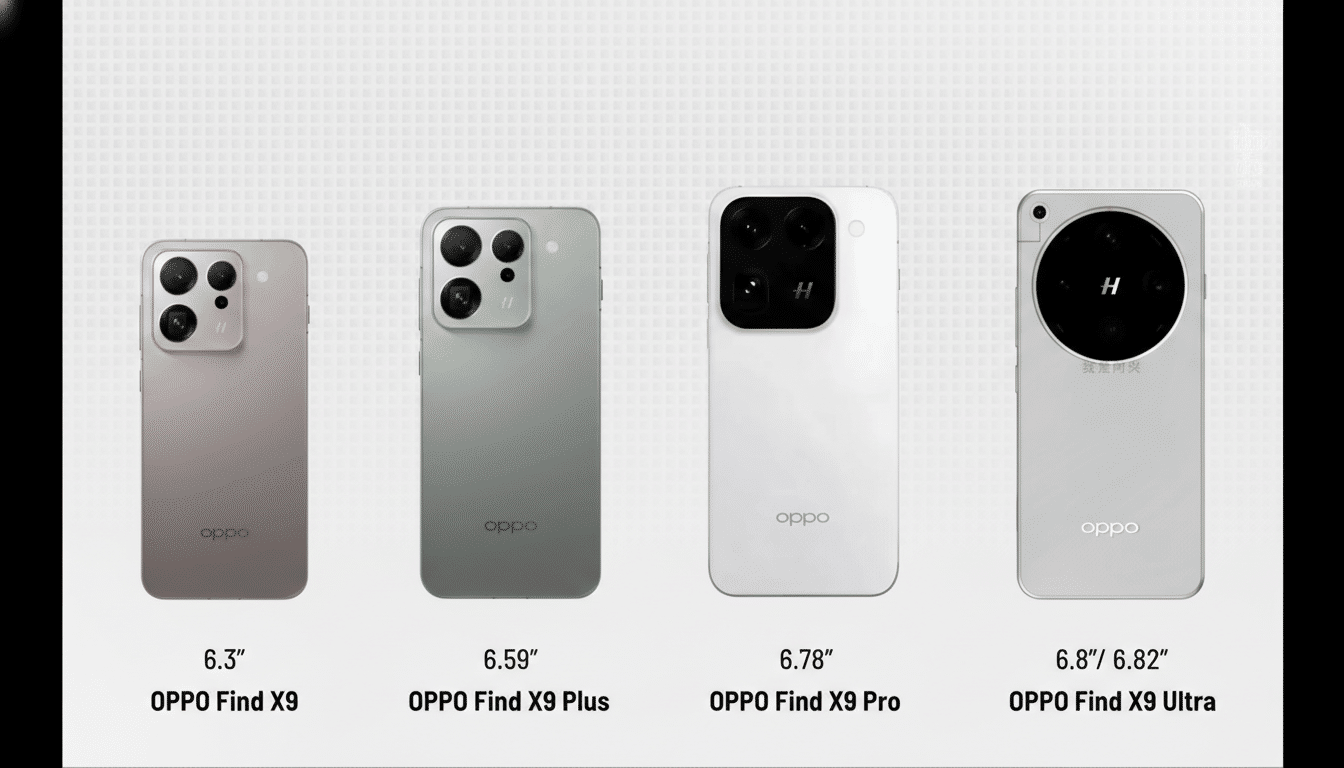
OPPO’s next Ultra-class flagship may ship with a camera trick we’ve never seen baked into a mainstream phone ecosystem: a 300mm telephoto lens extender. Images of an engineering prototype shared on Weibo show a substantial camera grip case with an attachable optical module marked to 300mm, hinting at a purpose-built system for serious long-reach photography on the Find X9 Ultra.
The prototype appears to use a flat-display handset snapped into a dedicated grip with physical controls, while the add-on lens sits over one of the rear modules. It’s unclear whether OPPO is extending a rumored high-resolution mid-telephoto or a periscope camera, but the size of the accessory suggests genuine optical reach rather than simple digital crop.
What A 300mm Extender Means For Mobile Zoom
A 300mm equivalent focal length is long by any standard. For context, most premium phone periscope lenses hover around 100–135mm equivalents, with a few historical outliers near 230–240mm. At 300mm, the field of view tightens to roughly 8 degrees, compared to about 20 degrees at 120mm and roughly 84 degrees on a typical 24mm main camera. That unlocks subjects like wildlife, stage performances, and architectural details that are often too distant for conventional phone optics.
There are trade-offs. Optical extenders—akin to teleconverters in traditional photography—typically reduce incoming light by 1–2 stops depending on magnification. Many phone telephotos already sit around f/3.x; adding an extender means the sensor and software must work harder to keep noise down and shutter speeds fast enough to avoid blur. At 300mm, the old 1/focal-length rule implies you’ll want shutter speeds at or above 1/300s, making optical stabilization and multi-frame stacking crucial.
That’s where computational imaging comes in. Expect advanced multi-frame fusion, AI-based super-resolution, and hybrid stabilization (OIS plus EIS) to be central. It’s also a space where brands gain points in independent evaluations like those from DXOMARK, which increasingly value versatile telephoto performance.
How It Might Integrate With OPPO’s Camera Stack
Leaks point to an ambitious setup: a “super large” 200MP primary sensor, a 200MP mid-telephoto, and a 50MP periscope rumored around 10x. If accurate, OPPO has two plausible candidates for the extender. Pairing with a high-res mid-telephoto would leverage oversampling for detail and noise control, while attaching to the periscope could push the upper limit of native optical reach even further before computational zoom takes over.
OPPO’s long-running collaboration with Hasselblad on color and tone mapping may help maintain consistency across modules, a frequent challenge when mixing optics and sensors with differing characteristics. The rumored emphasis on light intake for the 200MP telephoto also aligns with the realities of an extender, which demands strong baseline sensitivity to keep images clean at long focal lengths.
Design Clues From The Grip Case And Controls Layout
The grip case in the prototype shows multiple physical controls that likely include a two-stage shutter, a zoom rocker, and perhaps function buttons for video and exposure control. This style recalls earlier “camera grip” experiments such as Nokia’s Lumia 1020 accessory and modern enthusiast systems from Moment and ShiftCam, but OPPO’s execution appears more integrated, with optics designed specifically around the phone’s camera geometry.
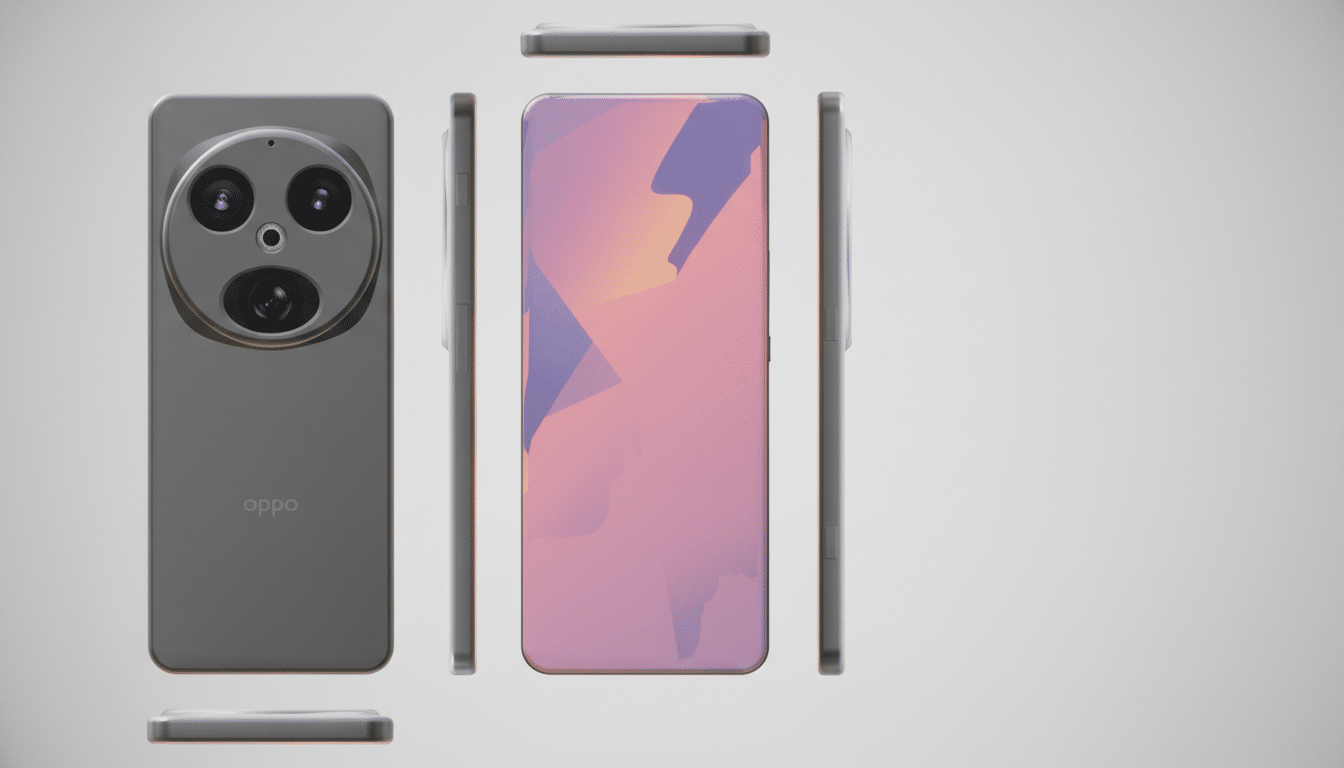
A bespoke extender can mitigate issues that plague generic clip-ons: alignment errors, vignetting, and corner softness. If OPPO has tuned the optical path to a specific module and sensor size, edge-to-edge sharpness and autofocus reliability stand a better chance—especially when combined with phase-detection AF and gyro-assisted stabilization.
Global Launch Plans And Potential Market Impact
Historically, OPPO’s Ultra-tier phones have been selective in their international availability. Tipster Yogesh Brar has suggested this model could see a wider release, indicating OPPO’s confidence in the hardware. If the 300mm system makes it to shelves outside China, it would give OPPO a clear differentiator against rivals from Samsung, Xiaomi, and vivo vying for the crown of best camera phone.
Beyond bragging rights, a polished long-tele solution could broaden how people use phone cameras, shrinking the gap between mobile and dedicated mirrorless gear for specific scenarios. Even if niche, a well-executed 300mm option would strengthen the Ultra narrative around purpose-built tools rather than spec-sheet inflation.
What To Watch In Real-World Use And Testing
Key questions remain. How much light loss does the extender introduce, and can the phone maintain fast autofocus at 300mm? Does stabilization remain effective, or does the system rely on aggressive digital cropping to smooth shake? Can the optics keep edge sharpness and suppress chromatic aberration, a common pitfall at long focal lengths?
Battery and heat management will also matter; long-lens shooting often triggers continuous AF, stabilization, and multi-frame processing, all of which tax the chipset. If OPPO balances these factors—and keeps the accessory compact enough to be practical—the Find X9 Ultra could deliver a telephoto experience that stands out in a market crowded with 5x and 10x claims but few truly clean long-range shots.
For now, the prototype is an intriguing signal: OPPO is testing hardware that pushes mobile photography beyond the usual playbook. If it reaches consumers as shown, 300mm on a phone may shift from party trick to a legitimate tool in the Ultra toolkit.
