


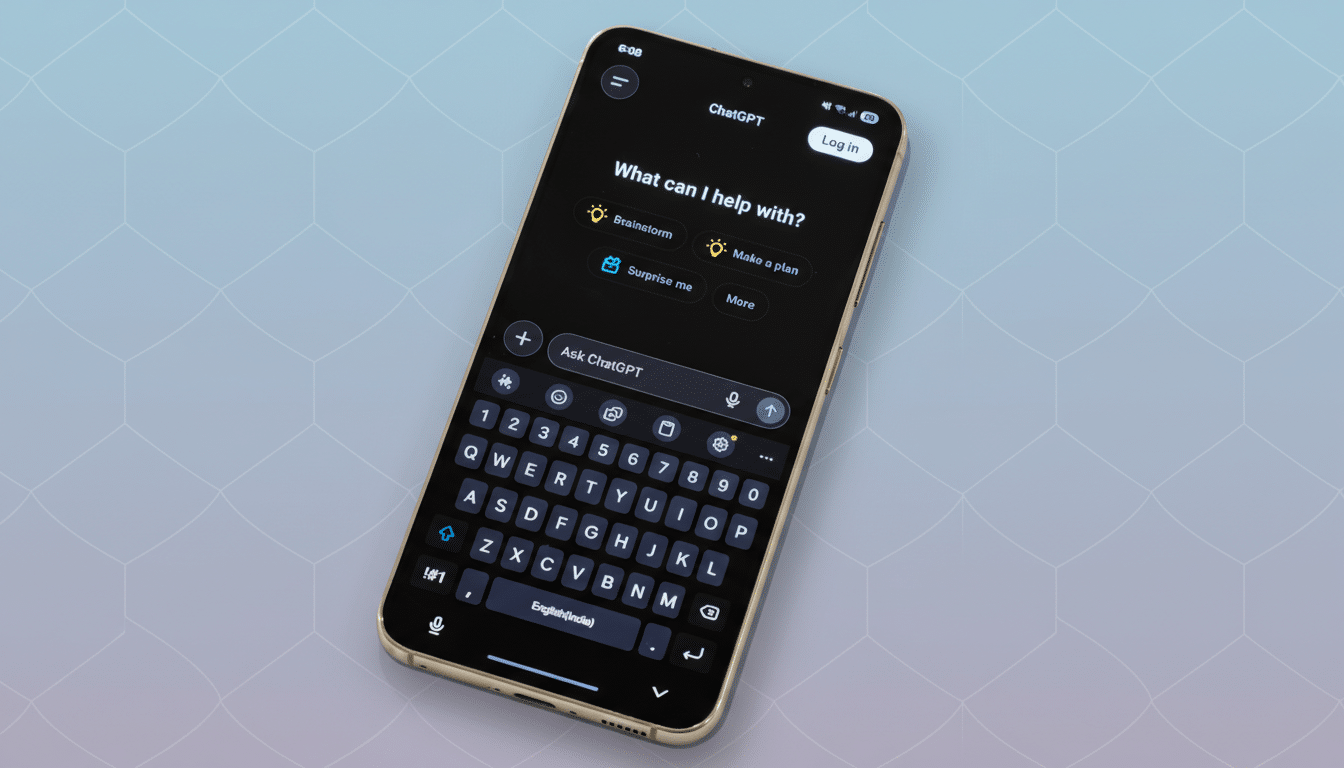
OpenAI says its first consumer gadget is on track to arrive later this year, but the company still isn’t saying what the device actually is. The rare public tease marks the clearest signal yet that the AI giant plans to move beyond software and into dedicated hardware.
At an industry event, OpenAI’s chief global affairs officer Chris Lehane described the debut as “on track,” while cautioning that the timeline is “most likely,” leaving room for slippage. Axios first reported the comments, which stop short of confirming when the device will actually go on sale.
- What We Know So Far About OpenAI’s Planned Hardware
- Why Dedicated AI Hardware Makes Strategic Sense Now
- Lessons From Recent AI Devices and Their Missteps
- Form Factors To Watch as OpenAI Finalizes Its Device
- Privacy And Policy Will Shape The Design
- The Supply Chain And Go-To-Market Puzzle
- What To Watch Next as OpenAI Moves Toward Launch
Design legend Jony Ive has been involved in OpenAI’s hardware efforts, according to previous reporting, and a dedicated internal unit had operated under the “io” banner before a naming dispute forced a rethink. A Google Ventures-backed startup named iyO challenged the branding, and OpenAI dropped the “io” name after losing an appeal, according to court filings and industry reports.
What We Know So Far About OpenAI’s Planned Hardware
OpenAI has not committed to a form factor. People familiar with the effort have suggested multiple prototypes are being explored, spanning wearables and other ambient devices. Earlier hints pointed to a reveal window that could land this year, with commercial timing dependent on development progress.
Given OpenAI’s investments in multimodal models—speech, vision, and real-time interaction—any device will likely lean heavily on voice and camera capabilities. That implies a design focused on hands-free access, persistent context, and seamless handoff between on-device processing and the cloud.
Why Dedicated AI Hardware Makes Strategic Sense Now
AI models feel markedly more useful when they’re always available, low-latency, and aware of surroundings. A dedicated device can prioritize instant wake, robust noise suppression, and local decision-making, reducing round trips to the cloud and making interactions feel natural. This is difficult to guarantee on generic phones and laptops where AI competes with other system demands.
There’s also a business logic. Pairing hardware with subscription access to advanced models could stabilize costs for inference at scale while encouraging steady upgrades. It’s the same playbook that made vertically integrated ecosystems—from Apple’s devices to Amazon’s voice appliances—stickier and easier to differentiate.
Lessons From Recent AI Devices and Their Missteps
The past year offered cautionary tales. The Humane AI Pin struggled with heat, battery life, and a lack of compelling everyday use cases. Early excitement around Rabbit’s R1 fizzled when reviewers characterized it as an Android wrapper for cloud actions rather than a truly new computing category.
By contrast, smart glasses co-developed by Meta and Ray-Ban showed that unobtrusive form factors with reliable voice capture, quick photo/video, and a sensible companion app can resonate with mainstream users. Adoption remains early, but the trajectory underscores a simple point: utility beats novelty.
Form Factors To Watch as OpenAI Finalizes Its Device
- Wearable pin or badge: Always-on microphones and a privacy-forward camera could enable a conversational assistant that “sees” and “hears” context. The challenge is battery, heat, and social acceptability, plus clear cues for when sensors are active.
- Headphones or earbuds: Given how often people wear audio gear, an OpenAI-branded headset with top-tier beamforming, whisper-quiet wake words, and real-time translation is plausible. Audio-first devices avoid camera concerns while maximizing everyday touchpoints.
- Home assistant or desk companion: A compact display, quality speaker, and array mics could revive the smart speaker category with truly conversational, goal-oriented “agent” behavior. The hurdle is differentiation against entrenched ecosystems and ensuring reliability for tasks beyond simple queries.
Privacy And Policy Will Shape The Design
Any camera- or mic-forward device from OpenAI will face heightened scrutiny. Expect prominent hardware kill-switches, recording indicators, and granular permissions. EU rulemaking around AI transparency and U.S. consumer protection guidelines effectively nudge vendors toward visible safeguards and tighter data minimization.
OpenAI has previously emphasized safety research and model governance. Translating those commitments into hardware—edge processing where possible, clear data retention policies, and enterprise-grade admin controls—will be essential for trust.
The Supply Chain And Go-To-Market Puzzle
The choice of silicon could define the experience. A hybrid approach—dedicated on-device audio/vision accelerators paired with cloud inference for heavier tasks—would balance responsiveness and cost. Component availability and yields will determine whether OpenAI can scale inventory without long waitlists.
Financial Times previously reported that OpenAI and Jony Ive explored partnerships and funding conversations with SoftBank, signaling ambition to build at scale. Whether OpenAI ultimately manufactures under its own brand, co-brands with a design partner, or licenses the experience to an OEM will shape distribution and pricing.
Bundling will be another lever. OpenAI has said ChatGPT counts over 100 million weekly users, a large funnel for hardware upsells. Packaging the device with premium model access for consumers or team plans for businesses could simplify adoption and make the value proposition clearer on day one.
What To Watch Next as OpenAI Moves Toward Launch
Hardware leaves breadcrumbs. Regulatory filings, component certifications, and trademark activity often surface weeks before launch. Hiring patterns in embedded systems, audio DSP, optics, and RF are similarly telling. If those signals accelerate, the “on track” guidance looks realistic.
For now, the company’s first gadget remains a cipher. The stakes are high: if OpenAI can turn its cutting-edge models into a reliable, everyday companion, it could redefine how we use AI in the real world. If not, it risks joining a growing list of hyped devices that promised magic and delivered friction.
