


OpenAI is hiring Slack CEO Denise Dresser to be their chief revenue officer, a hire first reported by Wired and later confirmed by the company. The move plants a seasoned enterprise operator at the heart of OpenAI’s commercial engine, charged with overseeing revenue strategy, large-account expansion and customer success — all areas that the AI leader must scale up in order to convert surging usage into lasting business performance.
Why OpenAI Needs a Chief Revenue Officer Right Now
OpenAI’s technology has made headlines around the world, but its business challenge is this: turning a viral consumer moment and strong demand from developers into steady enterprise revenue. Industry news outlets, including The Information and Bloomberg, have highlighted a multibillion-dollar annualized run rate fueled by API usage and ChatGPT subscriptions, but astronomical compute costs and complicated deployment requirements have kept profitability at bay.
A CRO can pressure-test pricing, standardize packaging across API- and seat-based products, expedite channel partnerships and segment the post-sale journey that influences renewals and expansion.
OpenAI’s leadership has telegraphed that push towards commercialization and bringing in an enterprise-grade operator is the loudest possible way to express yet that predictable revenue and margin discipline is the top of the agenda.
What Dresser Brings From Slack and Salesforce
Dresser joins with over a decade in Salesforce’s go-to-market machine — and, more recently, the top job at Slack. She has spent her career at the intersection of product, revenue and customer experience — bringing collaboration software from department pilots to companywide standards. That “land and expand” muscle is just what AI vendors need as pilots evolve into multi-year, multi-workload commitments.
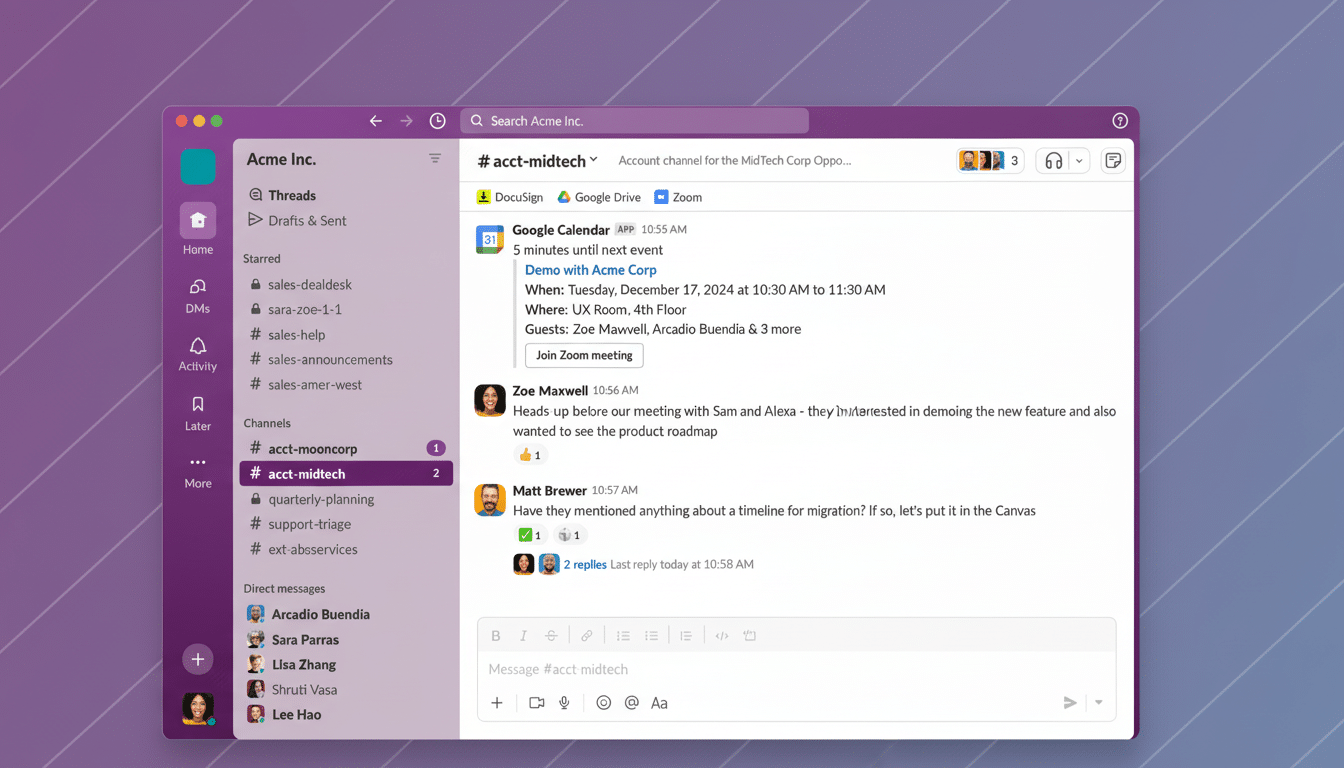
At Slack, Dresser managed the launch of AI features, including meeting recaps and channel summaries as paid add-ons, in conjunction with a push to emphasize enterprise readiness through security, governance and data residency.
Those experiences map nicely to OpenAI’s reality, in which CIOs consider model quality beside privacy controls, auditability and integration with the existing workforce. Look for Dresser to emphasize enterprise-level SLAs, compliance frameworks and customer success programs that accelerate time to value.
Enterprise AI Is a Packaging and Partnerships Game
OpenAI already has a few sales fronts: ChatGPT Team and Enterprise for subscription seat-based collaboration, the API for developers and large-scale deployments through partners. Professional services firms like PwC have notably announced wide deployment of ChatGPT Enterprise, and functioned as resellers to some extent; this latter fact also illustrates how the channel strategy will influence implementation. At the same time, the Azure OpenAI Service opens access further into Microsoft’s enterprise customer base — a potential source of both opportunity and challenge that must be managed through clear pricing, support and account ownership.
One challenge is getting the model right — but that’s only half of it. Enterprise customers demand price predictability (usage caps, volume discounts), strong security guarantees (SOC 2, ISO, data isolation), and roadmap transparency today. Dresser’s purview could involve rationalizing offerings, with a view to per-seat and usage-based models, introducing industry-specific bundles and “tightening feedback loops,” so that procurement, legal, and IT do not catch AI projects at the end of the track.
The prize is substantial. According to McKinsey research, generative AI could generate trillions of dollars in annual economic value, but this will only happen if the power of generative technology is operationalized—embedded into sales, service, finance, engineering and back-office workflows. Product packaging, and how it is aligning with measurable results through revenue leadership, will go a long way.
A Larger Leadership Reset Across OpenAI’s Business
Dresser is one of a growing bench of operators charged with scaling OpenAI past the confines of research-first breakthroughs. Fidji Simo, OpenAI’s chief of Applications, said the company’s goal was to give AI tools “to millions of employees.” She cited Dresser’s background as someone who drove companywide change. That marks a larger pursuit of business applications and vertical solutions — not just developer tools.
The ripples also are being felt at Slack. Rob Seaman, Slack’s chief product officer, will take over as interim CEO, Wired reported, which indicates some stability on the product side of things as Salesforce leads Slack’s enterprise team collaboration engine and AI smarts.
What Success Would Look Like for OpenAI’s CRO
For OpenAI, that CRO success will materialize in a handful of crisp metrics: Higher Net Revenue Retention through expansion; shorter sales cycles as security and compliance barriers melt away; healthier gross margins from model efficiency and considerate packaging; and a healthier mix of multi-year enterprise contracts.
Equally important, customer success needs to convert early enthusiasm into ongoing use across an organization, not just pockets of power users.
Dresser’s background indicates a practical, customer-centric strategy to scaling AI across the enterprise: Meet buyers where they are, base pricing on outcomes and invest in post-sale as the growth engine. If OpenAI follows that playbook, it can transform technical leadership into a defensible, repeatable business at scale.
