


OpenAI is reportedly poised to unveil a short-form video app with a swipeable feed — a clone of TikTok’s swipey UI — matching the release timeframe of its next-generation video model, Sora 2.
Per Wired’s reporting, the app would include only AI-generated clips made within the product, casting OpenAI not just as a model provider but also a consumer platform vying for users’ time against TikTok, Instagram Reels, and YouTube Shorts.
Some key details imply a tightly controlled ecosystem: Users wouldn’t be able to upload camera-roll videos. Instead, they would produce clips — capped at around 10 seconds — using Sora 2, due to copyright restrictions. Wired also reports an option for verifying identity and opting in to allow the model to use a person’s likeness, which could unlock personalized experiences but also raise new questions about consent and safety.
Why OpenAI Wants a Social Video Feed Now
Short-form video is the home of mobile attention. TikTok has more than a billion monthly users, according to multiple industry estimates, and YouTube says Shorts is available to more than two billion logged-in users per month. Meta has said that Reels accounts for an increasing proportion of time spent on Instagram and Facebook. A bottomless feed provides OpenAI with direct distribution (no platform intermediaries) and a feedback loop of prompts, responses, and watch-time signals to improve quality of generation and recommendations.
Controlling the feed also opens up monetization levers beyond API usage — from ads or sponsored formats through to premium creation tools. For a video model as expensive to compute as Sora, platform economics are relevant: increased engagement can offset the cost of inference and private engagement data may produce better ranking systems and content safety models. It’s the same flywheel that drove earlier social networks, but nowadays the “creator” is just as likely to be an AI model nudged into existence by a prompt.
How Sora 2 Might Power the Entire Stream
OpenAI previously showed that Sora can produce coherent, photorealistic scenes and sustain narratives over longer periods than previous text-to-video systems. A second-generation model should further improve fidelity, motion consistency, and scene physics, while improving prompt adherence and editability. If the app is also limiting clips to around 10 seconds, such a cap almost certainly treads the line between cost, responsiveness, and pacing that users expect in their vertical feeds.
The creation process will be streamlined: templates for iterative design, text and image prompts, reference frames, and in-app editors for timing, captions, and sound. The limiting factor will be bandwidth. For a social feed to feel alive, creation-to-publish cycles have to be seconds, not minutes. That puts pressure on OpenAI to optimize inference, caching, and possibly put in tiered or batchy quality settings under the hood.
Identity, Similarity, and Security Trade-offs
Allowing verified users to generate likenesses makes personalization rocket fuel — think reaction videos with you, stylized dance loops, or explainer videos in your own voice and face — but it also raises difficult safety and policy questions. OpenAI would require clear consent flows, easy revoke mechanisms, and strong protections against improper use — such as non-consensual deepfakes or impersonating public figures.
Labeling and provenance are table stakes now. The EU’s maturing AI rules and numerous regional laws force platforms to come clean over synthetic media. Projects such as C2PA’s Content Credentials can append or attach tamper-evident metadata, and OpenAI has also indicated some backing for provenance standards with watermarking research. At the scale of platforms, that must be matched by detection, human review, and quick appeals to protect creators and subjects alike.
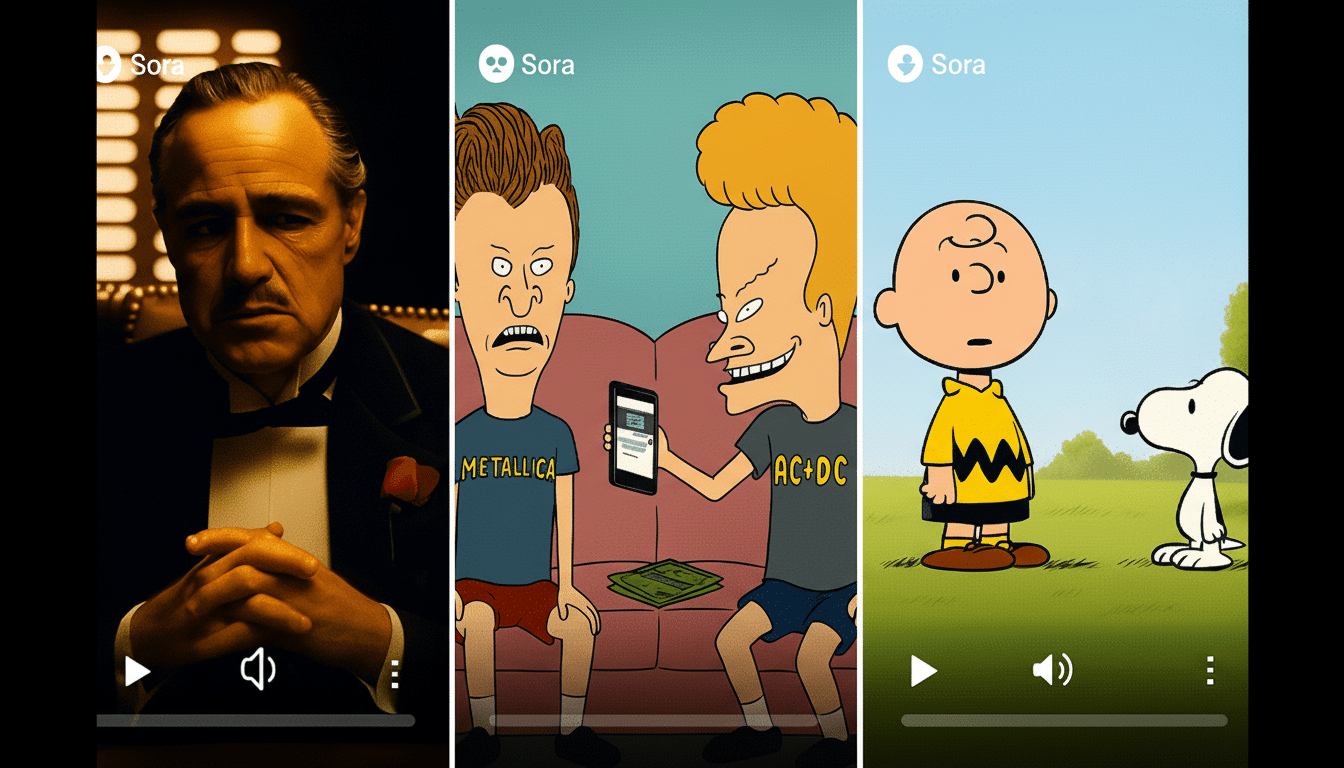
Questions of Copyright and Platform Liability
A feed composed entirely of AI-generated clips isn’t immune to IP risk. Prompts could produce outputs that look like protected styles, logos, or characters — and music is a minefield too if the app permits audio generation or comes backed by licensed tracks. AI music startups have already been sued by record labels, and image and text model training has drawn author and media lawsuits. An app for consumers would move OpenAI closer to the front lines of that fight.
Anticipate aggressive pre- and post-generation filtering: blocking known characters and brands, any unsafe prompts, and the output for copyrighted material. Industry trackers point out that large platforms take down hundreds of millions of videos for policy violations routinely; a 100-percent synthetic feed not only does not reduce moderation workload — it just recasts that load around different failure modes.
Competition for Short Video Among Major Platforms
OpenAI would be stepping onto a crowded field. TikTok’s creator ecosystem is locked in, YouTube Shorts piggybacks on existing channels and monetization, while Instagram locks short video into a powerful social graph and ad machine. What distinguishes them is creation: When anyone can whip up a slick clip in seconds, the very definition of “creator” expands vastly. That could reduce the barrier for new stars — or flood the feed with copycat, low-novelty content.
Rivals won’t sit still. Google’s Veo, Runway, Pika, and Luma are racing the competition on video quality and speed, while entrenched platforms will keep folding more generative tools into their native editors. If OpenAI nails instant, high-quality generation with strong recommendation systems, it could define a new genre: the network where the primary creative act is prompting, not filming.
What to Watch as OpenAI’s Launch Window Nears
There are a few signals to watch about how serious this push is.
- Clarification on moderation and consent policies
- Licensing deals for music and stock assets
- Watermarking standards and provenance requirements
- Creator incentives or revenue sharing
- Latency benchmarks and the upper limit on quality for mobile
- Whether OpenAI opens the app to third-party model outputs or keeps the feed Sora-only
If the reporting is correct, OpenAI is about to test a thesis that has been whispered from the beginning of the generative AI age: when making a passable, watchable sequence drops to almost nothing, does attention drift away from human-shot clips toward synthetic ones — or is it still the case that users crave real life’s grain?
The response will decide if this is a feature, a fad, or the beginning of something new in media.
