


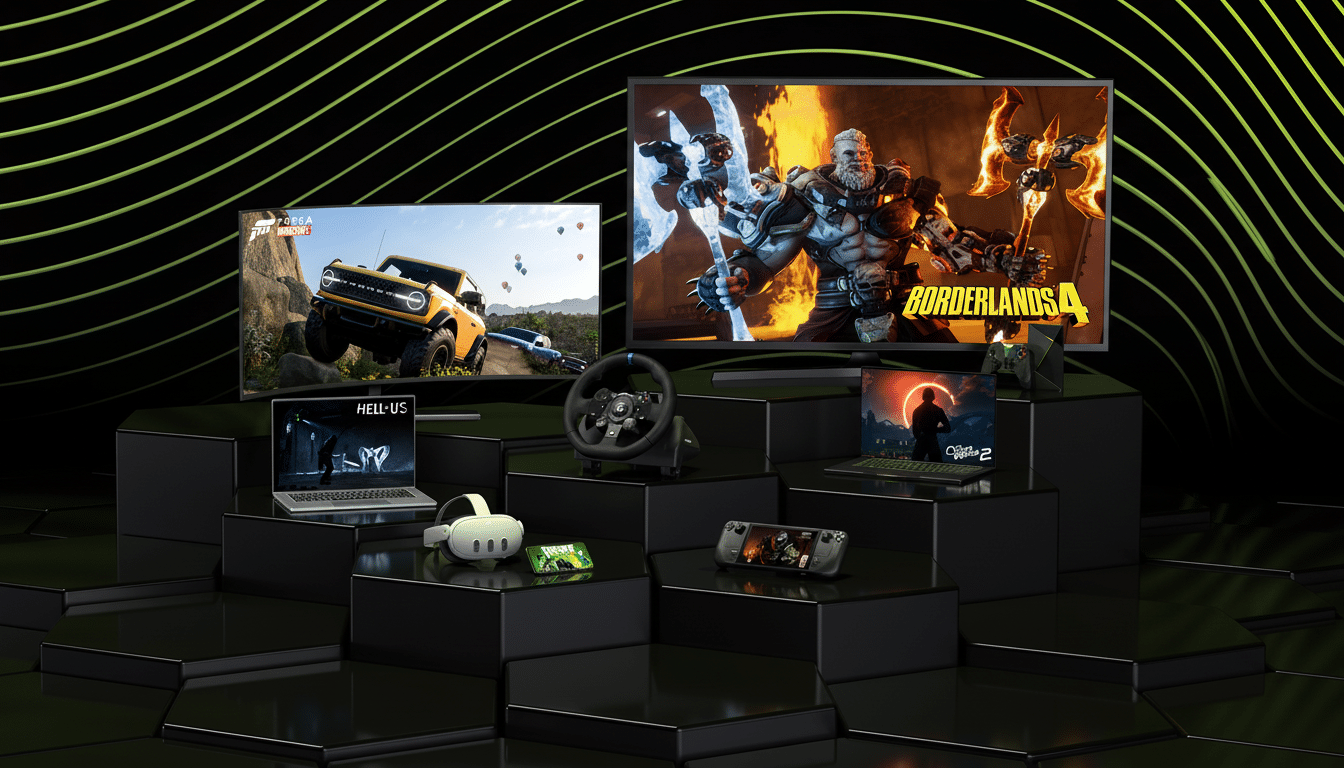
Nvidia is expanding the reach of GeForce Now, with a native app for Amazon’s Fire TV Sticks and first-party support for more desktops. That makes the move both a step forward for cloud gaming in your living room, as well as an easier path for Linux users hoping to experience top-tier PC gaming without dual-booting or Proton tinkering.
Native Linux App Aims at Power Users and Enthusiasts
The new Linux client is ready for modern distributions, with Nvidia listing compatibility starting at Ubuntu 24.04. The company claims streams can go up to 5K at 120 frames per second or 1080p at up to 360 frames per second on Ultimate-tier servers powered by GeForce RTX 5080 GPUs, if your display and bandwidth permit.
Support for Linux will begin in beta, although Nvidia hasn’t specified whether or not it’ll be open to all users from day one. Even in beta, a native app matters: Linux gaming has snowballed through Proton and gadgets (like the Steam Deck), though Valve’s own Hardware Survey consistently finds that Linux hovers around low single-digit adoption for live PCs. With a supported GeForce Now client, that same audience has clear access to the Windows-first games and anti-cheat-sensitive titles that can be a pain to get running locally.
Fire TV Sticks Will Bring PC Libraries To The Living Room
For the TV side, Nvidia’s native app will first be available on Amazon’s Fire TV Stick 4K Plus (2nd Gen) and Fire TV Stick 4K Max (2nd Gen). With a paired controller, it’s your Steam, Epic Games Store, and publisher libraries on the biggest screen in the house — no console required.
Amazon has been slowly but surely transforming Fire TV into a cloud gaming hub, announcing the arrival of Xbox Game Pass streaming on select models alongside its own Luna service last month. Fire TV’s installed base is huge (Amazon has publicly claimed to have sold over 200 million devices globally), so even a phased rollout represents a substantial distribution lift for GeForce Now. Nvidia hasn’t dubbed the Fire TV launch as a beta and isn’t ready to commit to bringing it to additional Fire TV models at this time.
Performance Targets And What You Will Need
The headline specs of GeForce Now depend on your tier, device, and network. Nvidia only gives recommended specs, and they’re not absolutely necessary, but it suggests a minimum of 25 Mbps for 1080p at 60 fps or around 45 Mbps for 4K at the same frame rate, either via wired internet or compatible (5 GHz Wi‑Fi) to minimize latency (less than 40 ms), ideally within a reasonable distance of your nearest data center. Expect some device-specific caps: Fire TV, for example, usually maxes out at 4K on supported TVs, while 5K/120 and 1080p/360 targets will be more of the right fit for desktop monitors with high refresh rates.
Note that, if you’re in it for ultra-high frame rates, remember that game-side settings, TV/monitor capabilities, and requirements for Nvidia’s Ultimate plan all gate the experience. Nvidia recently added a 100-hour monthly limit on replaying your favorite games — unless you downshift to its Founders Legacy subscription or add more time with add-on packs. That policy will influence how marathon players consume the service on Linux desktops and TV sticks.
New Peripherals and Easier Logins Arrive for Players
Nvidia is also throwing its weight behind dedicated flight controls, an ergonomic boon for cockpit loyalists in Elite Dangerous, Microsoft Flight Simulator 2024, and War Thunder. The fact that I can plug in a HOTAS and fly my ass through said cloud turns the Fire TV app from casual convenience to enthusiast swooner.
On the account side of things, Nvidia is also introducing automatic sign-in integrations to make things as painless as possible across storefronts. Battle.net is first up, with Gaijin.net slated to follow. For a service built around “bring your own library,” the less password juggling, the quicker time to play — especially on a TV interface.
Why This Expansion Matters for Cloud Gaming’s Future
It serves two strategic purposes: it plants a foot in mainstream TVs through Fire TV Sticks, while also lending the service credibility among tech enthusiasts who often shape the direction of gaming. As an added bonus, it also narrows the competition with Xbox Cloud Gaming and Amazon Luna, both seeking to be the low-friction path to blockbuster titles.
Convincing is a lot better than converting.
Analysts at firms like Newzoo and Omdia point out that, despite missteps including the shutdown of Stadia, engagement with cloud gaming continues to rise as broadband capabilities get better and content libraries become more robust. Nvidia is making a clear bet: meet players where they are, whether that’s on a Linux workstation or a $50 streaming stick, and let the data center do the heavy lifting.
If Nvidia nails the performance part and half the hassle, then this could be one of GeForce Now’s biggest steps yet — transforming even more TVs into game PCs and letting Linux users sit in the cloud front-of-the-plane for once.
