


Nvidia is also reportedly test-driving location-tracking software for its AI accelerators as rumors of high-end chips leaking into banned markets reach a fever pitch. Reporting attributed to Reuters said the company has developed a verification system capable of checking which country a chip is working in (initially, for its upcoming Blackwell generation). Nvidia has publicly stated that it hasn’t seen proof to back up recent allegations that Blackwell parts were imported into China for China’s DeepSeek models.
Why Nvidia Is Making Location Checks for Its AI Chips
Export controls have changed the global AI hardware landscape. Sales of high-powered AI chips are restricted on performance grounds by the U.S. Department of Commerce’s Bureau of Industry and Security to certain countries, forcing vendors to try to pin down a way for compliance hardening. Location verification offers Nvidia a first-party means to enable customers to show where their accelerators do — and do not — run, as well as demonstrate due diligence for regulators and partners.
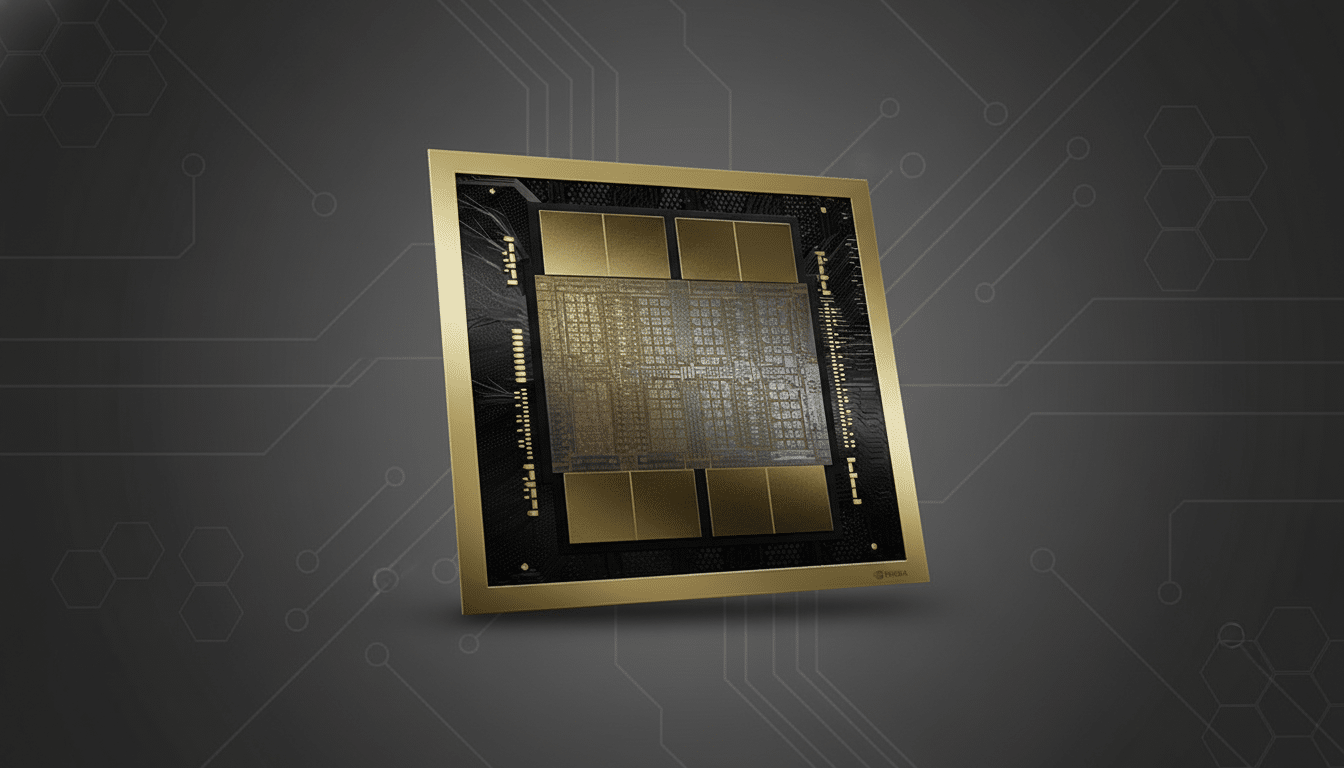
The new system would be elective for customers and, at least initially, supported on Blackwell parts, to allow enterprises and cloud providers to verify a chip’s location without pausing workloads. That design decision indicates Nvidia’s attempt at striking a balance between staying compliant and allowing the sort of operational flexibility needed by hyperscalers and research labs that shift compute across different regions.
How Chip Location Tracking and Attestation Might Work
Without spelling out details, industry engineers say such attestation usually mingles hardware with network telemetry. A device can demonstrate it is authentic and unaltered through signed firmware and secure-boot attestations, while software agents infer geography by comparing round-trip time to known waypoints across several networks. Combined with performance counters, those signals can identify unusual conditions corresponding to unlawful cross-border operation.
No geolocation technique is perfect: VPNs, satellite uplinks, and intermediate proxies can muddy the waters. But multi-point timing checks, cross-verified with cloud control planes and device certificates, make it significantly harder for those trying to hide the true location of a chip. The same principles apply to fintech and content delivery where geofencing needs to deter purposive evasion.
Smuggling Rumors and Nvidia’s Response to Allegations
In the past few days, uncorroborated reports have suggested that China’s DeepSeek was one of a number of research organizations to train models upon smuggled Blackwell-class GPUs. Nvidia has publicly claimed that it has not seen proof to corroborate those allegations. The company’s reported tracking pilot comes in the midst of that as a shot across the bow: an effort to beat gray-market leakage, and also show regulators high-end compute doesn’t escape controls via third countries or shell buyers.
The compliance landscape remains nuanced. Nvidia has recently been granted permission to sell H200 chips to some customers in China, according to public disclosures cited in news reports, but that clearance does not include the newer Blackwell lineup. Businesses with operations inside, or even near, broad restricted territories will now encounter more stringent procurement checks and audit trails into where, and how, to use AI accelerators.
Market Stakes and Impact on Consumers and Cloud Users
Nvidia’s chokehold on the AI accelerator market — analysts are generally in agreement that the company has a greater than 80% share — means any policy or technical feature regarding chip use will have oversized effects. China used to account for a big chunk of demand; some analysts have estimated it was close to one-fifth. That backdrop would help to explain why optional but software-based verification may be appealing to global customers looking for a route to compliance that doesn’t necessitate full hardware overhauls.
For cloud providers, the footprint questions are operational: who owns the telemetry, how it hooks into cluster schedulers, and what happens if a validation ping goes missing in the middle of a training run. And enterprises that are juggling multi-cloud or cross-border research will need clarity on false-positive rates, data retention, and whether claims about location can be audited independently.
What to Watch Next as Nvidia Pilots Chip Location Checks
From a product standpoint, we’ll need to see formal documentation of the feature set, details on which Blackwell configurations support verification out of the box (if any), and whether or not Nvidia will extend the capability to earlier generations through firmware. Keep an eye out for guidance from cloud partners — if the largest platforms turn on attestation by default, adoption could skyrocket.
If such location checks were actually implemented, as described by Nvidia, they might not stamp out smuggling altogether, but could at least render compliance audits more meaningful and gray-market routes less likely. In a market where training clusters stretch across thousands of accelerators, verifying where the chips are actually running is no longer just an IT task for the back office, but rather a strategic imperative.
