


Nvidia used the global platform of CES to announce a sweeping platform for generalist robots, including new base-level models, an open simulation suite, orchestration software and edge computing designed to help robotic systems learn and adapt at even higher sustainable rates. The strategy is clear: be the default stack for physical AI, like Android was the known choice for smartphones.
Why Nvidia Wants the Android Slot in Robotics
Robots in industry and service usage are making a shift from one-task-based automation to generalist capability, that is, machines which can reason about goals, plan across previously unseen environments and manipulate unfamiliar objects. That transition requires standardized software, large simulation and cheap on-device AI. This is consolidation, like mobile before Android.
- Why Nvidia Wants the Android Slot in Robotics
- A Full Stack from Models to Motors for Generalist Robots
- Simulation as the Next Frontier for Generalist Robots
- Hardware Worthy of Edge AI in Generalist Robotics
- Developer Gravity and Early Traction for Nvidia Robotics
- The Risks and Rewards of Competition in Robotics
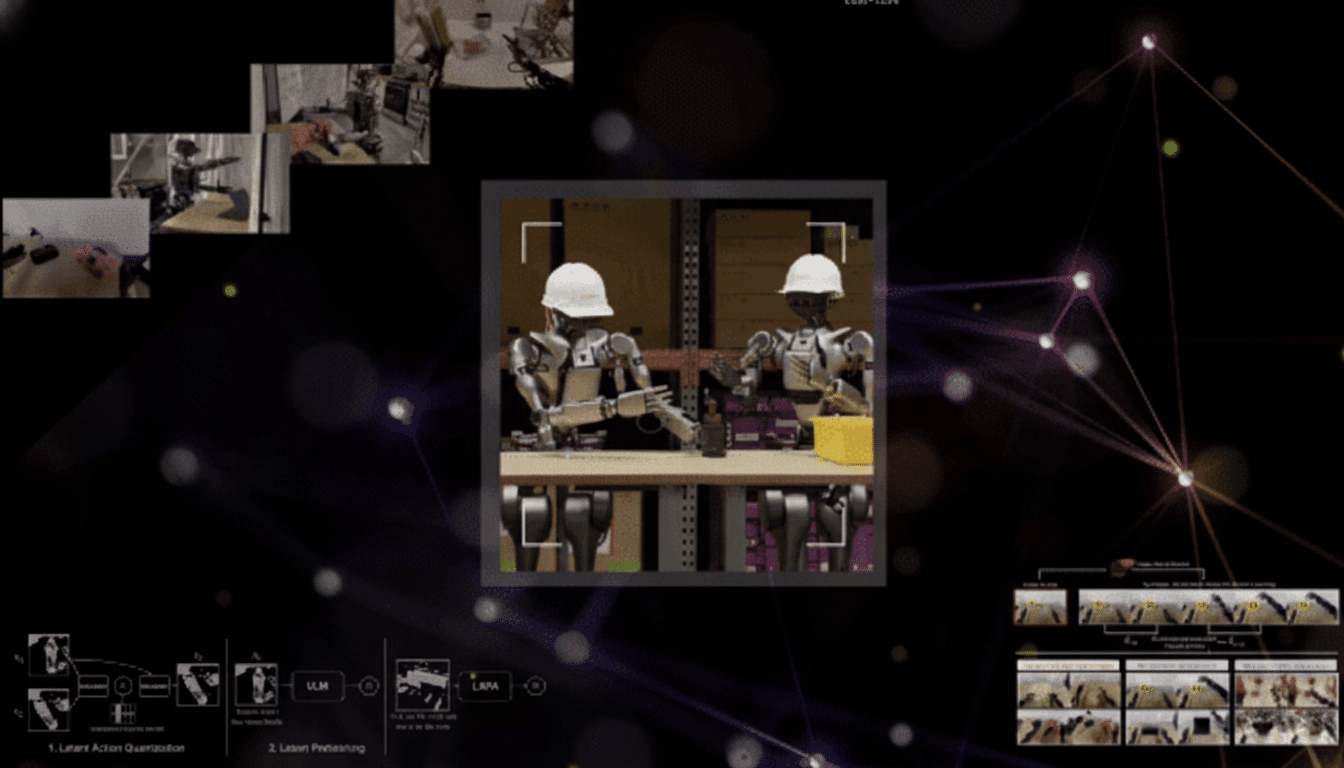
The installed base is ready. Worldwide, annual robot installations hit a new peak — more than 550,000 units globally last year, with the automotive and electronics industries as drivers of growth. Meanwhile, Omdia and TrendForce analysts say Nvidia has more than 80% market share in the data center AI accelerator category, which puts it in a prime position to dictate how robotic intelligence is trained and deployed.
A Full Stack from Models to Motors for Generalist Robots
Open foundation models aimed at generalizing across tasks and environments were recently introduced by Nvidia. Cosmos Transfer 2.5 and Cosmos Predict 2.5 are sort-of world models for synthetic data generation and policy evaluation in simulation, minimizing the expensive gathering of real-world edge cases. Cosmos Reason 2 is a reasoning vision-language model that integrates perception with action planning — key for robots that need to make sense of cluttered scenes and decide on safe, efficient steps.
Isaac GR00T N1 is at the top, a humanoid-specific vision-language-action model. It learns from intake sensory data to output motor controls; it sees and then moves — not by hand-tuned pipelines but with the few-shot learning system Cosmos Reason as its “brain,” unlocking whole-body coordination in the form of balance, locomotion, grasping, and object manipulation into one Syrup Policy. These models are all available via community hubs such as Hugging Face, a hint that Nvidia wants developers inside an open loop, rather than walled off in proprietary portals.
Simulation as the Next Frontier for Generalist Robots
Proving complex skills out in the wild is slow, risky and expensive. Nvidia’s latest Isaac Lab-Arena, which is based on an open-source simulation framework hosted at GitHub, consolidates workloads and resources, as well as benchmarks such as Libero, RoboCasa and RoboTwin. The goal is to narrow the sim-to-real gap and provide startups, labs and OEMs a common yardstick for measuring progress — something robotics has previously lacked.
Simulation is more than convenience. In generalist robotics, scale is king: millions of episodes in a diverse set of scenes teach models to plan robustly and recover from failure. Uniform simulation funnels like the mystery machine gather comparable data during training and speed up reproducibility while making safety regressions easier to find before your hardware is ever in danger.
Hardware Worthy of Edge AI in Generalist Robotics
For these models to run at the edge, Nvidia announced Blackwell-powered Jetson T4000 from its Thor family. The card churns out 1,200 teraflops of AI compute while packing 64GB of memory and sipping 40–70 watts — numbers that matter when you’re dealing in mobile systems; taking every watt into account leads to considerations regarding payload (less battery or less heat) as well as battery life. That’s a cost-effective way for integrators to perform real-time inference without chaining robots to the cloud.
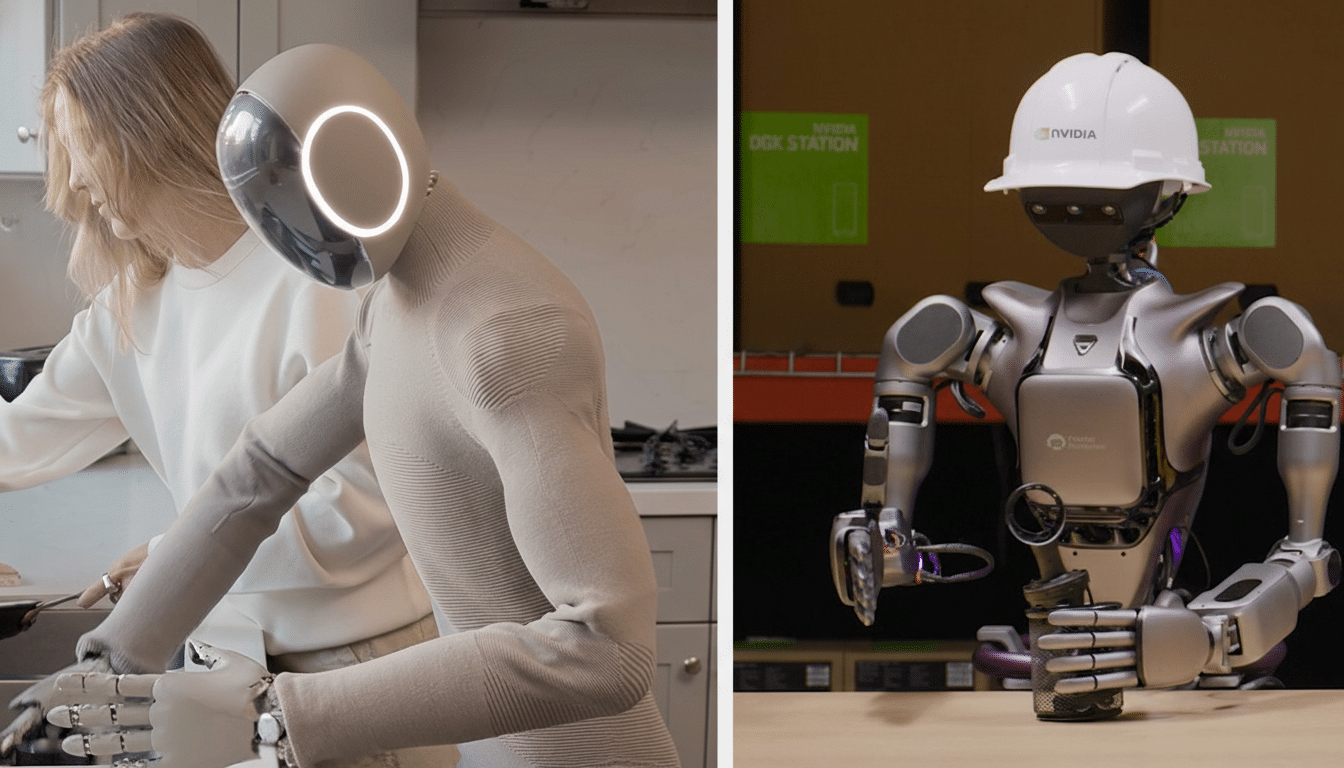
Backing the workflow is OSMO, an open-source command center that laces data generation, training, and deployment across desktop and cloud together. Think of it as the adhesive that allows a garage-scale robotics team to iterate like an experienced software shop: simulate, train, push to hardware, measure, repeat.
Developer Gravity and Early Traction for Nvidia Robotics
Nvidia is enhancing the integration with Hugging Face to expand the funnel for robot training. Isaac and GR00T now plug into the LeRobot framework to link Nvidia’s 2 million robotics developers with Hugging Face’s community of 13 million AI builders. The open-source Reachy 2 humanoid already sits right on Nvidia’s Jetson Thor chip, which means developers can choose to mix and match models rather than lock themselves in with the brain of one vendor.
Early signals are promising. Robotics is also the fastest-growing category on Hugging Face, where Nvidia’s models are now at the top of the lists for downloads. And a string of established players like Boston Dynamics, Caterpillar, Franka Robotics and NEURA Robotics are incorporating Nvidia stacks in production and R&D. For those looking to get started, compatibility with ROS 2 and widespread benchmarks can make the difference between nine months troubleshooting “hello world” and an opened purchase order — even better is if you’re heading off any of the common gotchas that seem so innocuous after six months in pilot purgatory.
The Risks and Rewards of Competition in Robotics
It’s not certain that it will become the “Android of robotics.” Powerful rivals — from Tesla’s Optimus efforts and custom silicon to Google’s RT-style robot learning and Alphabet’s Intrinsic — are jockeying for position at the software layer. At the fringe, Arm and Qualcomm are leading low-power compute, while open communities formed around ROS 2, MoveIt and PyTorch develop without a single gatekeeper.
There are also the market headwinds, from safety certification (per ISO 10218) and risk assessment (ISO/TS 15066) to fleet learning’s governance requirements and the costs of ruggedization and maintenance. Android’s journey involved fragmentation and control battles; robotics will bring higher stakes, where reliability and liability are based on downtime and safety of life, not app crashes.
Yet Nvidia’s gamble is well timed. As AI moves off screens and into the physical world, the company has begun packaging models, tools and silicon into a cohesive playbook developers can grab right now. If generalist robots do end up being the Next Big Platform, a turnkey stack could make Nvidia the natural pick — and that’s exactly the kind of leverage that Android provided in mobile.
