


A powerful geomagnetic storm is expected to push the aurora borealis deep into the continental United States tonight, creating a rare, coast-to-coast viewing opportunity. Forecasters at the National Oceanic and Atmospheric Administration’s Space Weather Prediction Center (SWPC) have issued a severe G4 alert, noting that an exceptional burst of solar activity is fueling the display.
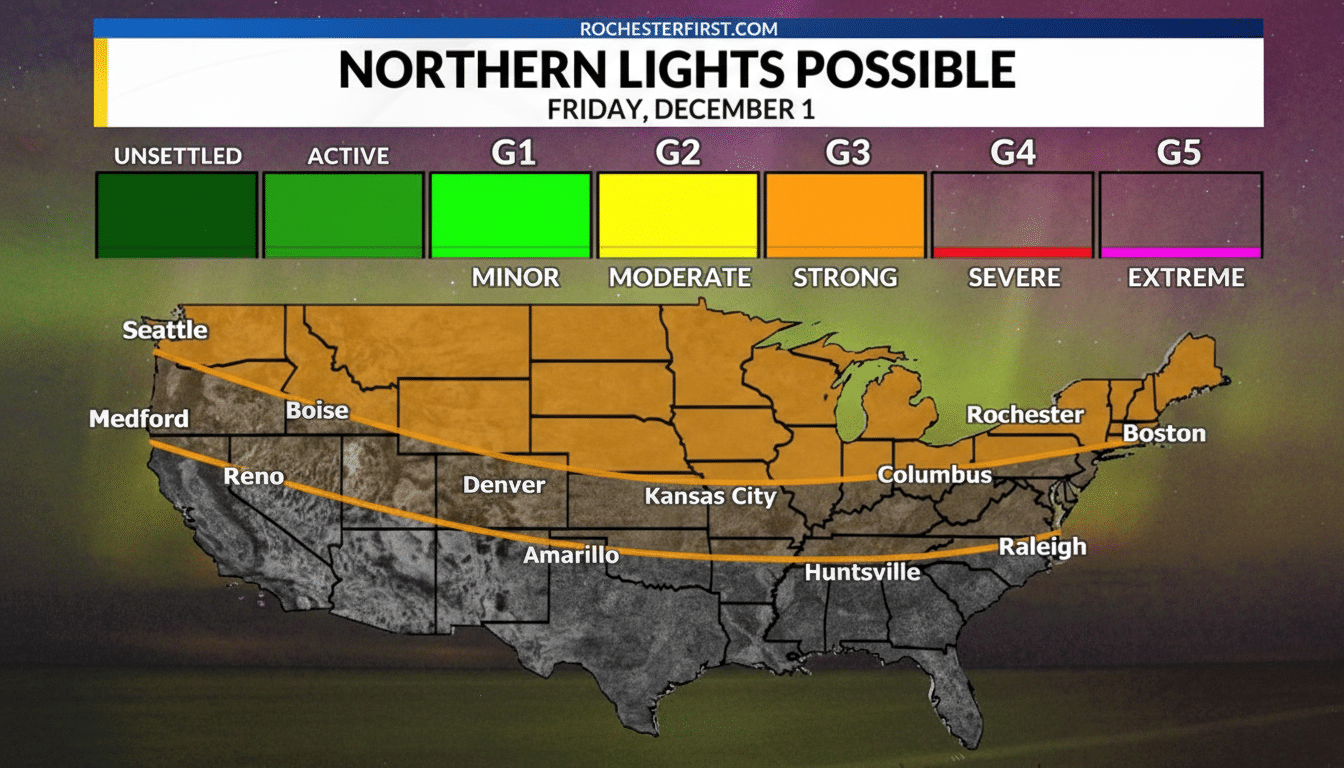
While auroras are most common near the Arctic, the strength of this event means the glow could dip far south of the Canadian border. SWPC guidance indicates visibility may reach as low as northern California and Alabama, with the best views for those under clear, dark skies.
- Where You Might See It Across the United States Tonight
- Best Time and Direction to Look for the Aurora Tonight
- How to Improve Your View and Maximize Aurora Visibility
- Photographing the Aurora with a Phone: Quick Tips
- Why the Aurora Is So Strong During This Geomagnetic Storm
- Possible Impacts and Safety Notes During a Severe G4 Storm
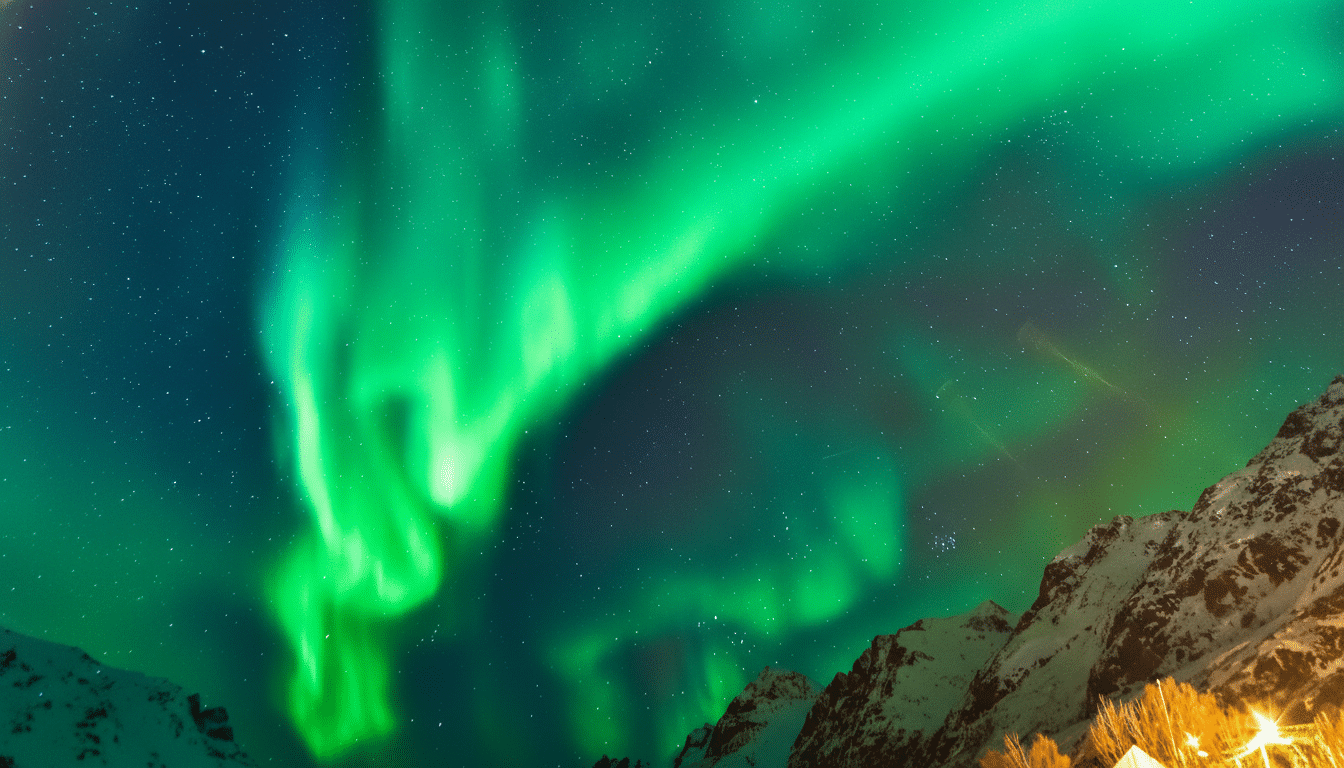
Officials emphasize there’s little the public must do beyond staying informed—unless you count stepping outside and looking up. Here’s how to maximize your chances.
Where You Might See It Across the United States Tonight
Confidence is highest for the northern tier: the Pacific Northwest, Northern Rockies, Upper Midwest, Great Lakes, and New England. Under strong storm levels, the auroral oval can expand dramatically; a Kp index of 7–8 typically brings visible auroras to roughly 40° latitude, which includes parts of Colorado, Kansas, Missouri, Kentucky, Virginia, and California’s northern interior.
Even if you’re south of the core forecast zone, it’s still worth a look. Under the right conditions, faint auroral arcs can be seen hundreds of miles away—SWPC notes visibility can extend up to roughly 600 miles from the active oval. Expect the display to sit low on the northern horizon the farther south you are.
Best Time and Direction to Look for the Aurora Tonight
The prime viewing window is generally late evening through the overnight, with activity often peaking between 10 p.m. and 2 a.m. local time as geomagnetic currents intensify. Face north and find an open view—lakeshores, ridge tops, and broad fields offer uncluttered horizons that make faint bands easier to spot.
Give your eyes 20–30 minutes to adapt to the dark, and avoid glancing at phone screens. For near-real-time conditions, many seasoned observers consult the SWPC auroral oval “nowcast” and short-term forecasts from the University of Alaska Fairbanks Geophysical Institute.
How to Improve Your View and Maximize Aurora Visibility
Light pollution is the aurora’s biggest enemy. If possible, head to a site recognized by DarkSky International or any rural location away from city glow. Kill nearby lights, park safely, and let the night get truly dark; even a dim porch lamp can wash out a weak arc.
Clouds are deal-breakers, so monitor local National Weather Service cloud forecasts and satellite loops. A bright Moon can mute color and contrast—if it’s high and luminous, prioritize the darkest hours and the longest, clearest view to the north.
Photographing the Aurora with a Phone: Quick Tips
Modern phones can capture surprisingly good aurora shots. Use Night mode, set a 3–10 second exposure, stabilize the phone on a tripod or car roof, and tap to focus at infinity. Start around ISO 800–1600; if the scene looks noisy, shorten exposure and lower ISO. If your camera app allows, shoot RAW and lock exposure to avoid flicker.
With interchangeable-lens cameras, a fast wide lens (f/1.4–f/2.8), 5–10 second exposures, ISO 1600–3200, manual focus at infinity, and a 3500–4000K white balance are reliable starting points. Shorter exposures help preserve structure in fast-moving curtains.
Why the Aurora Is So Strong During This Geomagnetic Storm
This display is tied to intense solar activity, including fast coronal mass ejections that hurled magnetized plasma toward Earth. When the solar magnetic field turns strongly southward upon arrival, it couples efficiently with Earth’s magnetosphere, pumping energy into the system and expanding the auroral oval.
We are in the peak phase of Solar Cycle 25, a period that naturally brings more frequent G3–G5 storms. Recently, strong events have driven auroras to unusually low latitudes across the Lower 48, a pattern consistent with an active Sun and favorable magnetic orientation.
Possible Impacts and Safety Notes During a Severe G4 Storm
SWPC’s G4 designation signals potential issues for power systems, long-haul HF radio, and precision GPS. Grid operators and satellite controllers receive dedicated alerts and take mitigation steps. For most people, impacts are limited to occasional navigation glitches or patchy radio communications.
Bottom line: check the northern sky repeatedly through the night, prioritize dark, clear locations, and stay flexible. Auroras can surge and fade in minutes—persistence is often rewarded with the kind of sight that keeps skywatchers up long after bedtime.
