


A popular micro-learning app is getting a massive markdown, positioning itself as a smart alternative to doomscrolling. Nibble Premium is available for $39.99 for three years—an 85% drop from its $269.97 list price—bringing the cost to roughly $1.11 per month. The offer targets anyone looking to convert idle screen time into focused, 10-minute learning sessions.
Inside the Microlearning Experience on Nibble
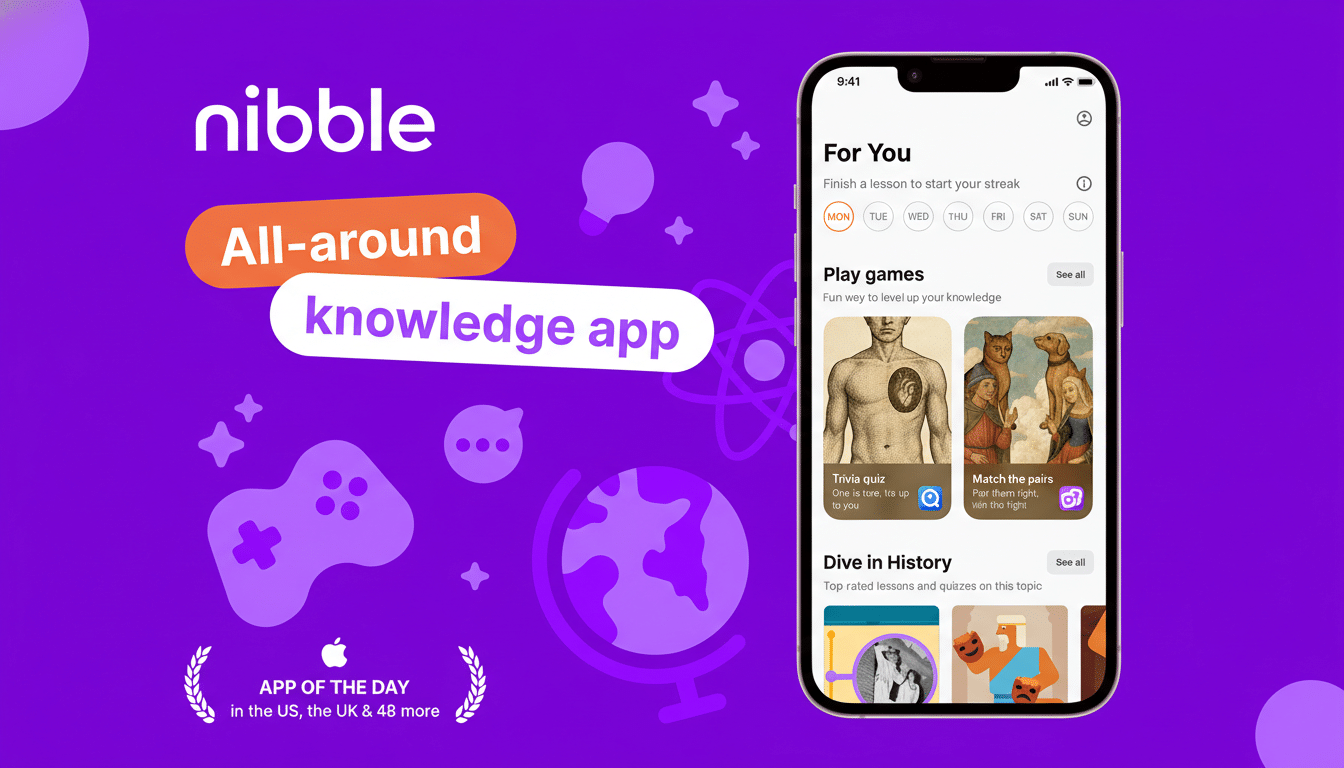
Nibble is built around bite-size, 10-minute lessons designed to fit the way people actually use their phones—between meetings, on commutes, or just before bed. The app spans 16 core topic areas, letting users sample broadly or drill deeper over time without the commitment of hour-long lectures.
Lessons are delivered through short reads, audio episodes, learning games, and interactive AI conversations. Visuals and animations break down complex concepts, while progress tracking provides a clear sense of momentum. There’s no rigid path: You can freely explore or follow recommendations based on your interests, and new lessons are added regularly to keep the catalog fresh.
Why Microlearning Beats Doomscrolling for Focus
Doomscrolling is efficient at burning time, not building knowledge. The American Psychological Association has flagged the behavior as a driver of anxiety and stress, while consumer research consistently shows people spend hours each day in feeds. Global trend trackers have reported that the typical internet user devotes more than two hours daily to social platforms—time that could support structured learning instead.
Micro-learning aligns with decades of learning science. Cognitive load theory suggests information is better absorbed in small, digestible chunks, and spacing concepts over time improves recall. The Ebbinghaus forgetting curve—often cited in education research—shows that brief, repeated exposure helps knowledge stick. In corporate learning, organizations like the Association for Talent Development have documented higher engagement and completion rates when lessons are short and on-demand.
The Deal and the Value Math Behind Nibble Premium
At $39.99 for three years, the effective monthly price undercuts many education apps. Annualized, the list price works out to $89.99 per year, but the current promo spreads the cost across 36 months for a fraction of typical subscriptions. For context, consumer edtech services commonly range from $10 to $30 per month, depending on catalog size and certification options. Nibble is positioned for habit-building rather than formal accreditation, which helps keep the cost low.
Equally important is opportunity cost. If you reclaim just 10 minutes a day for structured learning, that’s more than 60 hours a year—enough to cover multiple topic tracks. The app’s variety makes those minutes easier to sustain, which is where many long-form courses lose people.
Who Will Benefit Most From Nibble Microlearning
Nibble is best for curious generalists, busy professionals who want a steady drip of new ideas, and students looking to reinforce concepts without marathon sessions. It’s also a practical tool for parents or commuters who prefer audio-first learning. The game-like elements and AI chats add a dose of interactivity that’s helpful for maintaining attention when energy is low.
Limitations and Practical Notes for New Users
Micro-learning is not a substitute for deep, project-based mastery. If you need graded assignments, peer review, or industry certificates, traditional courses and university-backed programs remain the better fit. Think of Nibble as a habit engine: great for building breadth, refreshing skills, and discovering new interests without the friction of long sessions.
As with any app that includes AI-driven interactions, it’s wise to review privacy settings and content controls. Also check the renewal terms and regional availability before purchasing, as policies can change and promotions may vary.
Bottom Line: A Low-Risk Shift to Intentional Learning
If your thumb keeps drifting toward yet another feed, this is a timely nudge to redirect that energy. Nibble’s 10-minute lessons, broad topic coverage, and mix of formats make it an easy on-ramp to healthier screen time—especially at 85% off. For about a dollar a month, it’s a low-risk way to swap doomscrolling for deliberate learning and turn spare minutes into momentum.
