


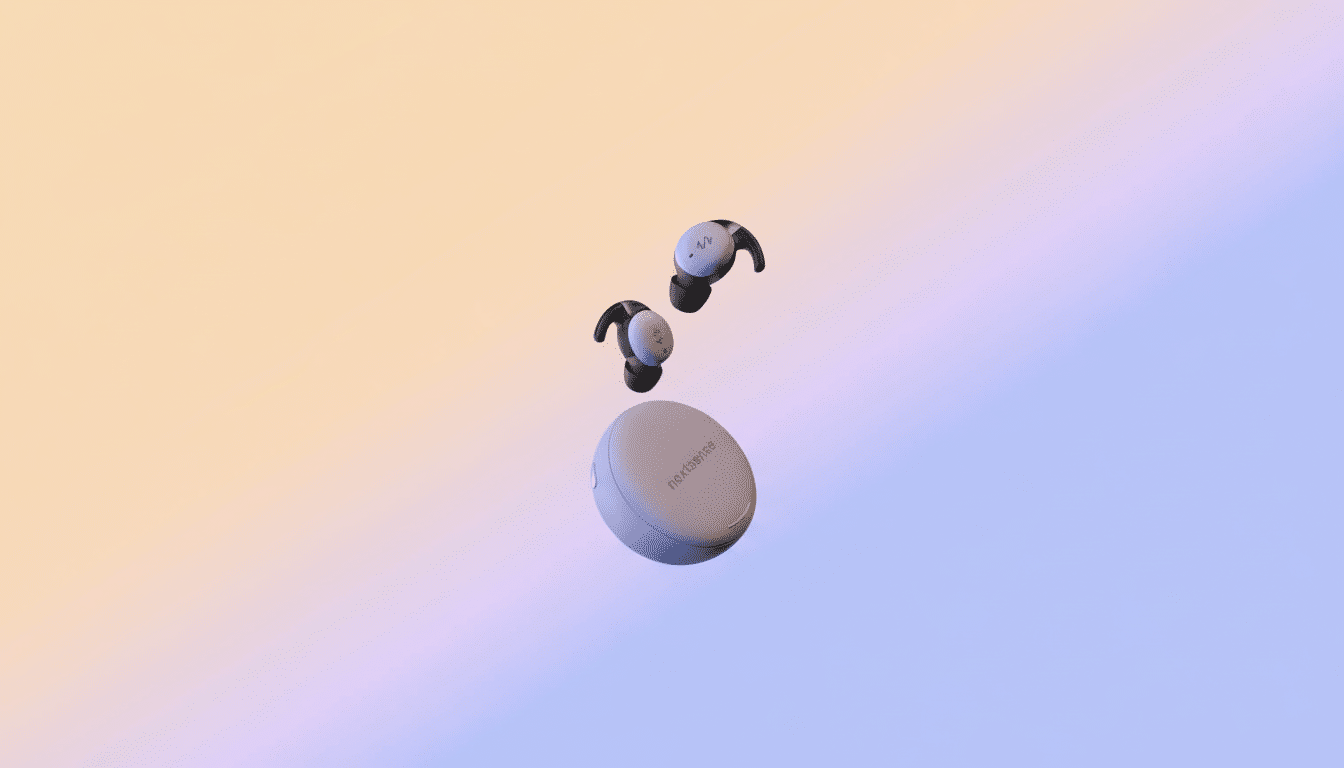
A single pair of earbuds on the CES show floor had a dedicated mob for just one reason: they wanted to measure your brain while you sleep. NextSense Smartbuds, a consumer earbud system that puts EEG sensors into your ears, is now available for preorder (as first spotted by Wilson) starting from $399, with shipping commencing in February.
NextSense says that its earbuds can convert your brain’s real-time activity into smarter sleep support—pairing soundscapes with insights intended to help guide you toward more restorative rest. It’s a bold pitch and an escalation in meaning from the motion and heart-rate proxies most sleep trackers are serving up today.
- Why EEG in Earbuds Is So Important for Sleep Tracking
- How NextSense Smartbuds Work for Smarter Sleep Support
- Hands-On at CES: Early Impressions of EEG Sleep Earbuds
- Daytime Focus and Training Features Teased by NextSense
- Price, Availability, and Competitors for EEG Sleep Earbuds
- Caveats, Privacy Considerations, and What to Watch Next
Why EEG in Earbuds Is So Important for Sleep Tracking
Now, creators and consumers of brain–machine interfaces treat electroencephalography, or EEG—which measures brainwaves directly—as the clinical gold standard for observing sleep stages. In the lab, that can include a cap or 20-plus electrodes and conductive gel. The principle of ear-EEG is to record the same signals in the concha and ear canal using dry electrodes, a reason supported by peer-reviewed studies which found that there was approximately 80–90% classification agreement with polysomnography for uni/supra-stages.
The potential payoff is timely. About 35 percent of American adults do not get the recommended seven hours of sleep a night, according to the Centers for Disease Control and Prevention; an estimated 10 percent have insomnia. The idea is that if earbuds can better detect when you get into slow-wave sleep and customize the audio or coaching around that moment, maybe it’ll let you have more efficient rest, rather than just prettier charts.
How NextSense Smartbuds Work for Smarter Sleep Support
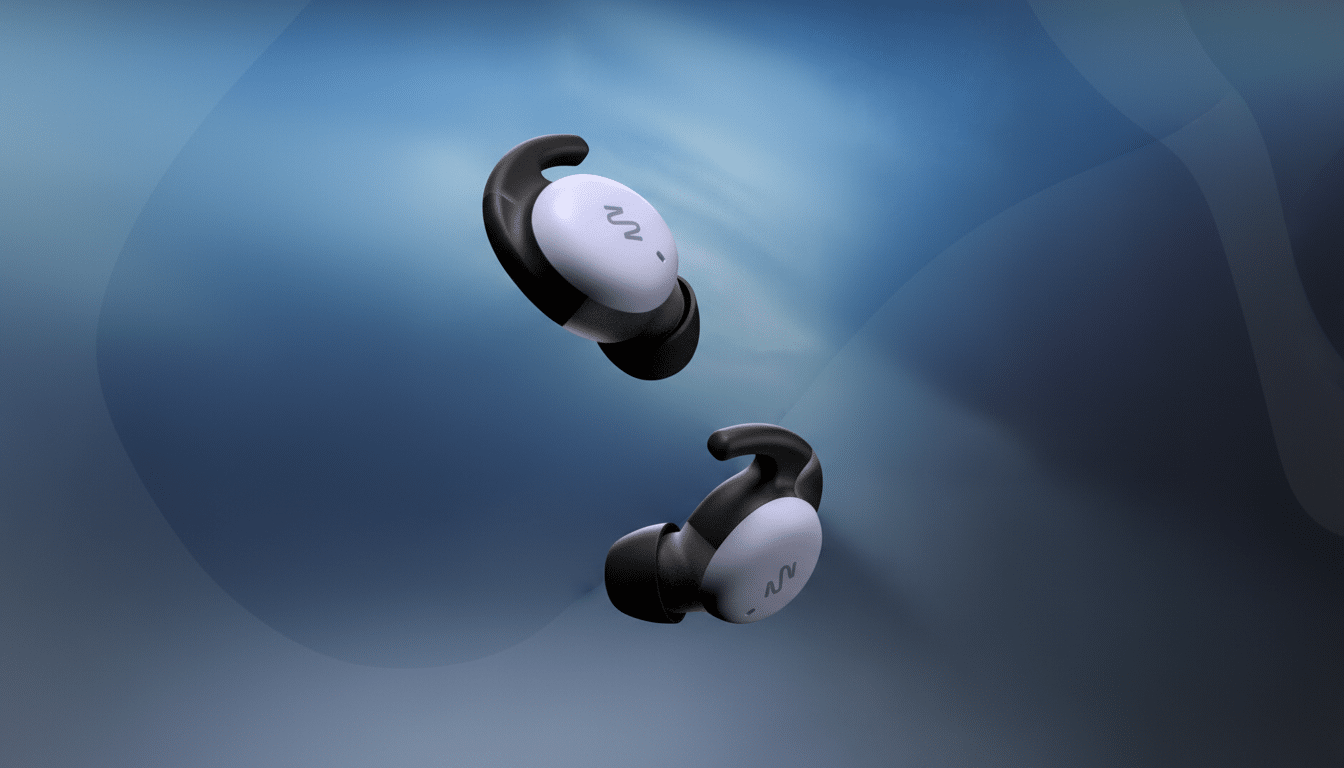
Each earbud has three electrodes constructed of a soft conductive polymer that takes dry recordings without the mess of ugly gels. The accompanying app provides sleep soundscapes, and can also play your regular music, white noise, or audiobooks. The company says the device will interpret brain rhythms on the fly and then coach user behavior with feedback intended to promote deeper, more restorative phases of sleep.
Importantly, these are consumer earbuds (not medical devices). They are not an alternative to clinical EEG, diagnosis, or treatment. NextSense markets the product for wellness insights and sleep, which is the same way most wearable makers straddle between coaching and clinical care.
On a full charge, the battery life is 7–10 hours based on usage patterns. That might cover your average night, but longer sleepers and those who prefer to lie on their side will need real-world data for endurance and comfort. In demos, the flexible build and small contact points felt light, but overnight fit and hygiene count.
Hands-On at CES: Early Impressions of EEG Sleep Earbuds
In demos, the app showed live brainwave traces that immediately responded to blinks and jaw clenching, a nice sanity check for signal pickup. The earbuds provided typical “earbud quality” audio through passive isolation, and the electrodes made gentle contact against the inner ear without hotspots.
The more interesting aspect was adaptive timing. Instead of simply blasting nothing but pink noise all night long, the system tries to favor playback at times when your brain is most receptive to winding down, and then tapers off once you’ve stabilized. That jibes with results from sleep labs, where carefully placed acoustic stimulation timed to coincide with slow-wave activity has modestly increased the amplitude and memory consolidation of the waves.
Daytime Focus and Training Features Teased by NextSense
NextSense also teased daytime features. With ear-EEG, the earbuds might be able to pick up attention patterns and mental fatigue, and provide a nudge to take a break or sneak in a little more focus. It is a natural extension of what meditation headbands, like Muse, have dabbled in, but as something you already wear for calls and commutes.
If done well, that sleep coach—twice-dipped as nighttime opener and focus friend by day—might make the earbuds useful beyond the bedroom. The age-old difficulty, of course, will be converting raw signals into coaching that feels actionable rather than simply noisy.
Price, Availability, and Competitors for EEG Sleep Earbuds
At $399, Smartbuds compete in the high-end segment of luxury wearables such as premium smartwatches and sleep rings. They also enter into a field where competitors before them have encountered difficulty. Bose discontinued its Sleepbuds line despite strong fan enthusiasm, and several startups that were specializing in sleep earbuds have pivoted or folded, as comfort and reliability prove challenging at scale.
What makes NextSense different is the EEG layer. Most trackers use motion and heart rate to infer sleep. Few try direct sensing of the brain itself in a mass-market form factor. If the company can prove accuracy in independent studies and continue to ensure comfort in a variety of ear shapes, it could be creating an entirely new category rather than just another soothing playlist to compete with.
Caveats, Privacy Considerations, and What to Watch Next
Buyers should look for three kinds of work. First, validation: we need to see publication-quality data comparing the Smartbuds to polysomnography for sleep stages and response to audio. Second, data governance: EEG is intensely personal. Transparent policies on encryption, retention, and data sharing will matter, and consumer wellness products are not necessarily covered by medical privacy rules.
Third, comfort and endurance: sporadic demonstrations can’t unmask problems that long-term nightly use does: skin irritation, ear fatigue, and battery degradation. Over several weeks of independent reviews, we’ll find out if these hold up for side sleepers and restless tossers, not just ideal-fit testers.
Bottom line: Smartbuds bring legit science to an everyday form factor. If NextSense can live up to its accuracy and coaching aspirations, EEG-enabled earbuds will set a new standard for smart sleep wearables, and you can even preorder them now.
