


Fresh marketing images have emerged for two of Motorola’s upcoming mainstream devices, offering a clearer picture of what the company has in store for its 2026 lineup. The Moto G Stylus 2026 seems to build on a winning formula of tactile materials and subtle design tweaks, while a second-gen Moto Tag redesigns its body and teases more polished-looking tracking features. The pics, posted by Android Headlines, suggest that it’s evolution rather than revolution.
A Design That Brings Warmth to Moto G Stylus 2026
At first glance, the all-new Moto G Stylus is comfortingly familiar. Motorola appears to be embracing the textured eco-leather finish it’s recently brought to models like this, and letting the stuff flow smoothly into the lens bubble instead of color-blocking off lenses on a glossy island. That continuity tends to enhance grip and minimize fingerprint smudging, small things that matter on a phone designed for heavy daily note-taking and sketching.
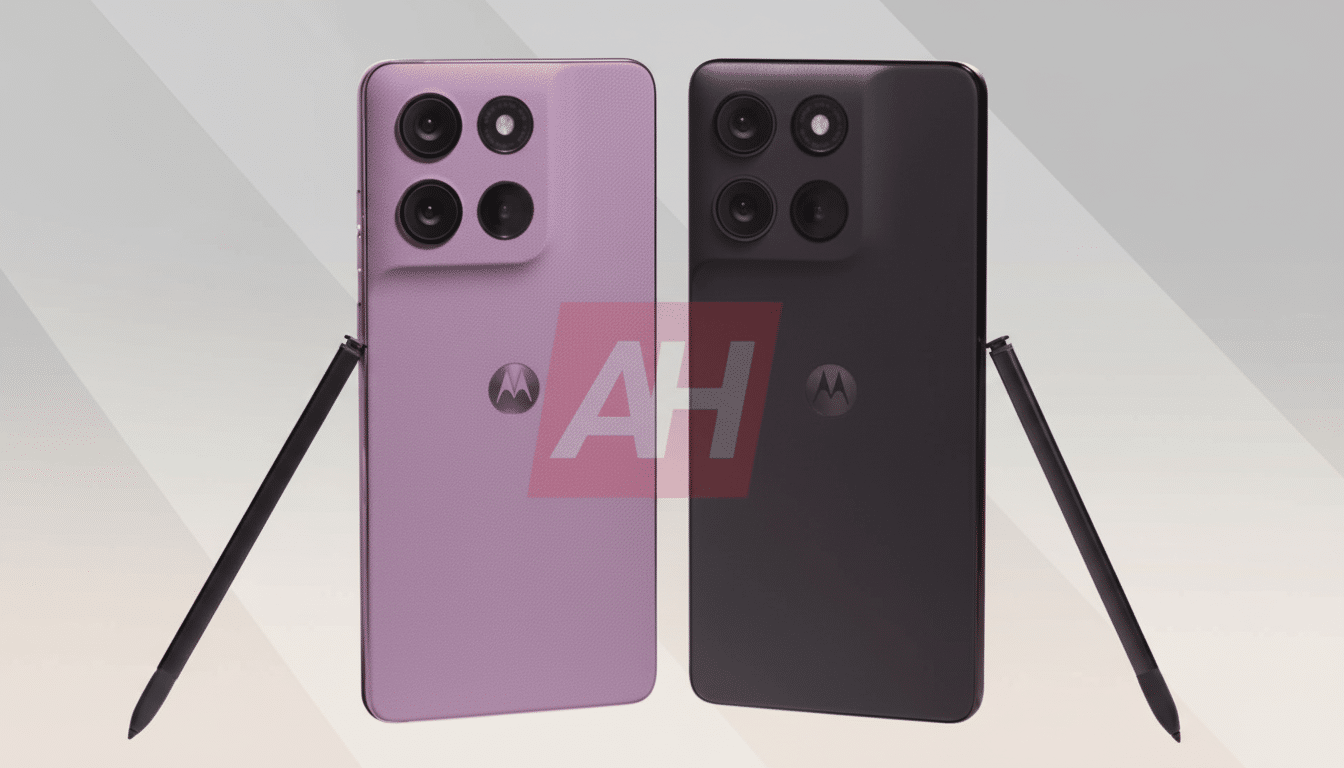
The renders depict dark gray and lavender colorways with matching frames. That uniform hardware palette is rare in the sub-$400 tier, where off-the-shelf silver frames still dominate. The move indicates Motorola is looking to go a bit more upscale in look and feel, but not increase the price point that has resonated with its G Stylus line among students, service workers, and small-business owners who need pen input.
What isn’t clear is what’s under the hood in the chip department. The 2024 version was powered by Qualcomm’s Snapdragon 6 Gen 3, a fine midtier chipset that gave us good performance and battery life. If Motorola hews closely to that playbook, perhaps with some performance tweaks or a minor camera pipeline upgrade, then it would fit the render-first narrative we see here: spit and polish versus reinvention.
Stylus Strategy Could Propagate To Flagship Realm
Other leaks suggest the Edge 70 Ultra might embrace stylus support, pushing Motorola’s pen strategy into full-on flagship contender territory. It’s not certain whether the stylus goes inside the phone or if it’s housed in a case, but even an optional pen on a flagship would help Motorola against Samsung’s S Pen ecosystem and Huawei M-Pencil phones in limited regions.
That is important because people who buy styli tend to become brand-loyal. Industry studies consistently demonstrate that devices receive higher user satisfaction when a pen is embraced for note-taking, markup and navigation—workloads responsible for both daily engagement, usage drive, and app stickiness. By offering a two-pronged package — G Stylus at value pricing, and Edge 70 Ultra for the higher end — Motorola could give itself a more cohesive message to sell in retail channels.
Moto Tag 2 Receives a New Cutout and Anticipated UWB Benefits
The renders also show the Moto Tag 2 serialized receiver clips in beige and orange featuring a new top cutout. The change in design is not accidental either, as there’s an apparent hole for a lanyard, key ring or accessory clip — but we can’t say for certain exactly what the intended purpose is. Yes, the first-generation Moto Tag shipped with decent hardware on board, but it wasn’t until a couple of months later that a software update allowed them to show their true ultra wideband (UWB) precision-finding capabilities.
Providing that Motorola includes the UWB and Google’s Find My Device network experience fully enabled out of the box, then the second-gen tracker could feel like it comes ready to use straight from day one. It would then have a stronger competitive footing against Apple’s AirTag, which is built around precise UWB guidance, while giving Android users a first-party tracker that they could trust instead of having to contend with the setup restrictions that marred fairly early tracker launches.
Google has claimed its crowdsourced Find My Device network reaches more than a billion Android devices around the world. The hardware makers that plug into that mesh infrastructure with strong Bluetooth range and effective UWB models tend to get better recovery rates when their technology is used in real-world cases of being left behind (think lost luggage at the airport or your keys left on a cafe table). If the leak pans out, the button feel, battery life and alert reliability will still make or break trust among users, but it’s all coming together in a broad sense.
Why Incremental Improvements Still Matter for These Devices
On paper, the changes are modest. In reality, they hit the right points of friction. It feels less like a budget stylus phone with a grippier finish and cleaner frame coloring. A tracker releasing with accurate finding and no-friction support from your network will skip the awkward “wait for updates” phase that makes early adopters into skeptics.
There are of course unknowns—processor, camera tuning and whether that is an in-device pen silo built into the Edge 70 Ultra, among others—but these renders suggest a brand sticking to what it knows.
If the price ends up in line with previous generations, and if Motorola nails the out-of-box experience on Moto Tag 2, then these could be quiet but important wins in markets where reliability and touch-and-feel have as much impact as raw specs do.
For shoppers, the takeaway is pretty straightforward: you can expect to see familiar hardware with crisper execution, a stylus tale that could finally make its way upmarket and a tracker that appears ready to compete without any kind of an asterisk attached. That’s not exactly flashy — but for many buyers, that’s precisely what matters.
