


Android looks different on almost every phone, and those custom layers matter. We evaluated the biggest Android skins across design coherence, polish, meaningful features, bloatware and ads, and — crucially — software support promises. The result is a fresh worst-to-best ranking that reflects how these interfaces actually feel to live with on modern hardware.
This rundown prioritizes daily usability and long-term value. Update policies were verified against manufacturer announcements and recent device launches, while observations draw on real-world testing, analyst briefings, and community feedback. Here’s where each skin stands right now — and why.
How We Ranked Android Skins: Criteria and Priorities
Our criteria weigh core UX elements (consistency, responsiveness, and accessibility), the depth and quality of features, preloads and ad practices, and official update commitments. We also considered foldable readiness, privacy tools, and smart extras like AI-assisted productivity. With that, let’s go from worst to best.
Worst to Best Ranking of Major Android Phone Skins
- Tecno HiOS: An uneven experience marked by derivative visuals, a split notification and quick settings shade, and aggressive bloat. Some users are pushed to install apps on first boot, and a past flagship shipped with a forum app that surfaced NSFW content. Update policy tops out around two OS upgrades and three years of patches.
- Asus Zen UI: Cleaner and closer to stock than in years past, with a few clever touches and new AI tricks like recorder and call summaries. But two OS upgrades on premium hardware is a letdown, and recent platform updates arrived thin on marquee features compared to rivals.
- Xiaomi HyperOS: Feature-dense and often delightful — per-app volume, powerful gallery tools, and PIN-to-power-off are standouts. The issues linger around ads, recommendations, and a busy aesthetic that borrows heavily from iOS, including a split shade. Flagships generally see four OS upgrades and six years of patches.
- Honor MagicOS: Capable but visually indistinct, with a grab-bag of good ideas (Magic Portal, robust eye comfort, text extraction) alongside gimmicks. The big news is support: new flagships move to seven years of updates, matching the leaders. Execution still feels scattershot.
- Vivo OriginOS: A dramatic pivot from the old Funtouch approach to a bright, widget-forward, iOS-inspired design. The feature set is richer now and foldable support is improving, though preloads persist in places. Recent flagships deliver five OS upgrades and seven years of security patches.
- Motorola Hello UI: Near-stock speed and simplicity with beloved gestures (the flashlight “chop” endures), Ready For desktop mode, and thoughtful Material You touches. The trouble is inconsistency: updates vary widely by model, and budget devices still surface ads and pushy “recommendations.” Premium lines have improved their pledges.
- Sony Xperia UI: Lightweight, fast, and laser-focused on creators. You get advanced camera controls, PlayStation Remote Play, and strong media tools without heavy overlays. Historically weak update support is finally improving, with newer models offering up to four OS upgrades and six years of patches.
- Nothing OS: A rare identity in Android land, built on monochrome styling, dot-matrix flourishes, and polished widgets. It ships lighter on bloat than most, though a misstep with lock screen ads and preinstalled Meta apps drew backlash before being reversed. Features are growing fast, and updates now stretch up to five OS upgrades on some models with extended security.
- ColorOS and Its Cousins (OxygenOS and Realme UI): The most complete Chinese skin suite, with deep customization (tile shapes, icon text size, animation pace), privacy helpers, and useful AI add-ons like webpage summaries and smart erasing. Bloat and “recommendations” still pop up in some markets, and foldable polish trails Samsung, but top-tier phones now commit to five OS upgrades and six years of security.
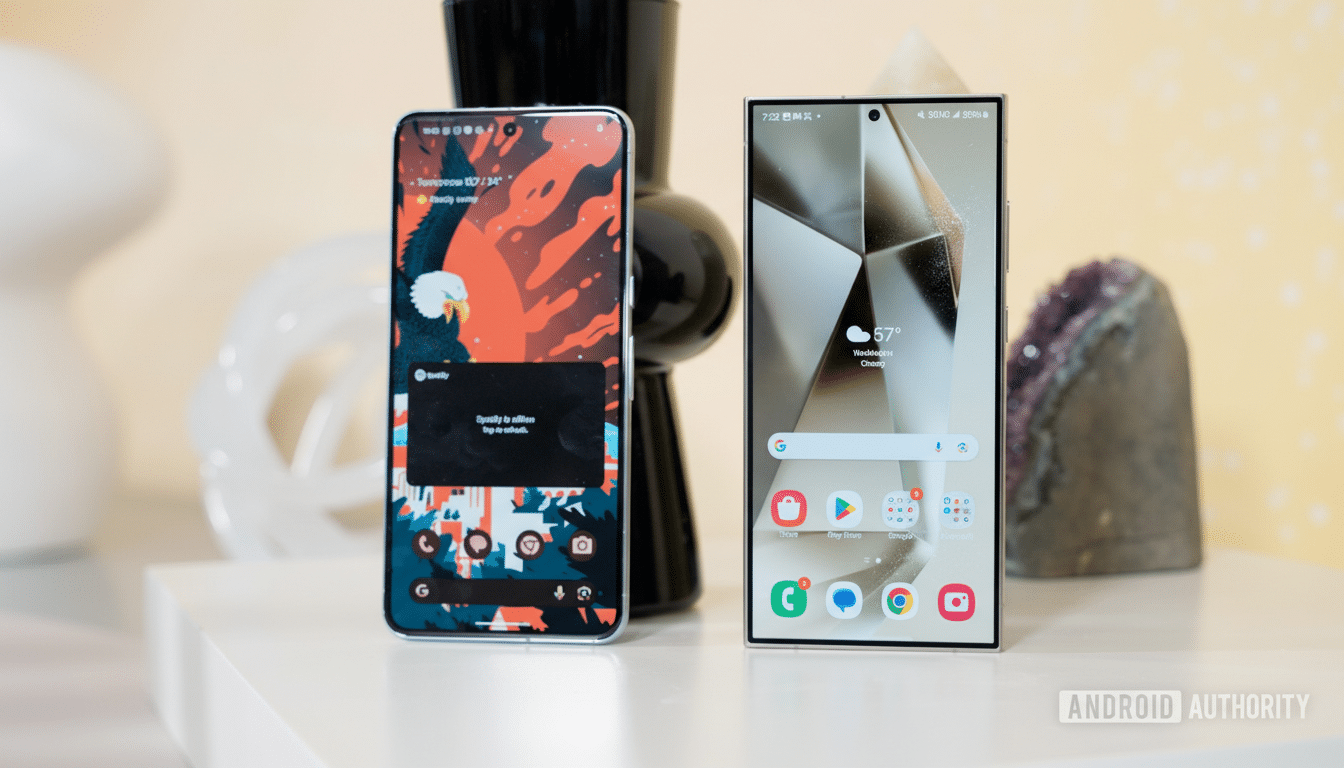
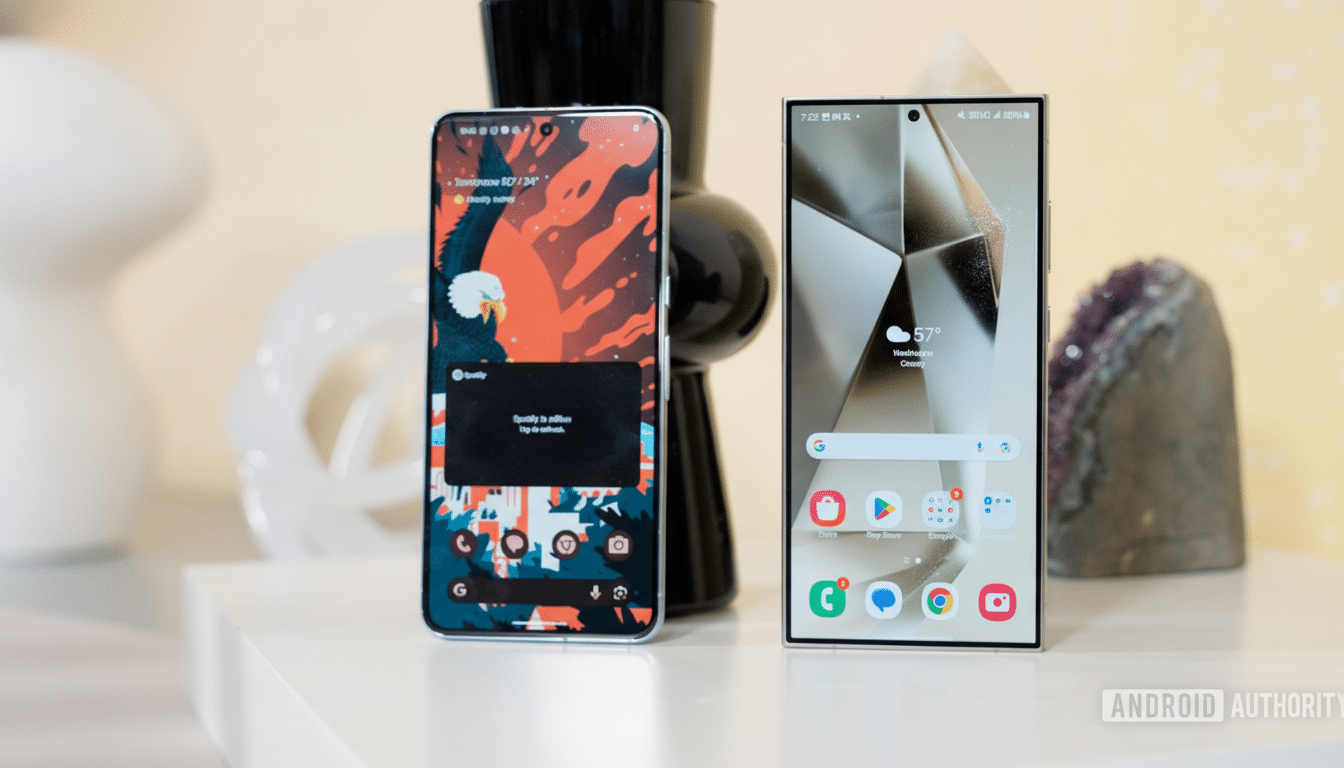
- Samsung One UI: Feature king, full stop. DeX, Expert RAW, Good Lock modules for granular customization, and a sweeping set of Galaxy AI tools for translation, summaries, and image editing. Seven years of updates on recent flagships is industry-leading. The tax is bloat — lots of it — across Samsung, Microsoft, and third-party apps.
- Google Pixel UI: Clean, coherent, and inventive. Signature capabilities like Call Screen, Now Playing, Google Recorder, Best Take, Add Me, and phone-as-webcam show how software can simplify life without drowning you in toggles. Bloat is minimal, and seven years of OS and security updates cement longevity. It trails One UI on some foldable-specific tricks, but overall usability and restraint put it on top.
Key Takeaways on Android Skins, Features, and Updates
The best Android skins add value without noise, and they back it up with long-term support. Right now, Pixel UI leads on balance and longevity, while One UI remains unmatched for sheer capability. If you want customization breadth, ColorOS and its siblings are close behind — and if you prefer minimalist speed, Motorola and Sony still deliver, provided you pick the right model.
