


Silicon Valley’s most turbulent split is officially a courtroom matter. A federal judge in Oakland rejected attempts by OpenAI and Microsoft to end Elon Musk’s lawsuit before trial, clearing the way for a jury to decide whether the AI lab strayed from its nonprofit commitments and whether Microsoft knowingly benefited from that shift, according to reporting first flagged by Bloomberg.
The stakes extend far beyond personality clashes. The case will test how legally durable “public-benefit” promises are when a research nonprofit restructures into a hybrid, capped-profit model backed by a deep-pocketed platform partner. It also puts the economics of the OpenAI–Microsoft alliance under a spotlight at a moment when generative AI is reshaping cloud demand and developer ecosystems.
How the OpenAI–Microsoft dispute reached a jury trial
OpenAI launched in 2015 as a nonprofit with a charter to develop safe artificial general intelligence for the benefit of humanity. Musk, Sam Altman, and others seeded the effort. Several years later, OpenAI created OpenAI LP, a for-profit entity capped on investor returns but overseen by the nonprofit board. Microsoft struck a multiyear partnership, committing computing resources and capital often reported at roughly $13B, tying OpenAI’s models tightly to Azure.
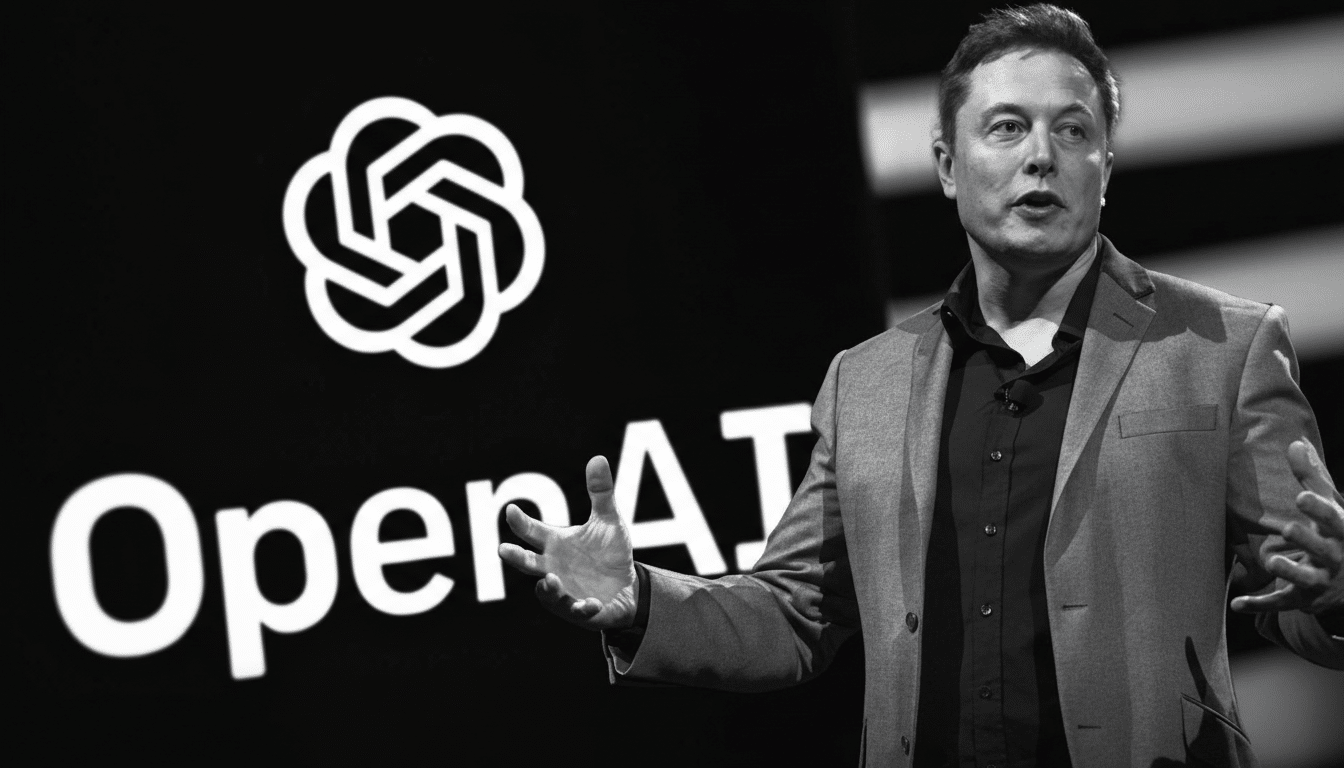
Musk left OpenAI’s board and later founded xAI, positioning it as a safety-focused AI challenger. His complaint alleges OpenAI abandoned its nonprofit mission by prioritizing commercial deals and productization, while OpenAI has labeled the suit baseless and an attempt to slow a rival. The judge’s ruling means a jury, not a motion to dismiss, will sort through those competing narratives.
What the judge allowed to proceed toward a jury trial
The court found enough in the pleadings to let jurors weigh whether OpenAI’s leadership breached commitments tied to its nonprofit mission. That puts founding documents, public statements, the charter, and board governance under evidentiary scrutiny. It is unusual for a jury to parse nonprofit promises typically policed by attorneys general and the IRS, but the case hinges on alleged representations and reliance, not only regulatory oversight.
Microsoft remains a defendant on claims it knowingly helped or encouraged the alleged shift away from public-benefit commitments. However, the judge trimmed the case by dismissing an unjust-enrichment theory tied to Musk personally, limiting the most expansive restitution arguments while leaving core claims intact.
Why Microsoft is entangled in the OpenAI mission dispute
Microsoft’s exposure stems from its strategic alignment with OpenAI: exclusive or priority access to foundational models, Azure as the preferred compute backbone, and deep integration across products such as Copilot. The partnership has been a growth engine for Microsoft’s cloud, with executives repeatedly crediting AI workloads for accelerating Azure adoption.
The aiding-and-abetting theory turns on what Microsoft knew about OpenAI’s obligations and whether it materially participated in any breach. Microsoft has consistently maintained that the alliance respects OpenAI’s governance, which formally places the nonprofit in control of key decisions. The trial will test how that control worked in practice when commercial imperatives collided with the lab’s chartered mission.
Implications for AI governance and hybrid lab models
The outcome could ripple across AI labs experimenting with hybrid structures. OpenAI’s capped-profit model was designed to attract capital without sacrificing public-interest objectives, a balance that has inspired and divided governance experts. Rival Anthropic has pursued a different approach with a Long-Term Benefit Trust to hold governance power while raising billions from industry partners, reflecting how unsettled the governance playbook remains.
A plaintiff win on mission-related claims would embolden challenges against “mission drift” in other tech-adjacent nonprofits and benefit corporations. Even without a sweeping precedent, discovery alone may reset expectations for transparency around board processes, safety research priorities, and how revenue-sharing agreements are structured when public-benefit language is central to a brand.
What to watch next as the Musk–OpenAI case advances
Expect a bruising discovery phase. Depositions of Musk, Altman, and Microsoft executives could surface board deliberations, internal safety assessments, and deal mechanics. Jurors will likely see founding pledges juxtaposed with commercialization milestones like ChatGPT’s rapid consumer adoption and enterprise licensing through Azure.
Settlement is always possible, but the court’s refusal to short-circuit the case signals an appetite to let a jury speak. For founders, investors, and policymakers, the verdict will be read as a referendum on whether Silicon Valley’s most ambitious AI ventures can promise public benefit while tapping corporate scale—and what happens when partners disagree on which priority comes first.
