


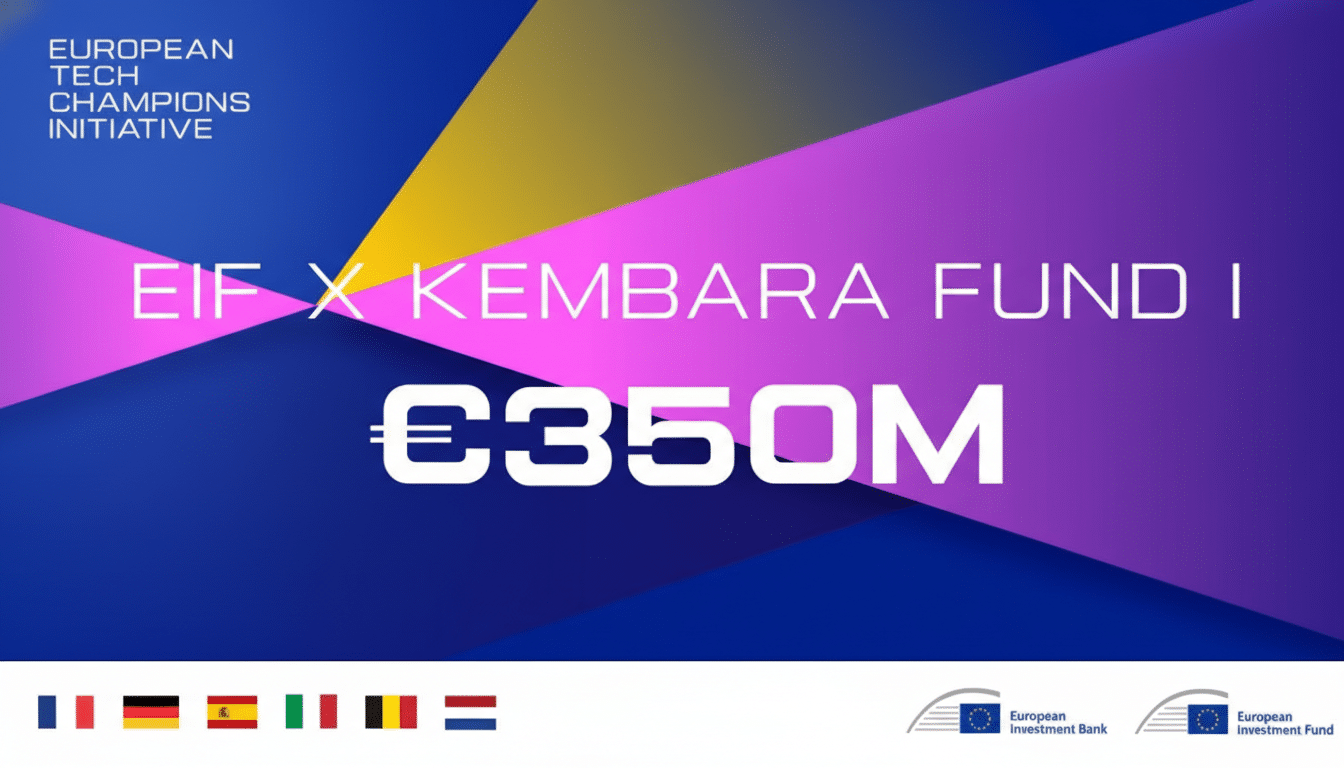
Mundi Ventures has secured a €750 million first close for Kembara Fund I, a new vehicle targeting Europe’s deep tech and climate scale-ups at the capital-intensive Series B and C stages. It is the firm’s largest fund to date and a direct response to Europe’s chronic growth-capital gap, with cornerstone backing that includes a €350 million commitment from the European Investment Fund under the European Tech Champions Initiative.
Aimed Squarely at Europe’s Scale-Up Bottleneck
Europe produces cutting-edge research and promising startups, yet too few graduate into global category leaders. Multiple reports from Dealroom and Atomico have highlighted a persistent shortage of late-stage financing in the region, with a materially lower share of $100 million-plus rounds than the U.S. That weakness has been especially acute for climate and deep tech, where manufacturing, certification, and supply chain buildouts require far more capital than software alone.
Kembara’s strategy targets that conversion gap. The fund plans to lead or co-lead B and C rounds with initial checks of €15 million to €40 million across roughly 20 companies, reserving substantial follow-on capital that could take total exposure up to €100 million per company. In practice, that gives founders a financing partner capable of supporting the costly leap from prototype to factory floor and from domestic pilots to global scale.
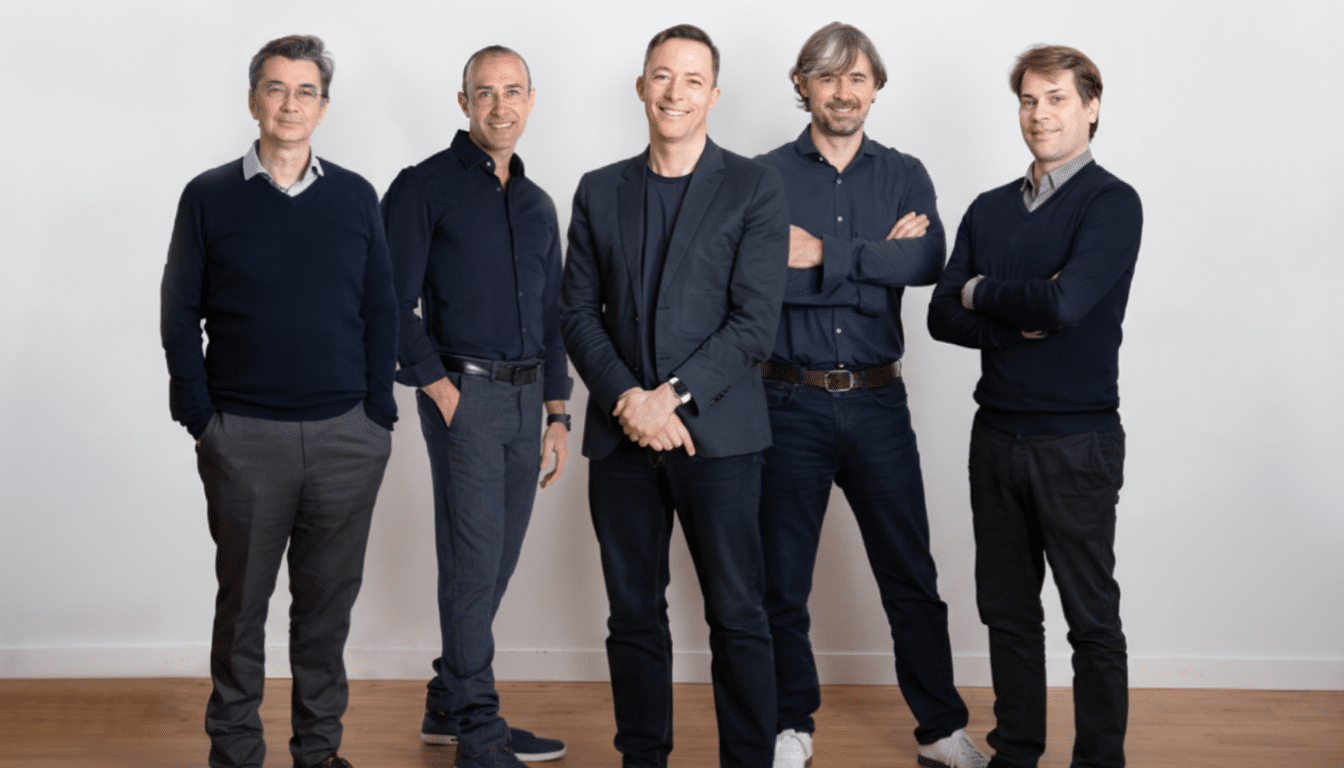
Built as a specialist team within Mundi Ventures, Kembara operates out of Madrid, London, Barcelona, and Paris. The general partners include co-founders Yann de Vries and Javier Santiso, joined by veteran climate and deep tech investors Robert Trezona and Pierre Festal, with former Atomico partner Siraj Khaliq as senior strategic advisor. Their combined track records in hardware-heavy businesses and industrial partnerships are designed to de-risk the classic European “stall at Series B” problem.
Financing Built for the Realities of Hard Tech
A distinctive feature of Kembara is its plan to “productize” non-dilutive capital alongside equity. The fund aims to blend instruments such as venture debt and asset-backed facilities to reduce dilution for founders and extend runway to critical milestones like certification and first-of-a-kind manufacturing. This reflects a broader lesson from European hardware: relying solely on equity in capital-intensive sectors can be prohibitively expensive and strategically risky.
Real-world examples underscore the point. Battery manufacturers and industrial climate players in Europe have increasingly paired equity with export credit, project finance, and venture debt to build giga-scale capacity. The approach is also aligned with the European Investment Bank’s long-standing role in venture debt and quasi-equity for innovation-led companies. Kembara’s LP base is expected to co-invest in breakout winners, creating a deeper capital stack for scaling plants, supply chains, and global go-to-market.
Deep Tech, Climate, and Strategic Sovereignty
Kembara’s mandate spans climate tech and core deep tech areas such as quantum, semiconductors, spacetech, and advanced computing. The fund is also open to dual-use technologies that reinforce European sovereignty. That stance reflects a wider policy push to retain strategic IP and manufacturing capacity on the continent—particularly as governments scrutinize dependencies in critical technologies and supply chains.
The team’s perspective is shaped by real outcomes: Europe has a history of selling breakthrough assets early or watching them migrate abroad for growth capital. DeepMind’s early exit has become a touchstone for the opportunity cost of limited late-stage funding, while high-profile electric aviation and new space ventures have struggled to secure the blended capital required for industrial scale. Kembara’s objective is to finance European champions that remain European in roots while expanding globally.
There is also a global access dimension. With “Kembara” meaning “to wander” in Malaysian, the fund’s brand nods to international reach. Mundi’s founder Javier Santiso previously led European operations at Malaysia’s sovereign wealth fund Khazanah, and the Kembara team expects to bring additional international investors in subsequent closes to open markets and fortify supply chains outside Europe.
Competitive Set and What to Watch in European Deep Tech
Kembara enters a market where later-stage pools are forming but remain scarce relative to need. Initiatives like Lazard Elaia Capital and operator-led vehicles such as Plural signal a shift toward larger European checks in the €20 million to €60 million range and beyond. For Kembara, a regulatory filing in Spain indicates capacity for a final close up to €1.25 billion, which would materially increase the firepower available for follow-ons and new bets.
Key indicators to track will include:
- The number of €100 million-plus rounds Kembara helps catalyze
- The pace of industrial deployments (factories built, megawatts installed, satellites launched)
- The durability of financing stacks combining equity with non-dilutive instruments
Expect the portfolio to tilt toward companies with strong university or national lab roots, credible industrial partners, and clear pathways to global scale.
If Kembara delivers on its thesis, it could help shift Europe’s deep tech arc from promising prototypes to enduring industrial leaders—turning the region’s research strength into market power, and giving founders the scale-up capital they have long been promised but too rarely received.
