


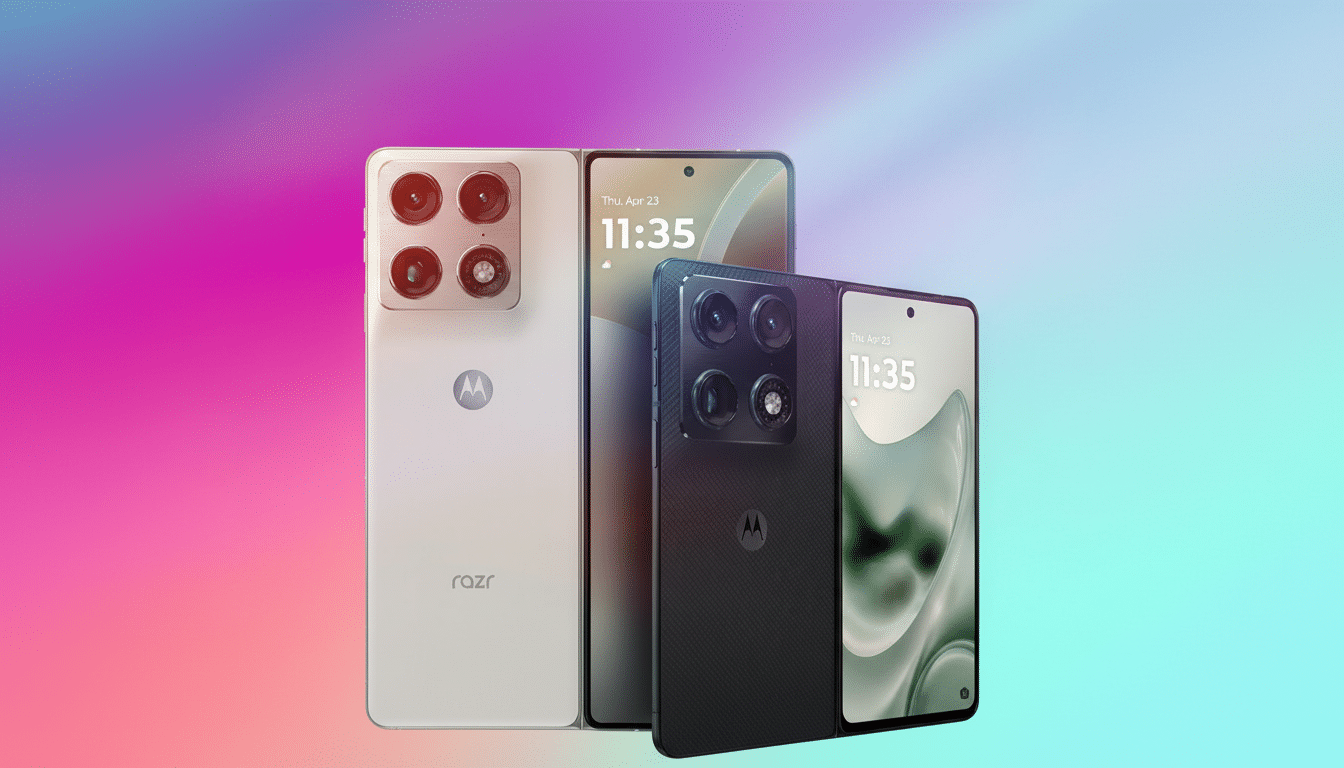
I got my hands on Motorola’s Razr Fold at CES, and it is the company’s most daring swing yet. This isn’t just another clamshell, it’s a book-style foldable handset with an 8.1-inch 2K LTPO inner display, a 6.6-inch outer display, a triple 50MP camera experience and a clear push toward AI-assisted experiences and stylus input. For a brand that, in recent years, has been primarily associated with budget phones, the ambition here is clear.
First Impressions in Hand Reveal a Sturdier, Wider Hinge
The Razr Fold opens on a larger center hinge, and it immediately feels sturdier than Motorola’s clamshells. The demo unit’s hinge had even resistance throughout the range of travel, steering clear of the floppy midpoint some early foldables suffered. Closed, it has the solid, slab-like confidence of a premium phone. Opened, the broad canvas creates open, unboxed, and uncramped-feeling apps with a spaciousness to put two side by side without micromanaging windows.
- First Impressions in Hand Reveal a Sturdier, Wider Hinge
- Displays and Hinge Design Balance Size, Clarity, and Strength
- Cameras Built for Versatility with Triple 50MP Array
- AI and Stylus Features Play a Larger Role in Daily Use
- Key Specs Like Chipset, Battery, and Charging Stay Under Wraps
- Price and Market Position Remain Open as Launch Approaches
- Bottom Line: Promising Hardware Awaiting Full Specs and Price
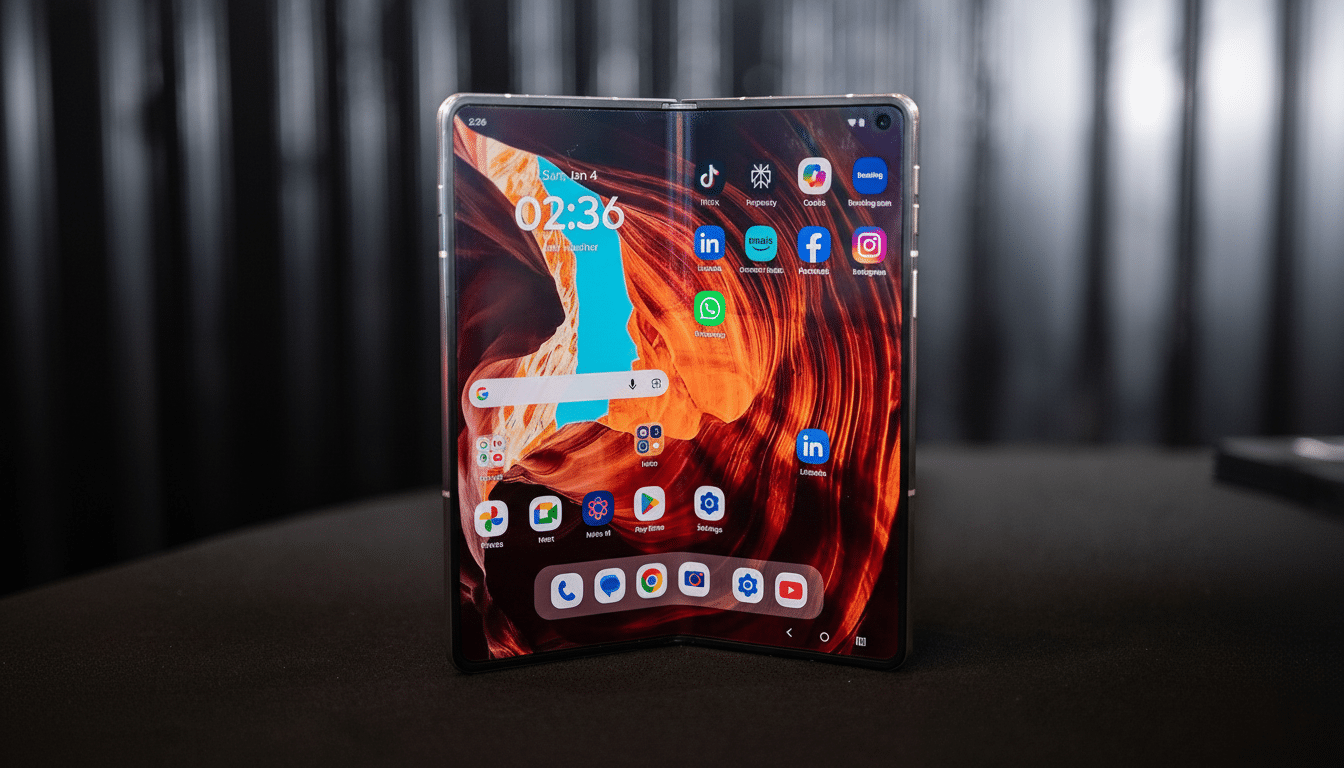
The crease is evident from some angles — as it is on all foldables today — but it wasn’t distracting while watching video or taking notes. The weight is even throughout the spine, which aids in one-handed operation on the outer display. The 6.6-inch cover display is a dual familiar: it behaves like an ordinary flagship phone, which is very useful for quick tasks — payments and maps — without the need to unfold that thang.
Displays and Hinge Design Balance Size, Clarity, and Strength
Motorola’s messaging is clear: the 8.1-inch LTPO screen on the inside of this foldable phone can be a productive and creative workspace. LTPO typically allows for adaptive refresh behavior to save power while maintaining smoothness in any interaction, however, Motorola isn’t yet listing refresh specs. Most importantly, the aspect ratio is comfortable for documents and split-screen layouts, making sure everything feels just right instead of boxed in like other narrow foldables. The outer 6.6-inch panel maintains apps at full size and full readability, a small but crucial difference from cover styles that are smaller, and often make you feel pressured to open the phone.
The hinge felt engineered for repeatability during my demo, offering consistent tension, confident clicks even at shallow angles, and no ominous creaks. Motorola wouldn’t specify durability cycles, but the feel suggests that the company is aiming for similar longevity expectations that its rivals promote. Display reflections were managed under show-floor lighting, a good sign for outdoor use in the real world.
Cameras Built for Versatility with Triple 50MP Array
Rear cameras are a triple 50MP array — main, ultrawide/macro and 3x periscope telephoto — suggesting a serious imaging push for the phone. Motorola combines the system with a Sony LYTIA sensor at its heart and support for Dolby Vision, which means that it’s setting up the Razr Fold to enjoy richer dynamic range when shooting both photos and video. On brief testing, the ultrawide kept straight lines in order and the 3x periscope maintained detail without leaving crunchy oversharpening all over its preview feed.
Two front-facing cameras complete the package: a 32MP shooter on top of the outer screen for those quick selfies, and a 20MP camera above the inner display for video calls.
The foldable nature lets you shoot flexibly, too; I propped the phone halfway for a steady, tripod-like way of doing time-lapses and group shots, and the cover screen made it easy to frame high-quality selfies using the main cameras.
AI and Stylus Features Play a Larger Role in Daily Use
Motorola is also making a play for AI with features like Catch Me Up and Next Move. Catch Me Up functioned as a personal summary, digest-style in the demo unit, listing missed messages and notifications as bullet points. Next Move teased that the recommendations could be context-aware — say, brief follow-ups, directions to a place mentioned in a chat, or suggestions about how to summarize a long email thread ahead of a meeting. These are the types of touches that make a book-style foldable more than simply a bigger screen.
Just as vital would be the Moto Pen Ultra. On a device this big, a stylus is no longer a gimmick and starts to feel like an essential. It felt natural sketching, annotating PDFs or marking up screenshots on the inside display with smooth ink flow and low visible latency in the demo apps. If Motorola carries out strong palm rejection and pressure sensitivity systemwide, it could make the Razr Fold a viable note-taking slate.
Key Specs Like Chipset, Battery, and Charging Stay Under Wraps
Motorola is keeping specifics about the chipset, battery capacity and charging speeds close to its chest for now. When hardware has the pole position, that’s rare but not unheard of. The company did harp on the “spacious canvas” angle several times, which implies a focus on multitasking, creator workflows and media consumption. With the power hog of a big LTPO screen and the advanced cameras, it’s going to be all about battery management and thermals when those full reviews start to come in.
Price and Market Position Remain Open as Launch Approaches
There isn’t a price or release date just yet. If Motorola could come down around or below the $1,000 price point, some watchers are floating it would drastically undercut average book-like competition and set off a very different conversation. Category-leading devices of the past were priced far more than $1,500 when first launched. Researchers at Counterpoint Research and DSCC have seen consistent, double-digit increases in foldable shipments along with slow price declines, and Topalmazoglu suggests aggressive pricing would capitalize on that momentum.
On size, at least, Motorola has the sweet spot in mind: The 6.6-inch cover and 8.1-inch inner panel are larger than the Google Pixel 10 Pro Fold’s 6.4-inch outer (and 8-inch inner), and contend with Samsung’s newest book-style model. More map doesn’t guarantee a better tomorrow, but in hands-on use the extra canvas meant fewer compromises and more reasons to leave the phone open.
Bottom Line: Promising Hardware Awaiting Full Specs and Price
From the buttoned-up hinge to the expansive interior display, competent cameras, AI helpers and stylus support — you don’t even need one of those, do you? — this reads as Motorola’s most ambitious phone yet. The other questions — about chipset, battery and charging technology and price — will determine if the device is merely interesting or category-shaking. From my limited time with the hardware, Motorola has a book-style foldable that feels ready to take on the front-runners — and perhaps redefine what a Razr can be.
