


Motorola is also bringing the fight to book-style foldables with its latest tease, the Razr Fold, showing off a large-screen device that will support an active stylus — an accessory that the company says will bring precision note-taking and sketching to its growing family of Razrs. The new move squarely takes aim at productivity-focused users who have tended toward Samsung’s Z Fold family, and most recently Google’s book-style foldables.
Initial details suggest a 6.6-inch outer display and an 8.1-inch inner panel, supported by three 50MP rear cameras and a 32MP front-facing camera.
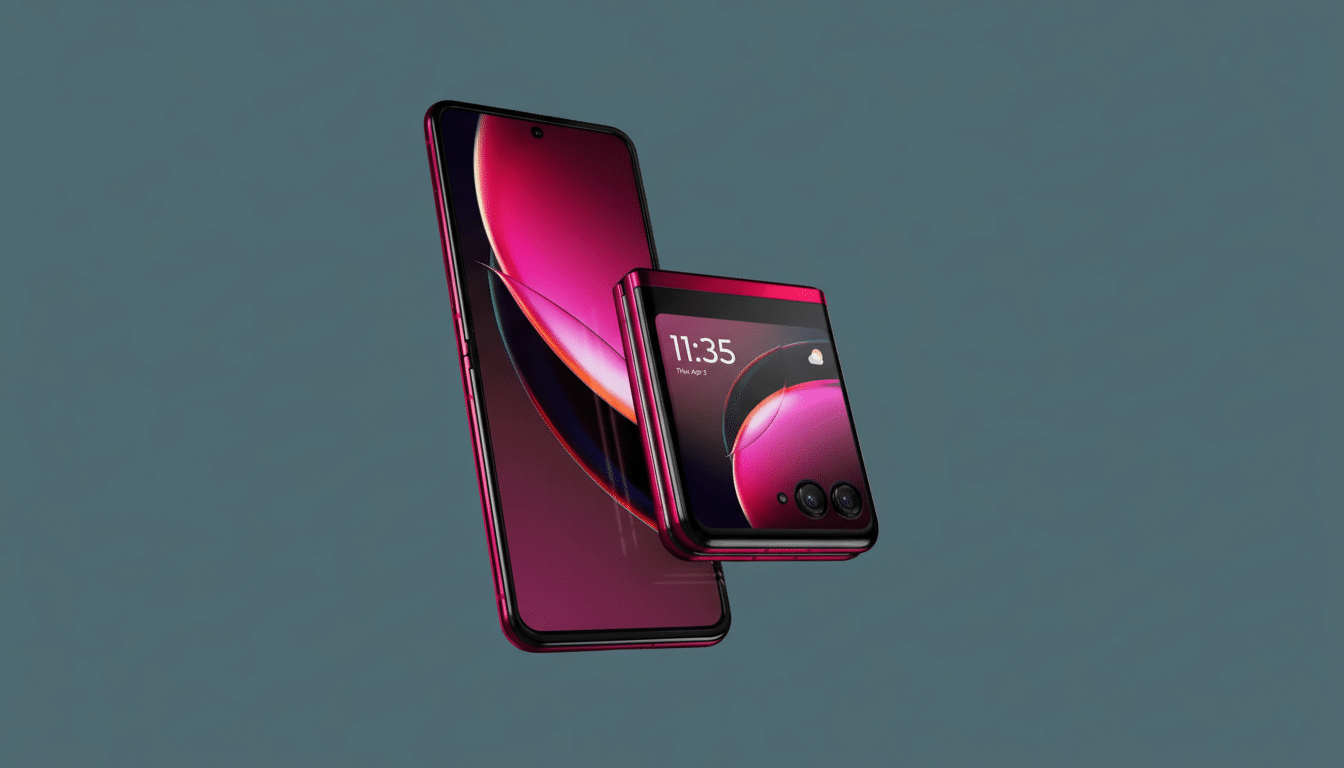
The stylus, says Motorola, will cost extra and comes with a charging case. The phone is expected to be released midyear, giving the company time to further polish the software and accessories before its launch.
A Foldable for Productivity-Focused Users
The Razr Fold sticks to the book-style form factor that closes like a normal slab and opens flat into a tablet-size canvas — which makes split-screen work, document markup and whiteboard-style brainstorming feel natural. Motorola’s software enables you to run at least three apps side by side, and the company advertises deep integration with Google’s Gemini for on-device assistance.
Hands-on impressions indicate a solid, seamless hinge and a chassis that feels substantial without going too heavy. The crease is noticeable when the inner screen is dormant — not an unusual sacrifice, but one that recedes once the panel is lit. Both of the screens look bright with enough pixel density, which is important when it comes to finer pen strokes and dense multitasking arrangements.
Stylus notes and the broader competition context
Motorola says its pen supports an impressive 4,096 pressure levels, Bluetooth 5.3 connectivity, IP55 certification, multicolor LED feedback and a latency target of 5.3ms. The included charging case is a thoughtful touch: it will keep the stylus charged and easy to carry, solving a pain point for foldable owners who love their pen but have no place to stash it in-phone.
It’s a smart competitive play. Samsung’s Z Fold line has for ages supported pen input, but absent a silo you need to either purchase a case or have the stylus along separately. Meanwhile, Google’s book-style foldables haven’t necessarily leaned into pen support. OnePlus and a few others mostly ignore it. By emphasizing a fast, pressure-sensitive pen and a charging case, Motorola is signaling that the Razr Fold isn’t just about watching videos on a big screen — it’s about getting work done.
The real question is how well palm rejection works, whether there’s tilt recognition when using the stylus sideways and if you can hover over objects or create shortcuts. Those nuances are the difference between a stylus feeling like an afterthought or a first-class tool for annotating PDFs, diagramming in apps like Concepts and even signing documents on the go.
Core specifications to expect from Razr Fold
Motorola isn’t revealing full specs just yet, but you can expect them to match its most recent flagship: a Qualcomm Snapdragon platform of whatever flavor is current, and somewhere in the range of 256GB–512GB storage and 8GB–12GB RAM. 5G, Wi‑Fi, Bluetooth, NFC and GPS should all be there (and USB‑C for charging). Android 16 is included out of the box, and multiyear OS and security updates are promised but not yet detailed.
Those three 50MP sensors make it sound like coverage for wide, ultrawide and telephoto, with the foldable design allowing you to use the cover display as a viewfinder for higher-res rear camera selfies. The battery is a mystery, as is ingress protection; rivals have moved toward more formal water and dust resistance on foldables, so an IP rating will be closely watched.
Why stylus support is a strong argument for foldables
Pen input can transform a foldable into an ultraportable digital notebook, a markup station for creators, or a field tool for workers who capture signatures and sketches. That’s strategically significant in a category that is still finding its ceiling. Counterpoint Research estimates that global foldable shipments were in the range of 20 million units across 2023, which is barely 1–2% of the smartphone market, so they still have a lot more headroom to scale as designs are polished and pricing normalizes.
The book-style models account for a disproportionately high share of foldable revenue, industry trackers like IDC and Display Supply Chain Consultants have noted, since they are used mostly for productivity tools and premium media. If Motorola matches an able pen with competitive pricing or trade-in offers, that could put pressure on incumbents — especially if the stylus experience is provided fresh out of the box.
What we still don’t know about Razr Fold details
The big unknowns are price, longevity and software finesse. We’re still waiting on clarity around the durability of the hinge, particularly its long-term reliability, as well as the IP rating, and whether Motorola will incorporate pen-first features like system-wide handwriting-to-text entry, gesture shortcuts and robust note syncing. Carrier relations and regional availability will have much to do with that launch as well.
The Razr Fold is promising on paper, with a pair of ample displays and a 4,096‑level stylus with low latency. If Motorola can nail the ergonomics and software polish, it could finally give book-style foldable buyers a credible new option — and actually exert some pressure on its rivals who’ve treated stylus support as an accessory instead of a core capability.
