


A small, as-it-happens pinpoint of light on the Moon has been recorded in a breathtaking video clip that provided astronomers with what appears to be an unprecedented view of a meteoroid striking the lunar surface and vaporizing upon impact.
The new footage, captured with the 17-inch Armagh Robotic Telescope in Northern Ireland, features a split-second flash of light on the Moon’s darker (or night) side — most likely from the ever-active Geminid meteor shower. The footage is now being studied at Armagh Observatory and Planetarium, which hopes to identify where the impact occurred, but preliminary observations suggest the images were captured close to the Langrenus region on the Moon’s eastern near side.
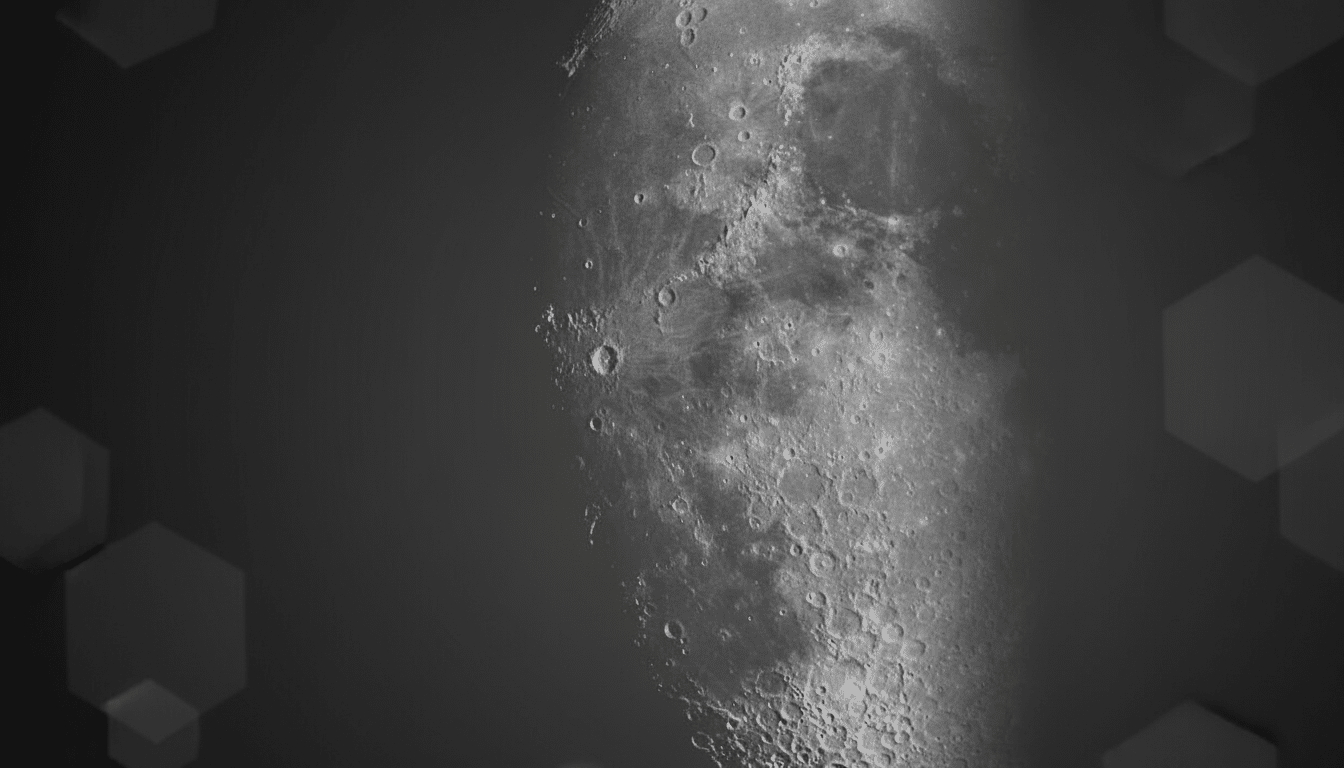
How the lunar impact flash was spotted by Armagh astronomers
Recording such a lunar impact flash requires targeted conditions: a partly illuminated Moon so that the dark limb isn’t washed out, stable atmospheric conditions, and patience.
Astronomer Andrew Marshall-Lee, a PhD researcher at Armagh, had put in tens of observing hours this year before the minuscule flare showed up. The event took place over a tiny fraction of a second — too quick for the naked eye during casual observing, but clear as day in high-speed, low-noise video frames.
The flash detection is believed to be the first lunar impact recorded from Ireland, a feat that’s more difficult than you might think given the region’s cloudy winters and lack of true astronomical night around midsummer. The observatory has been comparing the timing, lunar geometry, and brightness profile for the flash to known meteor activity in an effort to further pin down the impact site and energy.
Why scientists link the lunar flash to the Geminid meteor shower
Timing very strongly points to the Geminids — a shower originating from the rocky object 3200 Phaethon — as delivering the impactor. Geminid meteoroids slam into the Earth at an average speed of about 35 kilometers per second, or about 78,000 miles per hour. The Geminids create bright meteors as they erode while traveling through Earth’s atmosphere. In the airless environs of the Moon, it’s not the same thing: no fireball trail; here, that kinetic energy simply translates directly into heat and light for a very short, intense flash at the surface.
The glow is usually no more than a few hundredths of a second long, but it bears valuable witness. There were observations of flashes at thousands of kelvin from projects such as NELIOTA at the National Observatory of Athens, and multi-filter observations to determine impactor sizes. That, along with the Armagh data, can help constrain the mass and velocity of the object that struck.
Why lunar impacts matter for future missions and safety
Without an atmosphere to slow down incoming particles, the Moon’s surface is constantly bombarded by debris — from sand grains to boulder-size rocks. Even a pebble can translate into explosive energy. Data collected by NASA’s Meteoroid Environment Office indicate that impacts at the kilogram scale can blast out craters several meters wide and throw up tonnes of dust. A signature instance came in 2013, when a salmon-colored lunar flash witnessed by NASA and its partners matched an 18-meter-wide crater detected days later on the Moon’s surface, thanks to the Lunar Reconnaissance Orbiter.
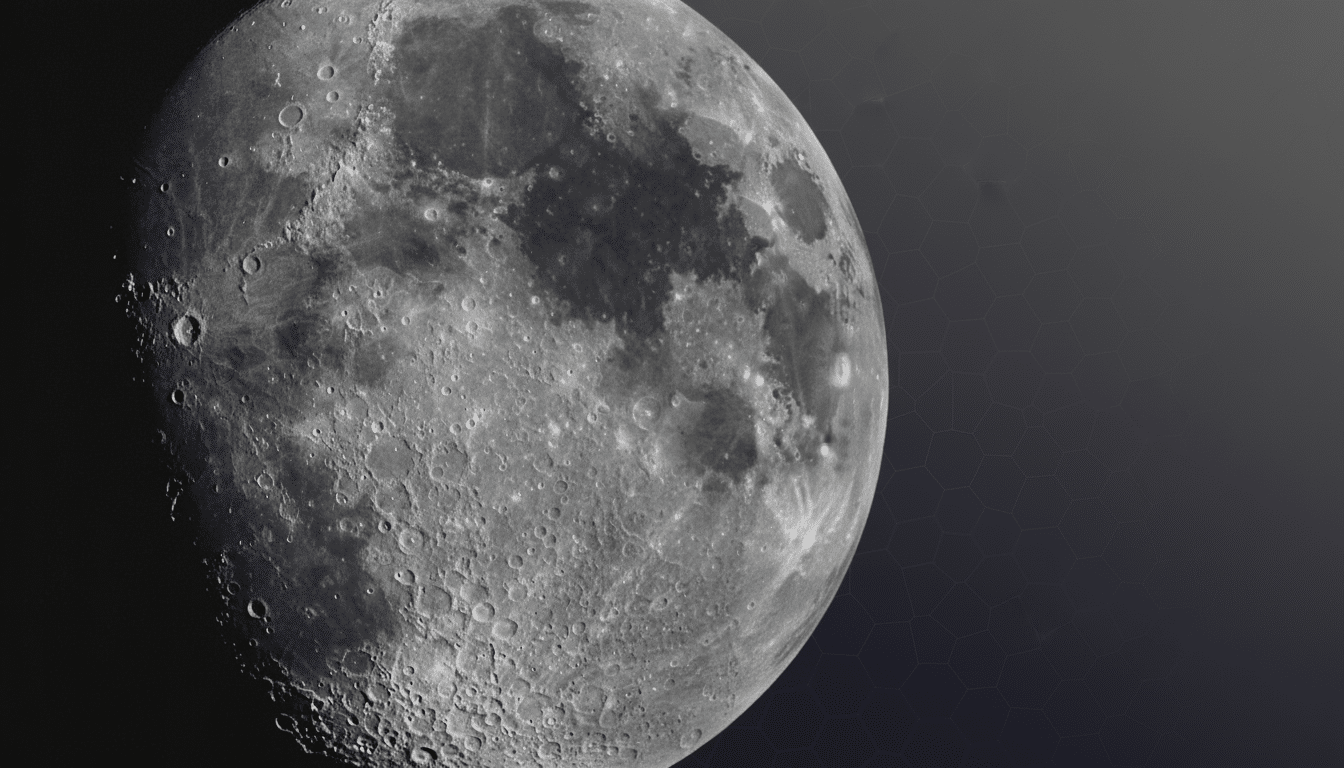
Understanding this flux isn’t academic. All future lunar outposts, habitats, and orbital stations should take micrometeoroid and meteoroid hazards into consideration. On Earth, NASA calculates that over 100 tons of dust and sand-sized particles enter our atmosphere daily; adding to this is material like this which bombards the lunar surface. Measuring the rate and energy of impacts enhances engineering margins for spacecraft, surface assets, and astronaut crew protection.
From a fleeting flash to a confirmed lunar impact crater
The next step is to locate the new crater. Scientists will triangulate a search area using the flash’s timing and the Moon’s illumination geometry, then compare before-and-after images from high-resolution orbiters. Astronomers at NASA have used LRO’s camera to find relatively fresh scars just a few meters wide by comparing new frames with the mission’s immense archive. It can take anywhere from weeks to months, depending on the lighting and/or orbital passes for confirmation.
The brightness of the flash can be factored in to calculate the energy of the impact: a golf-ball-sized rock hitting at Geminid speeds is capable of gouging out a visible pit and spraying ejecta over a wide halo. And if the preliminary position of the Armagh team’s crater near Langrenus stands, subsequent imaging might provide a nice “before and after” with which to make accurate measurements of crater diameter and ejecta distribution.
A rare capture and the value of a growing global network
Catching a lunar flash is a rare get for any single observer, even one who spends hours at the watch. The typical detection rate by Japanese astronomer Daichi Fujii (who has reported many events to Hiratsuka City Museum) is about one flash per tens of observing hours. But this rarity is why coordination of observations matters: campaigns conducted by amateur networks, Armagh’s robotic system, the NELIOTA instrument in Greece, and NASA’s own monitoring program together form a statistically significant record.
Every confirmed flash informs models of the meteoroid environment in space near Earth and the Moon, improves impact predictions, and hones rapid follow-up techniques.
The new Irish recording is a helpful data point — and another pretty picture reinforcing that the Moon’s seemingly peaceful face has not stopped being chiseled, six-tenths of a second at a time.
