


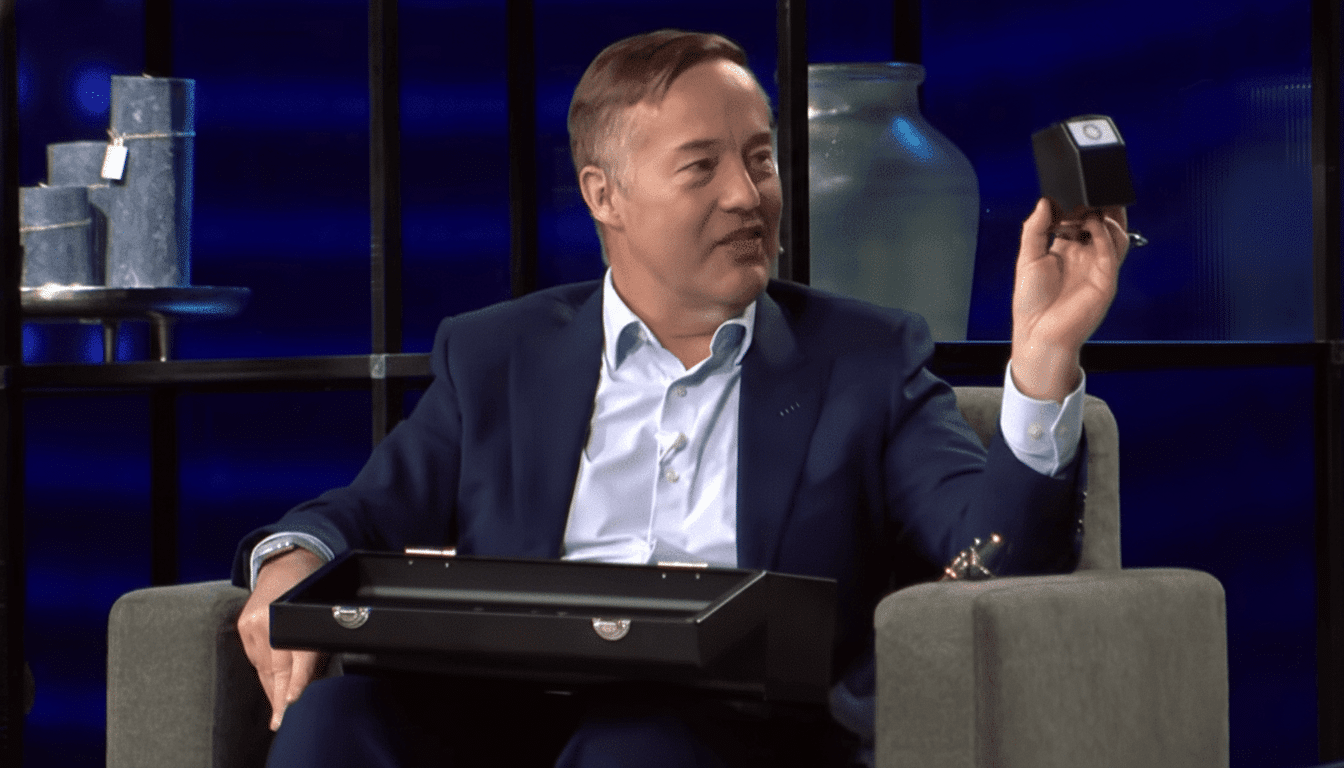
The old career bargain of front-loaded education culminating in decades of steady work is fraying. In a sweeping conversation at CES, McKinsey & Company global managing partner Bob Sternfels and General Catalyst CEO Hemant Taneja said that artificial intelligence is changing everything about how companies hire, how workers learn and how value creation happens — more quickly than the concept of “learn once, work forever” fits the economy we’re in.
And this kind of head-spinning transformation makes education a lifelong need for individuals reeling from automation-induced job loss or facing stagnating wages as they try to keep up with the ever-changing needs of their organizations.
- AI Speed Is Rewriting Career Trajectories
- The CFO vs The CIO When It Comes To Adopting AI
- Advantage: Human Moves to Judgment and Creativity
- Inside the New Operating Model for AI-Driven Organizations
- A Playbook for Employees and Employers Adapting to AI
- The Takeaway: Continuous Learning Will Define Careers
AI Speed Is Rewriting Career Trajectories
Taneja cast the change as a matter of capital formation. The payment giant Stripe took more than a decade to reach a $100 billion valuation; leading A.I. labs are racing there in a fraction of the time, alongside companies that have businesses less rooted in science fiction. The creation of multiple trillion-dollar AI-native businesses is not a far-fetched future, but an achievable near-term reality, he said.
That velocity is relevant to workers because product cycles, technology stacks and business models are turning over more quickly than college degree programs and old-school avenues for training can keep up. The World Economic Forum also projects that almost 44 percent of workers’ core skills will change over the next five years, and more than 60 percent of those will require training for new jobs by 2027. The implication: Skills will become outdated more quickly, and careers will be forged through consistent refresh rather than one-and-done credentials.
The CFO vs The CIO When It Comes To Adopting AI
Sternfels detailed the boardroom conversation he has been hearing over and over: finance leaders are looking for clearer returns before scaling AI, while technology leaders worry that waiting will put them at a disadvantage.
McKinsey’s own research indicates that most companies are now experimenting with generative AI, but only a small number have successfully scaled use cases to the point where enterprise-wide economics start to become clear.
There are early signals. GitHub’s own research indicates that developers complete coding jobs far faster with AI copilots, and service organizations see double-digit reductions in handling time from AI-driven workflows. But those benefits also depend on carefully designed deployments, strong data pipelines and change management — things that frequently make the difference between pilots that stall or take off.
Advantage: Human Moves to Judgment and Creativity
Both executives made the case that people’s comparative advantage is moving up the stack: problem framing, cross-function judgment, creativity and relationship building. The machines can draft, they can summarize, and now they can even simulate — so it’s only natural that the next step is for them to set our priorities as well. That division of labor is already changing the structure of work, with entry-level “rote” work flattened and apprenticeship models evolving. Aspiring young professionals will have to build profiles that offer evidence of initiative and critical thinking, not simply credentials.
Generative AI is projected to automate the equivalent of up to 30% of all work hours in the US by 2030, and add $2.6–$4.4 trillion to annual global productivity.
What’s counterintuitive is that companies often have more leverage in the short term by redeploying people, not laying them off — reallocating talent to client-facing and innovation work and automating back-office tasks.
Inside the New Operating Model for AI-Driven Organizations
Sternfels said his company hopes to have about one individualized AI agent per employee by 2026. Headcount won’t necessarily decrease, but the mix will change: more consultants and domain experts on the front line — roughly a 25% gain — and fewer administrative roles — down by about that same extent — as many of these routine processes become software-defined.
Similar moves are being made by big business. Accenture unveiled a $3 billion AI program and said it would dramatically ramp up its labor force of AI talent. PwC allocated $1 billion to train tens of thousands of workers in generative tools. IBM has indicated that thousands of positions in the back office could eventually be automated, with its hiring instead being redirected to higher-value roles. These changes indicate that leaders are not just cutting costs; they also are rewiring workflows, governance and talent pipelines.
A Playbook for Employees and Employers Adapting to AI
For the individual:
- Think in S-curves, not ladders.
- Develop durable capabilities — critical thinking, data literacy, communication, ethics — and then stack on top the short-cycle skills through certificates, microlearning and project-based work.
- Domain expertise is still a moat; adding AI fluency drives disproportionate value.
- A portfolio of work that shows the output and outcomes of multiple prompts/prototypes/client work indicative of momentum and willingness to learn.
For companies:
- Defuse the CFO–CIO standoff with staged scaling.
- Tie pilots to a few measurable workflows, bank the savings and reinvest a fixed share — think 10% to 20% — in reskilling and change management.
- Stand up a model for AI governance that includes security, compliance and ethics.
- Above all, build on-ramps: apprenticeships, internal academies and role re-designs that let people, especially the least privileged among us, climb into new capabilities rather than face a brick wall.
The Takeaway: Continuous Learning Will Define Careers
There was no sugarcoating in the message from McKinsey and General Catalyst: Careers are going to be continuous learning loops, and organizations will progressively be systems that learn. Those who consider AI an upgrade to the way they think, decide and serve customers — not just a tool for cutting costs — will end up ahead. The age of learning once and coasting is gone; the time of compounding skills has arrived.
