


McDonald’s Netherlands has taken down an AI-generated holiday commercial after a backlash on social media, saying the campaign did not have the warmth and nostalgia people eXpected. The move highlights how rapidly public opinion can sour on generative AI when it butts up against cherished seasonal traditions.
McDonald’s confirms removal and explains the decision
The company said the spot aimed to depict lighthearted seasonal anxiety relatable to Dutch households, but acknowledged that many of its guests think of the holidays as a celebratory period. In response, the brand underscored that its mission is to foster positive experiences around food and togetherness, not breed cynicism.
- McDonald’s confirms removal and explains the decision
- The AI aesthetic that drew criticism from online viewers
- Agencies defend the craft behind the spot amid questions
- Why this strategy flopped for a festive message
- A split screen in brand strategies on AI holiday campaigns
- What marketers can learn from the AI ad backlash fallout

The AI aesthetic that drew criticism from online viewers
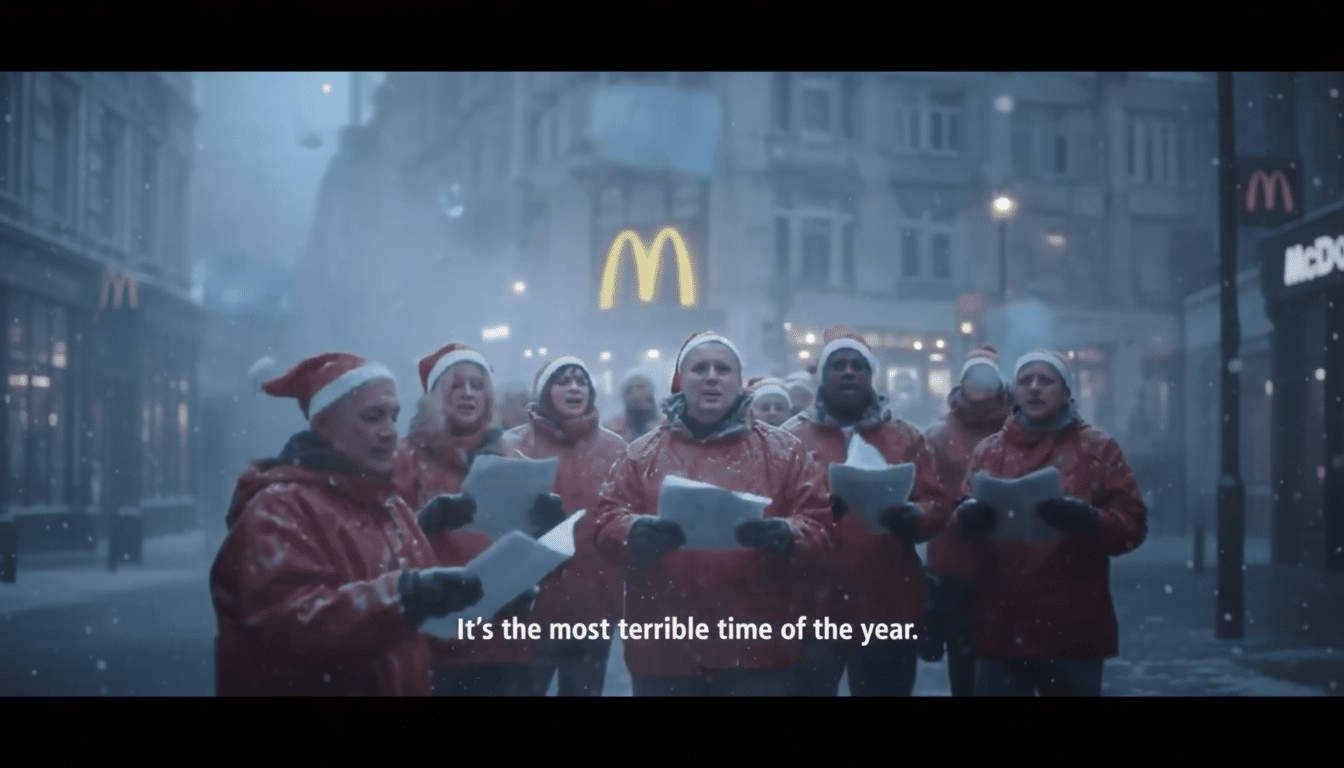
The ad — which was marked on screen with the words “AI-generated” to indicate its algorithmic origins — included snippets of festive moments gone haywire. Viewers soon spotted the telltales of generative video: lookalike faces, off-kilter physics, rubbery hand gestures, and a glossy, placeless aesthetic. Though the idea leaned into wry humor, some saw it as simply mean-spirited or even an odd approach for a holiday theme.
Social media posts on platforms including X, Reddit, and YouTube helped fuel the backlash, with critics deriding the “uncanny” look and wondering why a company with a global presence would go to the trouble of creating synthetic scenes instead of using real families, real kitchens, and real messiness. The mix of a tongue-in-cheek thematic premise and AI sheen proved volatile.
Agencies defend the craft behind the spot amid questions
The ad was created by TBWA\NEBOKO in the Netherlands, working with American production company The Sweetshop, according to reporting from the BBC.
In comments to Futurism, The Sweetshop’s directors emphasized that this is a human undertaking, with the film imagined as thousands of AI iterations — then honed in the edit — in the same way as a high-craft traditional production.
The defense echoes a larger industry argument that generative models are tools — not replacements — for helping push visual directions under human supervision. But the response to this campaign suggests that audiences aren’t only assessing process — they’re responding to the emotional texture of the output, too, especially in culturally sensitive times like over the holidays.
Why this strategy flopped for a festive message
And holiday advertising rises and falls on warmth, authenticity, and recognizably human detail. Studies from firms like Kantar have consistently shown that emotional resonance, and trustworthy characters, is what makes a seasonal ad effective. Generative imagery is still very bad at micro-expressions, physical nuance, and environmental context — the precise things that would make family-season storytelling feel real.
Public attitudes toward AI also provide a challenging backdrop. According to Pew Research Center, a majority of adults think they are more worried than excited about the expanding use of AI. Irritate that unease within a family-oriented context of the holiday frame, and you risk alienating viewers who interpret algorithmic visuals as shorthand for short-cutting or creative aloofness.
A split screen in brand strategies on AI holiday campaigns
McDonald’s Netherlands is not the only company experimenting with AI for seasonal campaigns. Coca-Cola posted a holiday spot, from the creative partner Secret Level, that featured AI, and ran it despite backlash — suggesting an appetite among some to move forward while the conversation is hot. The split could be indicative of a dawning playbook: one where some brands revel in the novelty, while others retreat to live action when sentiment sours.
Regulatory expectations are changing as well. The European Union’s proposed AI rules prioritize transparency in automated content, while national advertising standards advise ads not lead consumers astray — criteria that the McDonald’s spot satisfied by revealing its AI descent. But tagging AI by itself doesn’t account for the emotional disconnect that viewers of heartstring narratives commonly report feeling when they come across AI-generated people and places.
What marketers can learn from the AI ad backlash fallout
The lesson is not just “avoid AI,” but matching medium to message. For the fanciful, the surreal, or the hyper-stylized, AI can boost imagination. For rituals rooted in memory and human proximity — holiday dinners, homecomings, small acts of kindness — live-action or hybrid production may convey the sentiment. Pre-testing with consumer panels, stress-testing tone, and building human performances into AI-assisted workflows can also help minimize the risk of tonal whiplash.
In the end, McDonald’s Netherlands showed us that sentiment trumps short-term novelty and brand equity is everything by pulling the spot fast and saying something about it. Look for more experimentation from global brands — and quicker pivots, clearer disclosures, and a harder distinction made where AI dazzles and audiences still crave real people to bring the kind of spark only human beings can offer.
