


A new reader vote with over 1,000 Android users suggests the results are there for all to see on Google Messages’ Remix, the in-chat AI editing tool for images. The most popular answer among respondents is that they dislike Remix and want to be rid of it, a sentiment shared by 47 percent of respondents. An additional 36% say they don’t even know what it does. Just 8.7 percent say they “love” the feature and use it often, with the rest favoring the concept while complaining about its implementation.
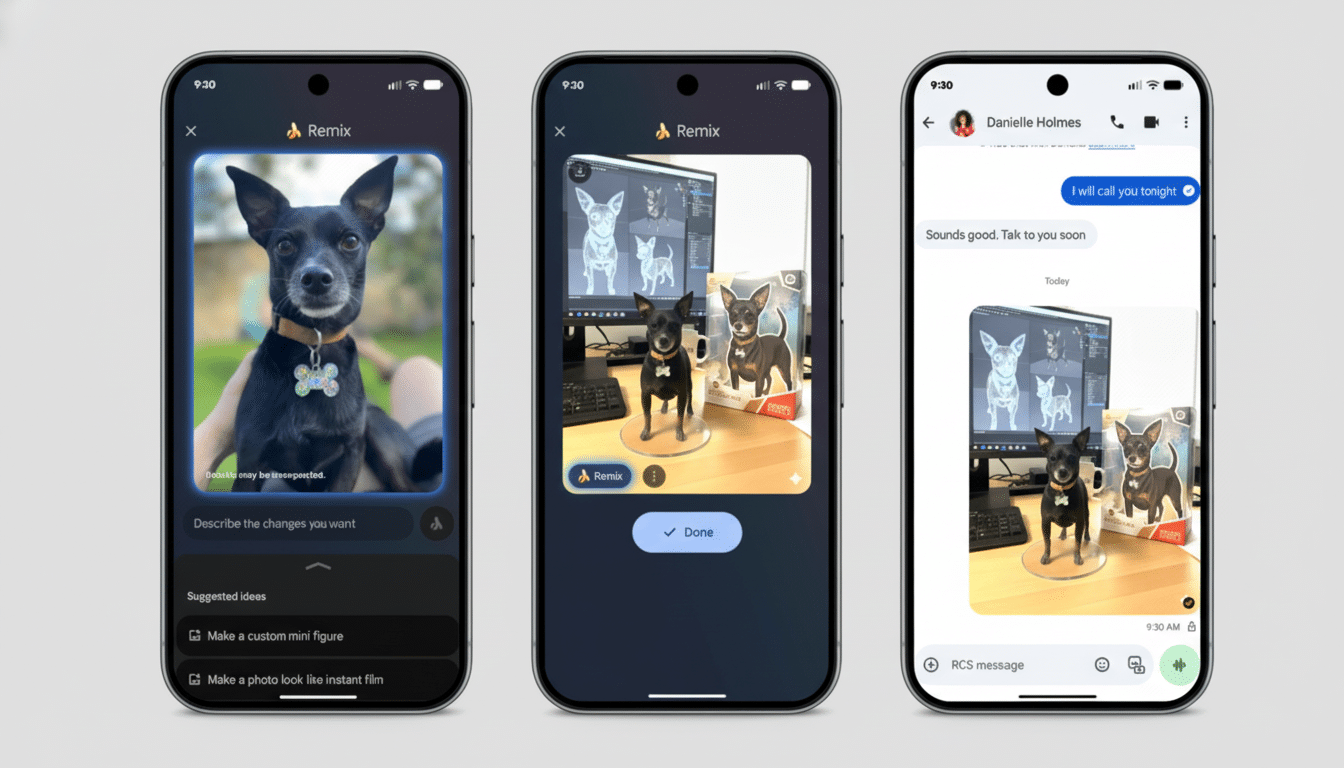
Remix bakes AI-driven photo editing directly in Google Messages; at first, the option will be a big button when you try to view a photo full-screen. On paper, it’s a smart compromise between casual sharing and lightweight editing. In reality, many people regard it as intrusive or confusing and want more control over who sees what.
What the poll reveals about Google Messages Remix sentiment
Not a scientific survey, granted, but with the sample size and audience that it is—engaged Android users who like to weigh in on platform changes—it’s a relatively reliable snapshot of sentiment. The split is stark: almost half reject the feature outright, more than a third are uncertain why it exists — and fewer than one in 10 are enthusiastic adopters.
That confusion metric matters. When 36% of the voters don’t even know what Remix does, you’re off on discoverability and messaging. Branding around “Nano Banana” — the whimsical name attached to Google’s image-sized tools for photos — may be amusing for insiders, but it also risks muddying up usefulness for real-life users. In a rapid, conversation-oriented app, users would want clarity and as little friction as possible.
Why Remix is missing the mark with Google Messages users
The former location—a large action button on top of images—seemed a little too heavy for the messaging context. Material, Google’s own design language from the Material family of specifications for software and electronics platforms, advocates for contextual actions: clean layouts that let you act on what you’re looking at; Remix leaned a little in the other direction instead, surfacing novelty before utility. That trade-off can turn off users who mainly look for speed and simplicity in chat.
There’s also a trust factor. Even the most playful of generative edits can raise questions about both authenticity and privacy. With Google’s greater AI arsenal, from Magic Editor in Photos to on-device features running on smaller models, the writing is on the wall. But deploying those powers in a personal messaging thread, without evident onboarding or controls, ratchets up the sensitivity.
Competitors offer a contrast. WhatsApp includes AI-powered stickers in a contained flow and keeps the more advanced features hidden behind menus. Telegram is brave to try out the cool stuff while allowing power users to discover them without interfering with default behaviors. In messaging, opt-in beats opt-everywhere.
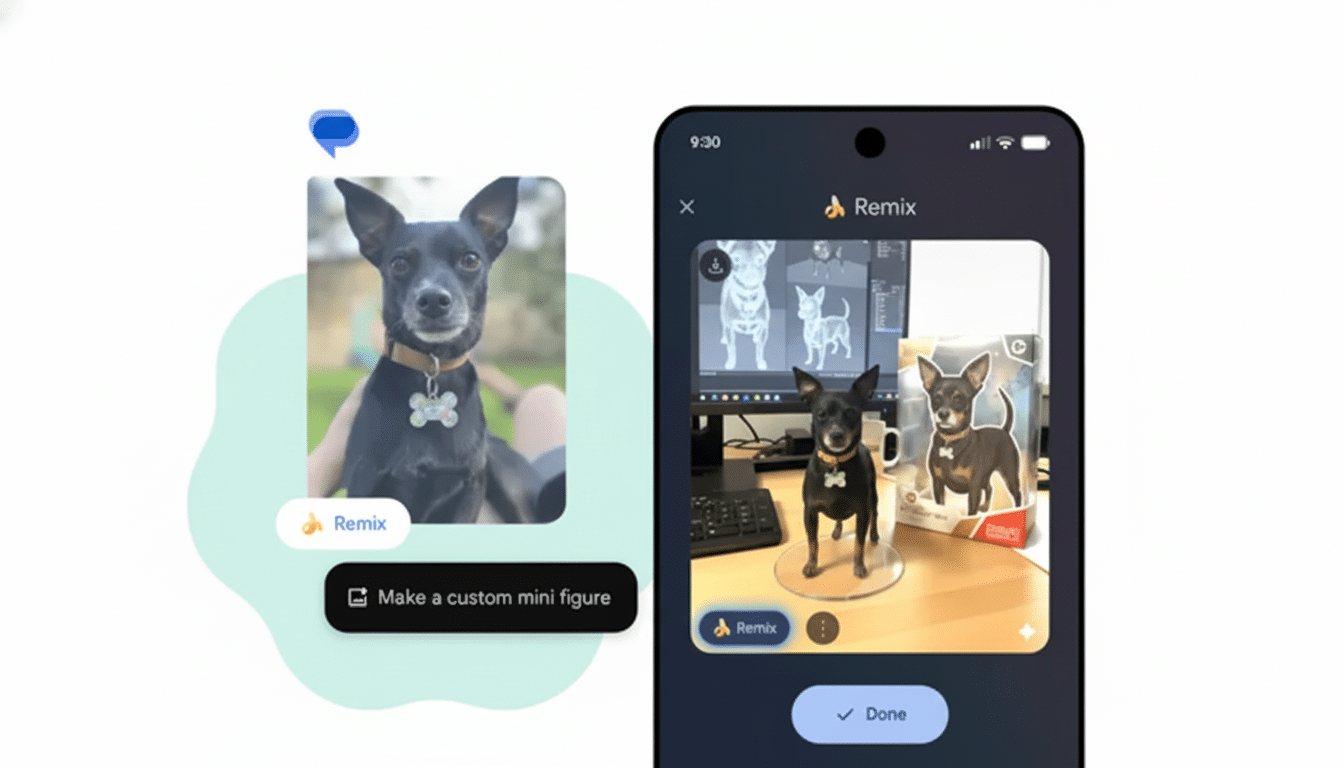
Google adjusts the UI accordingly after user feedback
Google is moving Remix from a visible button to the long-press context menu on images, and removing the Nano Banana branding. It keeps that function basically the same while dialing back on the visual pressure. It’s closer to Material by hiding those advanced actions just above the fold.
It may be insufficient for the 47% who want a full off switch. Something simple like an off switch — “Disable Remix” — would be nice. Google often gives us fine-tuned controls over smart suggestions, typing assistance and notifications; we could easily have seen the same treatment for this setting that respects user autonomy without squelching experimentation for those who like it.
What this means for messaging AI on Google Messages
Google Messages is at the center of Android’s RCS push, which the company notes has over a billion users. When you’re at that scale, even little UI decisions ripple out in all directions. The poll’s findings reflect a larger lesson: when it comes to messaging, utility should be patently clear, interruptions scarce and AI features unmistakably optional.
The pathway forward is familiar to experienced product teams: clear labels, short in-context education, conservative defaults and powerful controls. If Google makes Remix more an opt-out feature with simpler language and subtler placement, maybe it can remain available for the 8.7% who fancy it — and less of a slowdown to everyone else.
AI will continue to penetrate our quotidian tools, but its validity will depend on trust and restraint. The reaction to Remix is a handy reminder that the best messaging features make conversation breathe; they don’t compete with it.
