


A new unboxing video purports to display Apple’s forthcoming flagship tablet, an M5 iPad Pro, out in the wild — and already the footage is sparking discussion across the tech world.
The clip shared by Bloomberg’s Mark Gurman and posted by Russian creator Wylsacom goes over what appears to be retail packaging and a turned-on device with clear benchmark results. If accurate, it’s the strongest indication yet that Apple’s pro-grade tablet is due for a refresh.
Apple has not confirmed the existence of an M5 iPad Pro, and Apple does not comment on unreleased products. That said, the prospect of a thorough unboxing alongside on-device menus and performance claims sounds exactly like the sort of leak we usually encounter before hardware launches.
What the purported unboxing video appears to show
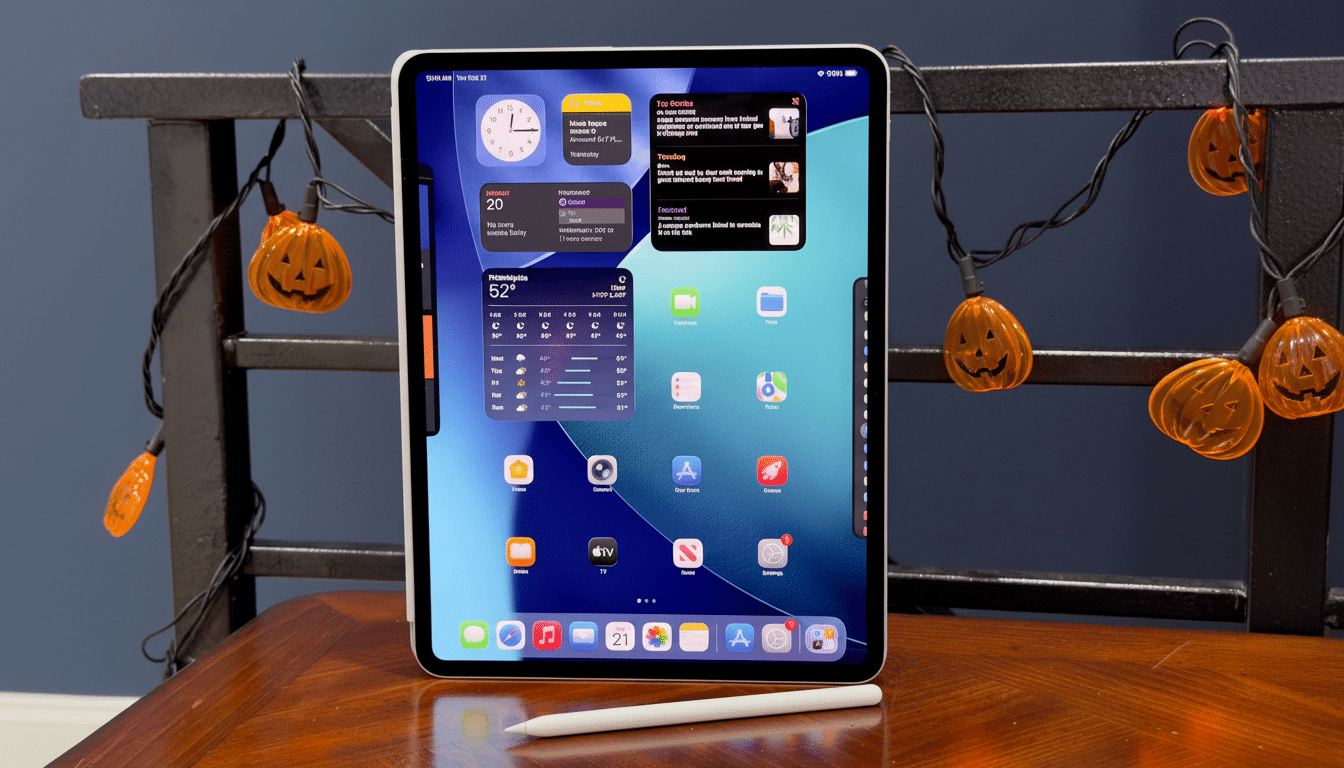
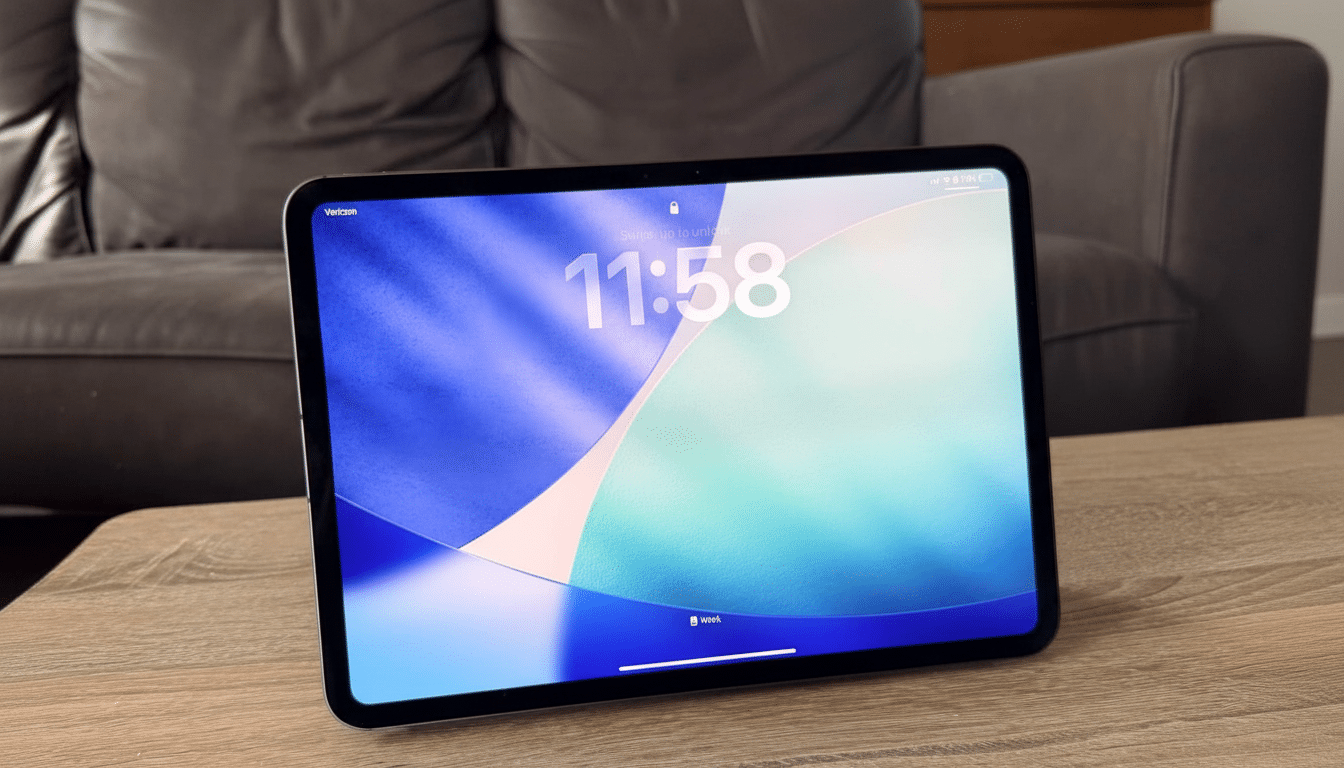
The device in the video closely resembles the current iPad Pro: a super-thin body, a single rear-facing camera, flat sides, and an enormous laminated screen surrounded by exceedingly skinny bezels. There are no immediately apparent external redesigns, which is typical of the way Apple tends to keep industrial design consistent through iterative cycles while changing around what kind of silicon and panels get included between major releases.
Of more interest: the specs said to flash on screen. The device is listed with 256GB storage and 12GB RAM. On the M4 iPad Pro, 256GB models included 8GB, while the 1TB and 2TB options had 16GB. A 12GB option would also be new, so it’s possible that Apple is broadening memory options to better match pro workloads without requiring trade-offs on highest-capacity storage.
The video creator also promises better benchmark results than that of the M4 iPad Pro. There are no numbers to confirm or anything like that at this point, but modest multi-core CPU and GPU improvements wouldn’t be surprising; it’s what Apple has delivered (and, slower cadence aside, I suspect the A13 will continue the trend) over time.
Why this alleged leak is raising questions and eyebrows
There are caveats. As highlighted by 9to5Mac, Apple does not actually sell products in Russia: it wasn’t immediately clear how an unreleased product would appear there boxed up. There are parallel import channels, but a retail unit this early with working software is rare to say the least.
This same channel earlier this year posted an unboxing of a MacBook Pro with new silicon before Apple announced it, giving the account a track record — but also making us wonder about sourcing and authenticity. Without serial number confirmation or Apple documentation, the most prudent position is watching with skeptical interest.
It’s also worth remembering that prototype shells, engineering proofs, or early test builds can appear very close to final hardware. Apple hardware leakers have displayed everything from real dummy units to misunderstandings about what EVT construction even looks like. Interestingly, it looks like the final packaging in this video, but it’s not conclusive.
What an M5 chip could realistically do for iPad Pro
If we base our assessment on what Apple’s done in the past, an M5 would represent an iteration of their 3nm-class architecture centered around efficiency and sustained performance, with a beefier Neural Engine thrown into the mix. Already, Apple’s M4 put the iPad Pro on advancing footing with a more powerful GPU as well as hardware acceleration for ray tracing; an M5 would be expected to enhance those areas and increase on-device machine learning throughput.
That’s important because the iPad Pro is increasingly framed as a mobile studio for creators and developers. Pro apps including Final Cut Pro, Logic Pro, and DaVinci Resolve are optimized to take advantage of all that additional memory bandwidth and those GPU cores. Plenty could also be accelerated by a step up in neural processing power, which would make possible features dependent on Apple’s on-device AI tools, including those that rely heavily on the Neural Engine as well as unified memory.
What more memory could mean for demanding pro workloads
Assuming the 12GB configuration is legitimate, it suggests a more versatile memory approach. For video editors, 3D designers, and researchers who stress iPadOS with multi-layer timelines, or large RAW photo sets, or on-device model inference, the amount of memory a device has often determines how smoothly projects scrub and export. Jumping from 8GB to 16GB on the M4 line forced you to go to premium storage tiers; a middle-ground option might have hit a more accessible price-performance sweet spot.
Common memory also aids new OS and Stage Manager multitasking, permitting more apps and assets to be resident before aggressive reloading. That can result in real-world time savings in pro workflows, even if the raw benchmark deltas seem modest on paper.
Signals to watch for before any potential iPad launch
There is a paper trail when it comes to Apple product cycles. Model identifiers have historically been discovered in regulatory filings with the Eurasian Economic Commission before new iPads are announced. That includes supply chain reports followed by outlets, including Bloomberg and The Information, that can indicate panel shipments, keyboard accessory refreshes, and chip production ramps. iPadOS beta versions have occasionally indicated device identifiers or feature flags that correspond with new hardware.
Accessory support will also be revealing. Assuming the chassis remains static, today’s Magic Keyboard and Apple Pencil Pro are said to transition over, minimizing friction for current owners. Whatever the surprise accessory refresh, you’d expect it to be under-the-hood changes like updated magnets, pin layouts, or display technologies.
For now, the unboxing remains a tantalizing hint rather than proof. Gurman adding his heft to the report gives it credibility, and what’s listed in the specs would seem strategically appropriate for Apple’s pro tablet line. Until Apple peels off the veil, mark this leak as a strong insight into where the iPad Pro is going — and a reason why even locked-down product pipelines can still find ways to surprise.
