


Qualcomm’s upcoming laptop silicon, with the Snapdragon X2 Elite Extreme rumored to lead the charge, could be the most serious attempt yet to outperform Apple’s M4-based MacBooks. If the company’s own performance data holds up to independent testing, it could shift the competitive landscape of thin-and-light performance laptops in favor of Windows on Arm.
Snapdragon X2 Elite Extreme: what’s in the box
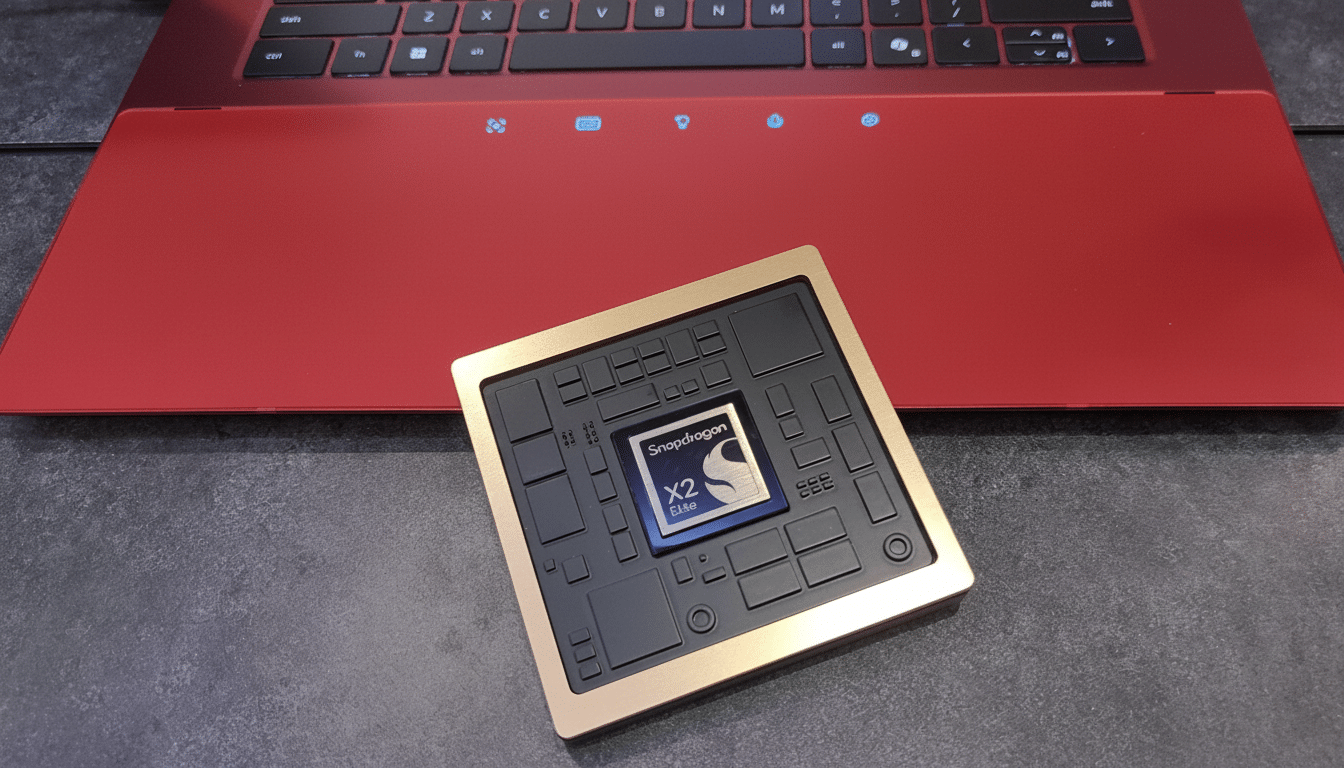
At the high end, the flagship X2 Elite Extreme augments a third‑generation 18‑core CPU dubbed Oryon with a new Adreno GPU and an on‑chip Hexagon NPU rated at 80 TOPS. Qualcomm teams up the platform with LPDDR5 memory to feed those engines, and that’s a combination that is squarely targeted at intensive multitasking, media creation and on‑device AI workloads without taking a toll on thermals or battery life.
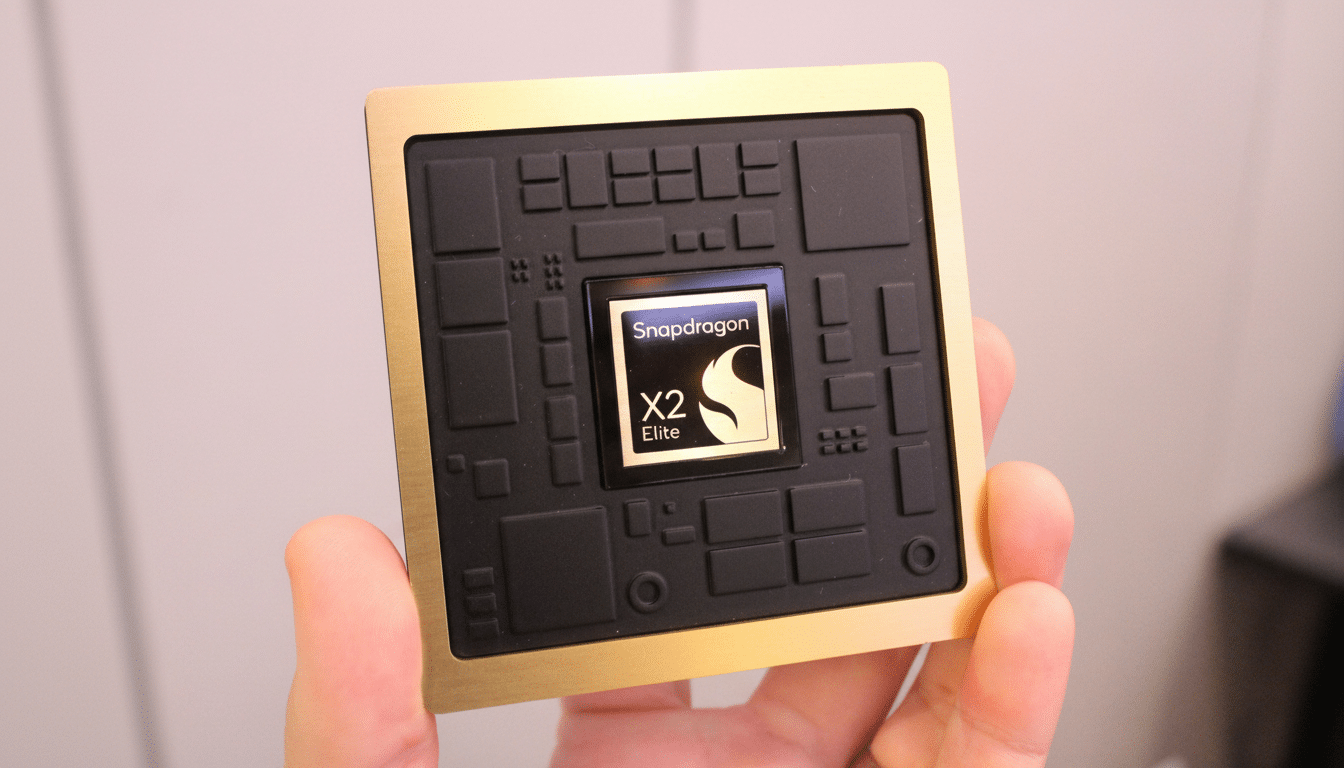
Per information from Qualcomm briefings, the Extreme tier is optimized for “ultra‑premium” systems — say, pro‑class Windows ultraportables — and will be above a plain X2 Elite variant. The company’s message is a simple one: CPU throughput, graphics, and dedicated AI acceleration all take a step up versus its first‑gen X Elite — with the focus specifically on sustained performance when engaged in long renders and during model inference.
Early performance numbers versus Apple’s M4 results
In internal testing by Qualcomm, the X2 Elite Extreme scored a Geekbench 6.5 multi‑core score of 23,491, versus 15,146 for Apple’s M4. The firm’s reported GPU results were similarly biased toward the Snapdragon silicon, with scores of 90.06 to 65.12 in like runs. Qualcomm wasn’t done at raw compute, either. It also claimed there was a significant gulf in NPU performance: 80 TOPS for the X2 platform versus Apple’s publicly stated 38 TOPS for the M4’s neural engine.
Now, vendor lab numbers should be considered “directional” — test conditions, thermals, and system power budgets will all matter — but the deltas seen here are big enough to deserve notice. If those translate into real workflows, then prepare for snappier export times in Premiere Pro and DaVinci Resolve, quicker large‑codebase builds, zippier photo stacks, and on‑device AI features that process locally rather than offloading to the cloud.
Why ‘AI horsepower’ is the new battleground
Specialized NPUs are the new system value. Laptop innovation peaked at being a laptop. Microsoft has established a minimum requirement for new “AI PC” experiences that rely heavily on local inference, and an 80 TOPS engine offers PC makers additional headroom for multimodal assistants, background transcription, real‑time effects, and small‑to‑medium language models that can operate offline. With twice the NPU throughput, Qualcomm is looking to differentiate on responsiveness and battery impact, with NPUs typically offering more performance per watt than GPUs for a similar AI task.
It still has the power of tight integration and macOS optimization from Apple’s M‑series, and the M4 GPU brings modern features to creative apps. But if Windows laptops achieve a sustained advantage in on‑device AI, we’ll experience an array of practical improvements:
- Smoother timeline scrubbing with AI effects live
- Instant object isolation within photo apps
- Smarter noise reduction for calls — without turning up the whine of cooling fans, or docking near a charger
The software and battery-life questions
Paper performance leadership won’t make a difference if the ecosystem can’t keep up. Good news: essential apps — Microsoft 365, Chrome, Edge, and many Adobe Creative Cloud titles — are now running natively on Windows on Arm; Microsoft’s Prism translation layer has lessened the impact for x86 and x64 apps that still require emulation. Even then, niche creative plug‑ins, CAD tools, and enterprise agents can become bottlenecks if they’re missing Arm64 builds.
Battery life, though, is the other big unknown. Qualcomm’s previous laptop‑based chips have become known for long runtimes, and Arm designs are efficient with light and mixed loads. The problem arises in lengthy CPU and GPU bursts in low‑profile chassis. Until reviewers are able to execute standard suites from groups like UL Solutions, and the Geekbench Browser lists results for retail devices, claims about all‑day performance should be considered preliminary.
Bottom line: a genuine shot at the MacBook crown
The Snapdragon X2 Elite Extreme appears to be Qualcomm’s best effort yet, showing that Windows ultraportables can outpace Apple’s current baseline MacBooks, not just stepping and fetching their fastest configurations. It promises better multi‑core CPU performance, a faster integrated GPU, and well over double the NPU throughput — three factors that have a bearing on modern mobile computing.
The vanilla X2 Elite will likely work the same 80 TOPS NPU in a lower‑end CPU/GPU configuration to cover broader price points, implying a larger wave of AI‑capable Windows laptops. Now it is up to PC makers — and independent labs — to prove the gains. If they do, designers and other creative types, as well as power users of all stripes, will have a serious choice to make the next time they line up laptops for competition between Apple’s MacBook line and high‑end Windows alternatives.
