


Lunar Energy has secured $232 million in fresh funding to accelerate the rollout of residential battery systems designed to bolster the power grid. The financing comprises a previously unannounced $130 million Series C led by Activate Capital and a $102 million Series D led by B Capital and Prelude Ventures, bringing the company’s total capital raised to more than $500 million.
Funding and Manufacturing Roadmap for Lunar Energy
The company says the cash infusion will scale production to 20,000 battery units by year-end and to 100,000 by the end of 2028. Lunar currently offers 15 kWh and 30 kWh modular systems for homeowners in select U.S. markets, and the plan is to grow both factory capacity and software capabilities in parallel.
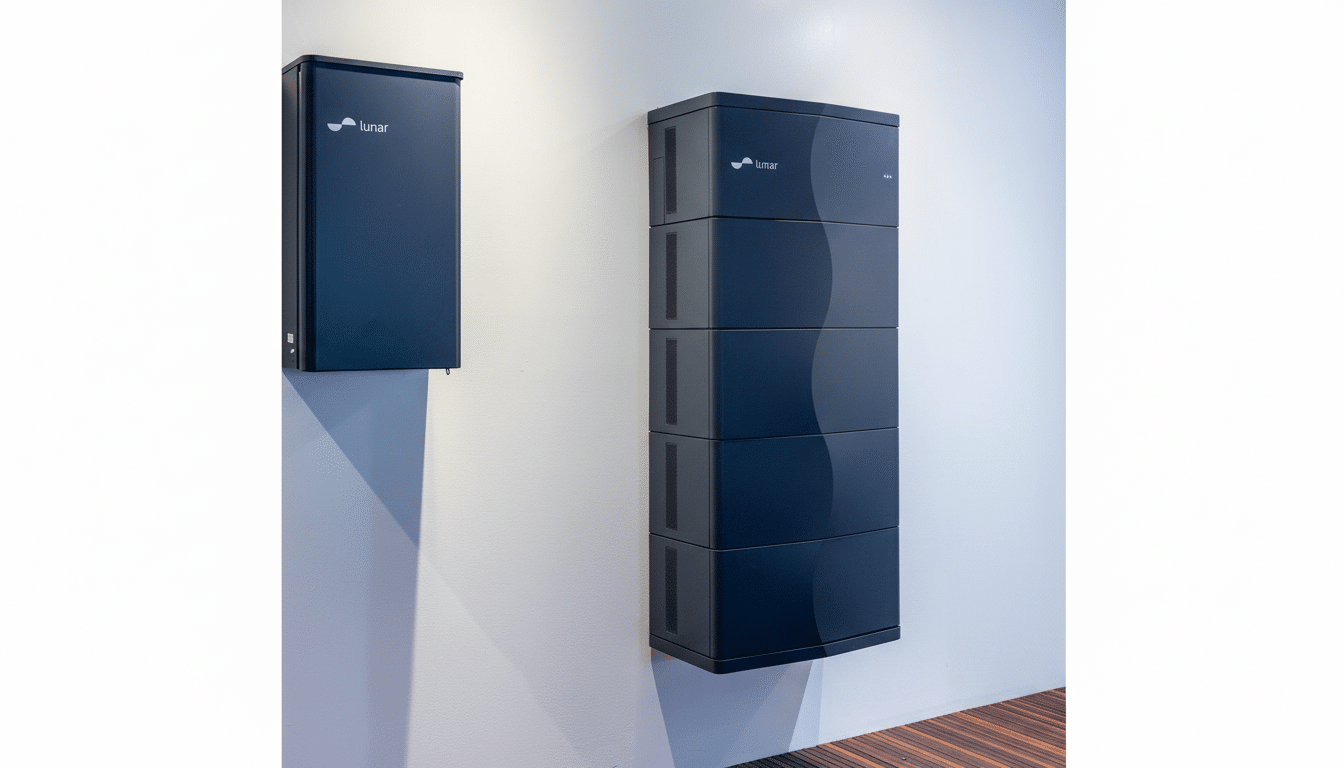
Why that matters: a six-figure fleet of home batteries represents meaningful grid capacity. At 100,000 installs, even a conservative 3–5 kW of dispatchable power per home translates to roughly 300–500 MW of flexible capacity—enough to offset multiple gas peaker units during critical hours—while delivering backup power and bill savings to customers.
Why Home Batteries Matter for the Grid in the United States
U.S. power demand is rising as electrification accelerates and data centers proliferate. Federal and regional reliability assessments have warned of tightening reserve margins, and the Energy Information Administration reports battery storage is one of the fastest-growing assets on the grid. Modular storage can be sited quickly, relieves local bottlenecks, and responds in milliseconds—attributes utilities increasingly prize when heat waves, storms, or evening ramps strain supply.
At the household level, batteries capture solar overproduction at midday and discharge during expensive evening peaks, reducing grid stress and customer bills. That dynamic has sharpened in states like California, where changes to rooftop solar export compensation have pushed homeowners toward storage-first designs. BloombergNEF notes battery pack costs have fallen more than 80% since 2010, improving the economics for both customers and aggregators.
Inside Lunar’s Virtual Power Plant Strategy
Lunar’s systems can be orchestrated through its virtual power plant (VPP) platform, allowing aggregated homes to perform demand response, peak shaving, and contingency support. Beyond tapping stored energy, Lunar’s software can also modulate EV chargers and large appliances to reduce load, turning each home into a flexible, two-sided grid resource.
The Department of Energy has highlighted VPPs as a cost-effective way to meet peak demand and defer pricey infrastructure upgrades. In practice, that means a coordinated residential fleet can help replace or reduce reliance on peaking plants—assets that are expensive to run and emit disproportionately high pollution during short bursts of operation. Compensation structures vary by utility, but mature programs in regions such as New England’s ConnectedSolutions have shown that homeowners can earn meaningful annual payouts while improving local reliability.

For Lunar, execution hinges on enrolling customers into utility programs, meeting evolving interconnection rules, and proving dependable performance over many seasons. The company’s focus on both hardware reliability and software forecasting will be central to winning multi-year capacity contracts with grid operators.
A Crowded Field And Shifting Policy Landscape
Competition is intensifying. Base Power recently assembled a $1 billion war chest to scale its residential VPP footprint, while Tesla continues expanding its Powerwall-based programs in markets like California and Texas. Incumbents and integrators including Sunrun, Enphase, Generac, and sonnen are vying for the same rooftops, and ecosystem players such as Redwood Materials are moving deeper into stationary storage supply chains. Automakers are entering via bidirectional charging, with vehicles like the F-150 Lightning doubling as home backup and grid assets.
Regulators are also paving lanes for growth. FERC Order 2222 requires wholesale markets to open to aggregated distributed energy resources, a foundational step for VPP participation at scale. At the same time, shifting federal incentives and state-by-state rules create uncertainty that favors well-capitalized players with strong policy and utility partnerships. Lunar’s new funding provides a buffer to navigate those complexities while ramping manufacturing.
What to Watch Next for Lunar’s Home Battery Rollout
Key markers to gauge Lunar’s trajectory include unit deployment pace, attachment rates with rooftop solar, the share of installed systems enrolled in VPP programs, and contracted grid services revenue per battery. Supply chain strategy will also matter: component availability, chemistry selection, and warranty terms will shape lifetime value and service costs.
If Lunar hits its 100,000-unit goal and secures robust utility partnerships, the company could become a consequential player in peak management and outage resilience. With load growth and extreme weather putting pressure on the grid, the race is on to prove that distributed, software-coordinated home batteries can deliver reliable capacity at scale—and earn their place alongside traditional power plants.
