


I’ve used each new Lenovo laptop on the show floor, and spent hours with each of them, from production-ready flagships to concept experiments with motors and rollable OLED. Five machines stood out from the pack for very different reasons: repairability at a level we rarely see, audacious display engineering, intelligent collaboration features, and an ultraportable punching far above its weight.
ThinkPad X1 Carbon Aura Edition Repairability Comes to Prime Time
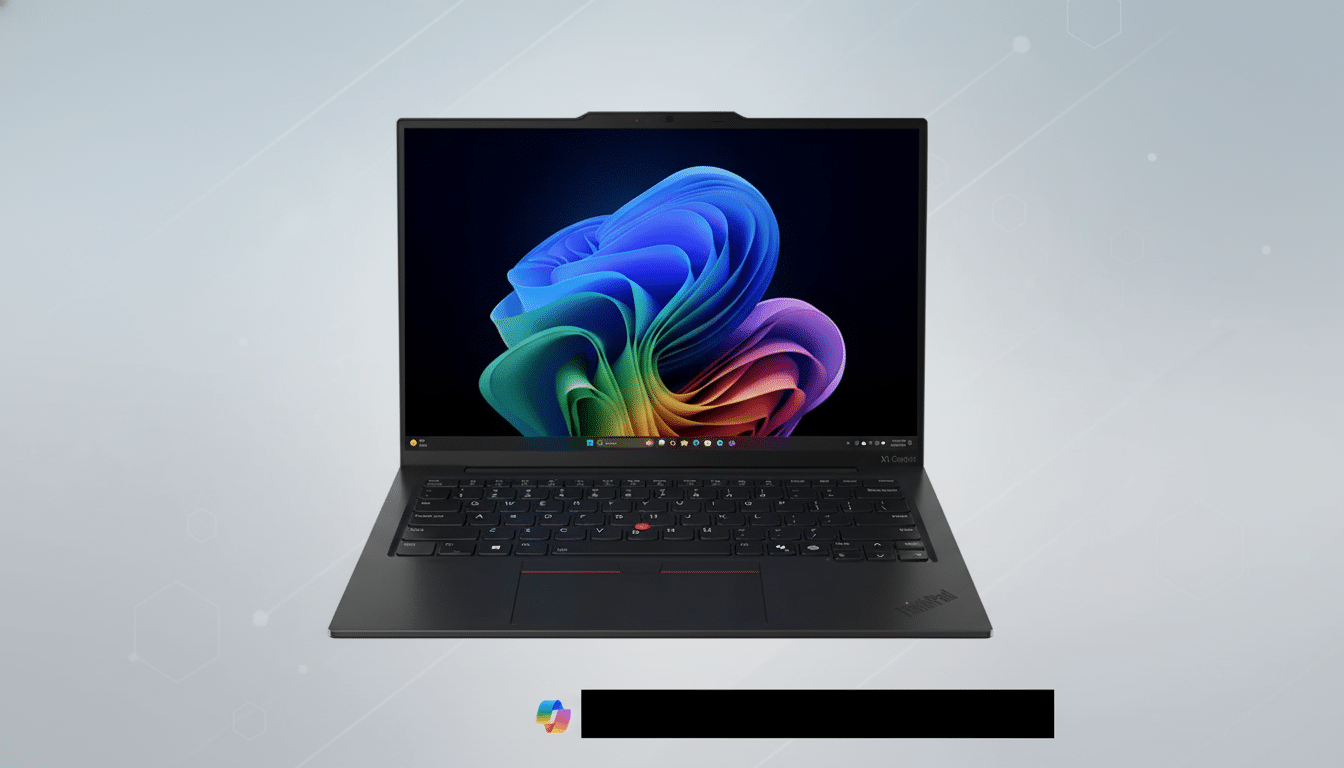
The 14th-generation ThinkPad X1 Carbon Aura Edition is this year’s most significant Lenovo laptop, because its changes are structural, not cosmetic. A new “space frame” design relocates components from only one side of the motherboard to both sides, freeing up volume, improving airflow, and making those widely used pieces user-replaceable. On my hands-on, the lower cover was removed with fewer steps than previous X1s, exposing modular USB daughterboards, an easy-to-pull battery and easy-access fans and speakers.
- ThinkPad X1 Carbon Aura Edition Repairability Comes to Prime Time
- Legion Pro Rollable A Physically Expanding Gaming Screen
- Rollable ThinkPad XD Dual Displays For Client-Facing Work
- ThinkBook Plus Gen 7 Auto Twist Designed For Modern Meetings
- Yoga Slim 7i Ultra Ultralight Without Compromises
- The Bottom Line: Five Lenovo Laptops That Truly Stand Out

That re-architecture results in practical gains: iFixit gave the laptop a 9/10 repairability score, an uncommon one for any ultralight. Lenovo also unlocks sustained power at 30W, with faster LPDDR5x clocked at 9600 MT/s and Intel Core Ultra X7 Series 3 silicon. For IT departments, this isn’t just a green story — it’s a TCO story. Though analysts have argued for years that serviceable business laptops create less downtime and longer refresh cycles, this X1 finally marries that philosophy with premium performance as well as a classic ThinkPad feel.
Legion Pro Rollable A Physically Expanding Gaming Screen
Lenovo’s wildest swing is the Legion Pro Rollable concept, an OLED notebook that expands its display from 16 inches up to 21.5 and then out to a panoramic 24 inches. The transition is mechanical and somewhat startling; the panel slides down to expose more of the battlefield in what Lenovo calls Tactical and Arena modes. That wider FOV instantly felt like an advantage in a squad shooter, giving me enough of a peripheral map awareness without pinching the HUD down to ant-size.
It’s a concept, so the hardware isn’t set in stone; however, Lenovo is eyeing a chassis akin to the Legion Pro 7i-class, with visibility of Intel Core Ultra technology coupled with GeForce RTX 5090 and DLSS 4 support. The big wild card is durability: over-and-over extends and retracts require some seriously robust rollers, tensioning, and cable management. If Lenovo can demonstrate staying power, this form factor could redefine what we should expect from portable esports rigs, which usually have to plug in an external monitor for some extra girth.
Rollable ThinkPad XD Dual Displays For Client-Facing Work
The ThinkPad Rollable XD is the most “ThinkPad” concept to come out of Lenovo’s experiments. With the lid closed in classic clamshell style, one part of your flexible panel curls onto the back to act as a rear mini‑display—perfect for mirroring slides to a client across the table, or flashing meeting reminders. Pull up and the main screen goes from a compact 13.3 inches to a roomy 16, transforming your coffee shop workstation into a desktop‑class space.
Lenovo markets the XD as a productivity tool, so don’t expect top-binned game-ready silicon, but rather efficient Intel Core Ultra options instead. This is not about raw speed; what’s more interesting here is bending your work patterns: quick face‑to‑face sharing without swiveling the whole machine, then a taller canvas for code, timelines or vertical documents. For road warriors, it’s a clear quality-of-life upgrade — as long as the mechanism ends up being as reliable as it feels in brief demos.
ThinkBook Plus Gen 7 Auto Twist Designed For Modern Meetings
Of the shipping designs, the ThinkBook Plus Gen 7 Auto Twist is the crowd‑pleaser. Its motorized center hinge spins the 14‑inch 2.8K OLED display almost 360 degrees to show a colleague or room, then flips it back for heads‑down work. It’s a small thing that prevents an endless series of fumbling laptop rearrangements by slim stainless-steel monoliths. The turn is smooth and silent, with no apparent wobble when typing.
Specs are sensibly premium for a productivity rig: Intel Core Ultra Series 3 processors, Dolby Atmos-tuned speakers, and a big ol’ 75Wh battery, with options of up to 32GB RAM and a 2TB SSD. At a starting price of $1,649, it’s less than some enterprise convertibles with the same panel. For hybrid offices where ad‑hoc collaboration prevails, Auto Twist reads like a feature you’ll be using every day.
Yoga Slim 7i Ultra Ultralight Without Compromises
The featherweight of the lineup is the 2.2-pound, all‑white Yoga Slim 7i Ultra, but it manages to dodge the trade-offs that shed grams in other systems. The matte magnesium alloy chassis puts up little resistance to grubby prints and flex, the keyboard has decent travel (nearer 2mm than 1), and that 2.8K OLED deployment hits a claimed peak of 1,100‑nit HDR which kept content punchy under our harsh show lights. I heard little to no fan noise while running a mixed workload of browser tabs, light photo editing and streaming.
Under the hood, Lenovo combines an Intel Core Ultra X9 Series 3 processor with integrated Intel Arc graphics and 32 GB of fast dual‑channel memory. It seems tailor-made for those creators who like portability but still need responsive timeline scrubbing and fast exports, and to see their color‑critical work on a display that would do it justice. In a landscape where “ultra‑light” often comes at the cost of “not quite enough,” this one feels like every bit the laptop its size suggests.
The Bottom Line: Five Lenovo Laptops That Truly Stand Out
Lenovo had quantity, but these five had clarity of purpose. The X1 Carbon Aura Edition puts repairability at the flagship table. The Legion Pro Rollable and ThinkPad Rollable XD continue to drive display engineering toward cold, hard benefits rather than pure spectacle. The ThinkBook Plus Gen 7 Auto Twist gives a new twist to everyday collaboration. And with the Yoga Slim 7i Ultra, ultralight can still mean ultra capable. If this is the tone for the year, Lenovo’s laptop story is no longer about spec bumps and more about solving friction points that are real.
