


First up is Qira, a cross-device assistant that jumps between your phone, laptop and tablet—and, for some reason, Motorola’s AI Pin.
Rather than feeling like a distinct chatbot, Qira feels more like an ambient teammate that moves off your apps and onto your hardware—online or offline.
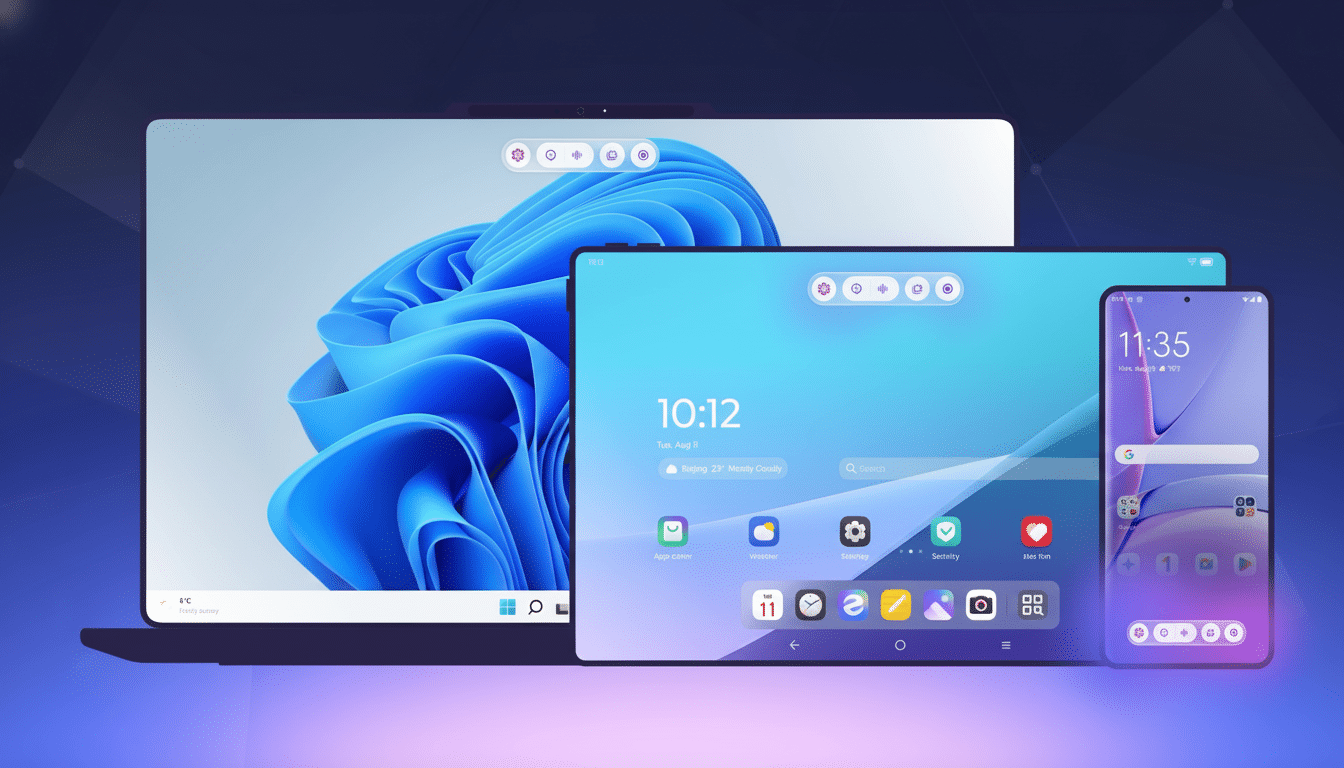
An Ambient AI That Understands Your Context
Qira demonstrates aspects of “personal ambient intelligence,” where it gradually learns user-approved context from documents, messages, calendar events and recent activity to form a fused knowledge base. That living model of your world allows it to predict steps and accomplish tasks with minimal hand-holding. Tell it to “get me ready for the client call,” and it will be able to build a brief from your notes, summarize an email thread related to the call, and set up pertinent files on your PC just in time for the meeting.
Two showcase features suggest how it plays out in practice. Next Move serves contextual nudges with selections based on what it sees you’re doing at the time—for example, turning a rough note into a draft of your slides. Catch Me Up consolidates what you missed while you were gone, across apps and devices, so that you won’t need to bounce from inbox to feed and back.
Cross-Device Actions Without App Juggling
Qira differs from most assistants in that it doesn’t quit at recommendations, but rather gets the job done across different platforms. In testing, the assistant did everything for me—started app workflows and completed them by itself—opening services, entering details, picking options, confirming submissions—you name it, transparently. You can see its reasoning play out on your phone or laptop, approve the steps it takes, or let it run free once you trust it.
Because Qira connects Lenovo PCs with Motorola phones, it can transfer files point-to-point without the cloud, fill out spreadsheets on your ThinkPad from receipts shot on your other device, or pull up a draft email when you switch devices. Ecosystems have promised that kind of continuity for years; Qira’s pitch is that agentic execution removes the friction that typically disrupts flow.
Privacy by Design and Robust Hybrid Processing
For all of this, Lenovo insists that being clear with users and ceding control are key. Qira optimizes for on-device computation by utilizing the NPUs in today’s PCs and smartphones, and only queries trusted cloud services when required. The company says that data is maintained locally by default and can be reviewed or deleted to follow the principles in the NIST AI Risk Management Framework and standard enterprise-operations controls such as role-based access and audit trails.
That hybrid approach is relevant as AI becomes more personal. IDC and Gartner analysts point out that on-device AI cuts latency, shields sensitive data for privacy or security purposes, and ideally can save money over always-on cloud inference, among other benefits. It also sets Qira up nicely for corporate rollouts, in which data residency and compliance are a must-have, without exception.
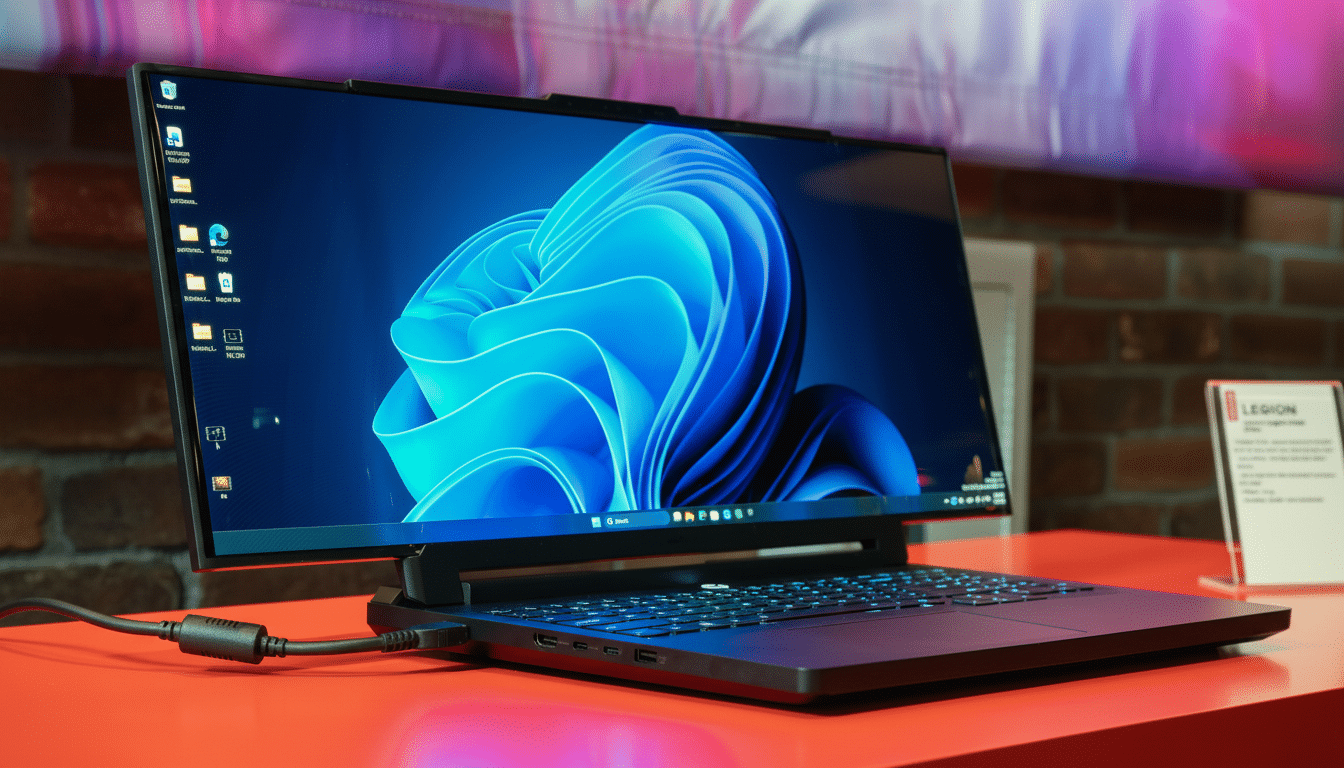
Motorola AI Pin Expands Qira to Wearables
All of Qira’s agentic functionality is now housed in Project Maxwell, a proof-of-concept AI Pin by Motorola that can be worn hands-free with its magnetic force. Attached to your lapel or on a necklace, worn magnetically, this pin comes with a camera for visuals, so Qira can help interpret the things you’re looking at and act upon them. On-stage demos showed voice-only requests—say, for directions, ordering a ride or sending a text message—processed end-to-end without someone needing to pick up a phone.
Prior AI pins battled with latency, battery life and limited touch control of apps. Motorola is leaning on tight integration with the phone to add compute and network resilience, while the app-level actions by Qira do the heavy lifting. A declared “show your work” mode gives users full visibility into every step Qira takes within apps—open, fill, select, and submit—engendering the trust that is critical for agents acting in your stead.
Why This Development Matters for Lenovo Today
Lenovo’s reach will provide Qira with a head start, too. IDC and Gartner routinely rank the company as the world’s largest PC maker, with a share that hovers around 25%. More significantly, that installed base, combined with Motorola’s Android ubiquity, means Qira can serve users across work and personal domains—an important edge as assistants evolve from novelties to tools.
It also focuses the competitive picture. Apple is embedding systemwide intelligence through devices, Google is bringing multimodal models to Android, and Microsoft has integrated Copilot more deeply into Windows. Qira’s distinction is an agentic orchestration across a multi-OS ecosystem, combined with an entry into perceptive wearables that can augment tasks sans screens.
Availability Timeline and Ecosystem Integration Details
Qira will be integrated into some Lenovo devices, then trickle down to supported Motorola phones. The branding adapts to whatever device you’re currently on—Lenovo Qira for PCs and tablets, Motorola Qira for phones and the wearable—to assure a consistent experience (shared across devices) and synchronization of memory. Look for firm integration with Lenovo’s PC utilities and Motorola’s device services, complete with opt-in controls to regulate what Qira can see and do.
If Lenovo can deliver on the promise—trustworthy, privacy-respecting assistants who actually get things done—the assistant could make using two devices simultaneously so routine as to become backgrounded work. The combined cross-device reach, transparent execution and practical wearables may finally nudge ambient AI from demo to daily habit.
