


The Lenovo ThinkPad Rollable XD, the latest concept from its premium lineup, features a display that doesn’t just roll up—it rolls 180 degrees around the top of the lid and back down on the rear. It’s a bold vision of how the rollable laptop works, and in person, it is the kind of engineering flex that draws attention across a crowded show floor.
Called the ThinkPad Rollable XD, the prototype turns Lenovo’s previous rolling-screen concept on its head by extending the panel across the lid rather than unfurling from inside the keyboard deck. The result is a portrait-friendly canvas that stretches outward at the push of a button but doesn’t consume any additional space within the base of the machine.
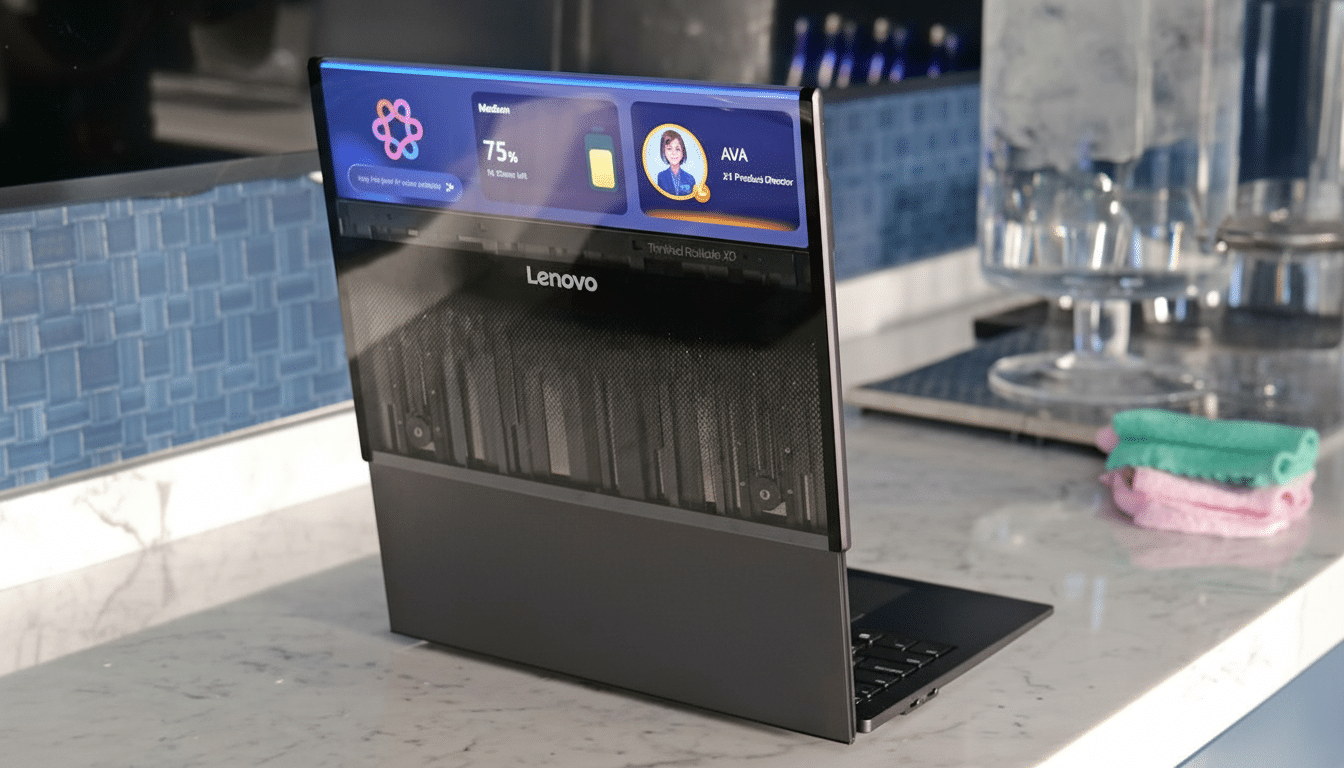
Across-the-Lid 180-Degree U-Turn Explained
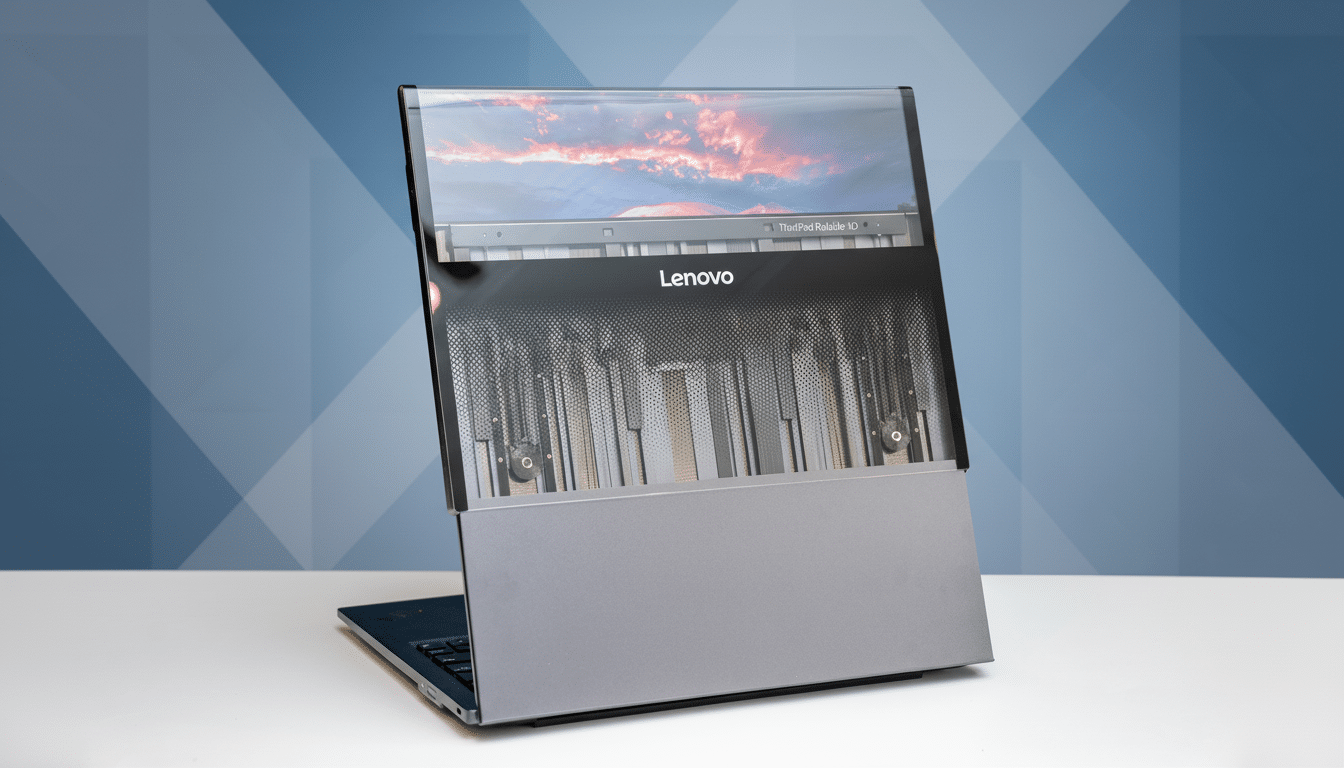
The XD’s secret is a deep “U” around the top edge. When it’s turned on, the lid lifts up along vertical rails as a flexible display rolls up from a cartridge that sits inside the backside of the lid, curling over the crown and down onto the user-facing side. It also makes the show even better: you can see pulleys, guides, and tensioning clips that keep the panel aligned and taut as it moves on the transparent rear in the prototype.
Control is limited to a capacitive area on the top edge. A short hold and a swipe, and it is extended or retracted. On early units, it can be a finicky gesture—occasionally needing to be tried again—and one demo machine did pause in the middle of a lift because (I suspect) of power or motor calibration. These are the sorts of hiccups that don’t stick at the conceptual phase—not deal-breakers but reminders of just how complicated this choreography is.
Why Roll Over and Not Under on a Rollable Laptop
Lenovo already sells a rollable concept design that unfurls vertically, stretching out extra display real estate stored beneath the keyboard. This new design (tentatively called Floating Screen) also rests the screen flush up against the lid, which could leave some precious volume in the base unused and open for more thermal headroom, battery, or speakers—all aspects that impact performance and acoustics. Engineers live and die by cubic millimeters, and hoisting the panel mechanics upstairs can be worthwhile.
Functionally, the payoff is a burst of vertical pixels in a footprint that still stows easily. On Lenovo’s rollable notebook, the viewing area expands from about 14 inches to nearly 17 inches at full length. That extra height is gold for code editors, financial models, research papers, and timeline-heavy creative tools. It’s also a glorified handheld portrait monitor without needing to haul around an extra display.
There’s also an ergonomic angle. Because tall 16:10 or even 3:2 screens mean less scrolling while reading and writing, users like them more. A rollable panel makes that benefit even bigger when you want it to, then shrinks for flights, meetings, or the coffee shop table where space is tight.
Early Hurdles and Durability Concerns to Watch
Flexible displays come with some familiar concerns. Extended, there was a faint line—you can see it under the right angles and light—on the XD. That’s in keeping with what we’ve seen on foldables and rollables across both phones and laptops. The good news: head-on, it’s nowhere near as distracting, and panel makers have been refining their top layers to mitigate it.
These mechanical designs bring moving components and a sharp bend at the top of the lid. Display Supply Chain Consultants has consistently cited bend radius and film stack toughness as gating factors for rollables, along with manufacturing yield. In contrast, makers of foldable phones generally cite 200k+ actuations in the lab, but rollables come with sliding friction and routing tolerance challenges that require robust rails, dust hedging, and smart motor control. IP and lifecycle ratings will be as core to the story of any shipping product.
Power is a factor too. Powering a motorized lid up and down sips power, and maintaining constant tension as the product moves adds load spikes. Intelligent firmware can stagger speeds and adjust torque, but every aspect of the system—from battery capacity to controller efficiency—will dictate how frequently users are able to “grow” the screen before they require a charger.
The Cost and Competition Picture for Rollables
Cost, of course, is the elephant in the room. The early rollable notebooks are rolling out at enthusiast prices north of $3,000, a premium that restricts adoption even as these devices advertise what is possible. At least until new materials achieve higher yields for panels, and mechanisms are far simpler, rollables will be occupying the same space as dual-screen machines or luxury OLEDs—a class of halo product.
There’s momentum, though. Lenovo has shown a number of rollable concepts across laptops and phones, and panel suppliers like BOE and Samsung Display have demonstrated rollable OLEDs at industry events. It’s clearly an ecosystem iterating: lighter tension systems, harder cover films, and adhesives that survive temperature swings and thousands of cycles are all going in the right direction.
What This Means for Future Laptops and Design
More than spectacle, the ThinkPad Rollable XD tests a pragmatic notion: have more space in the base without giving up screen real estate, and serve tall, work-friendly views only when it’s time to concentrate.
If those can be freed up, it could mean quieter fans, larger batteries, and speakers in a mainstream-sized laptop that you might actually notice on a daily basis.
Software will have to catch up. Dynamic resolutions and scaling are already well orchestrated by Windows, but creators and developers enjoy an experience where apps remember layouts while the screen grows. You can bet vendors will be shipping utilities that snap panes and reflow toolbars intelligently as the panel grows.
For the time being, this ThinkPad concept is a statement piece—and it’s a smart one. It has the gumption to situate a roll where it wins back internal volume, and it demonstrates that vertical pixels can happen without a second screen. If Lenovo can refine the gesture controls, stiffen the mechanics, and bring costs down, the over-lid roll is perhaps the most intriguing take on a rollable laptop we’ve seen yet.
