


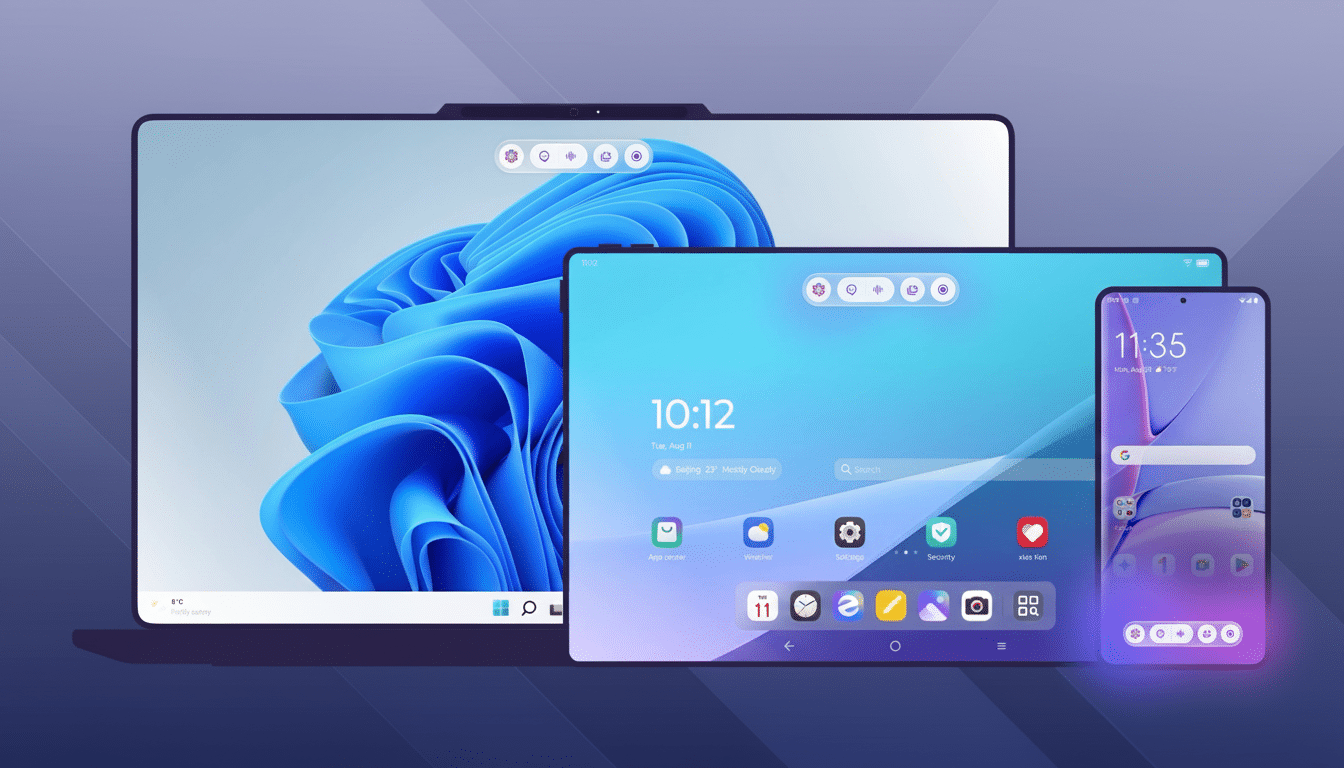
Qira is an ambient cross-device system designed to perform tasks for you rather than just answering questions.
This new competitor is Lenovo and Motorola’s own offering in the AI assistant space: Qira. Announced alongside a fresh round of hardware at CES, Qira’s pitch is simple and bold: provide helpful hints in context across your PC, phone, tablet, and wearable device—and do so with solid on-device privacy controls.
- What sets Qira apart from traditional chatbots and assistants
- A wearable companion with real pull for screen-free tasks
- Privacy and the hybrid design behind Lenovo’s Qira
- How it stacks up with Copilot and Gemini
- Early use cases provide a reality check for Qira
- Challenges to watch as Qira scales across devices
- Rollout and branding across Lenovo and Motorola devices
What sets Qira apart from traditional chatbots and assistants
Unlike classic chatbots, Qira is designed for “agentic” tasks—transferring files between devices, filling in forms, starting and shutting down apps, and completing multi-step workflows from beginning to end. Lenovo calls it a private ambient intelligence that is trained over time from your selected interactions and documents to build up a companion knowledge—this fused model will be a living one of what’s important to you. It means fewer context switches, and it means more proactive advice.
Two examples illustrate the approach. Next Move surfaces suggestions based on what you’re doing at the moment—imagine pitching the right presentation deck when you access your calendar. Catch Me Up gives you the news of what changed while you were gone, using emails, files, and apps that you permit. The idea is to reduce friction, not by adding a place you have to check.
A wearable companion with real pull for screen-free tasks
Motorola’s Project Maxwell pin illustrates what Qira can be when no screens are in sight. The proof-of-concept wearable relies on voice and an onboard camera to understand context and then takes action from start to finish—calling up a ride, sending out a message, or routing directions—without you having to open your phone. For transparency, you can examine later how Qira performed each of the steps: which app was opened, what fields were filled in, and what choices were selected.
It’s a practical rejoinder to previous AI pin experiments, like those that promised ambient help but faltered under the pressure of reliability and usefulness. By leveraging Qira’s cross-device base and apparent trace of the task, Motorola is targeting utility first and novelty second.
Privacy and the hybrid design behind Lenovo’s Qira
According to Lenovo, Qira’s design puts consent and local development first. A hybrid architecture stores personal data on the device by default, bringing in secure cloud services when necessary. That lines up with the industry’s direction toward NPUs and edge inference throughout Lenovo and Motorola laptops and phones, along with their chip partners, whose goal is to cut data movement while improving responsiveness.
This matters because action-taking assistants require deep integrations and permissions. Consent-driven operation, with full visibility of what it’s doing and why, will be crucial for enterprise acceptance, where auditability, data residency, and compliance play into adoption decisions.
How it stacks up with Copilot and Gemini
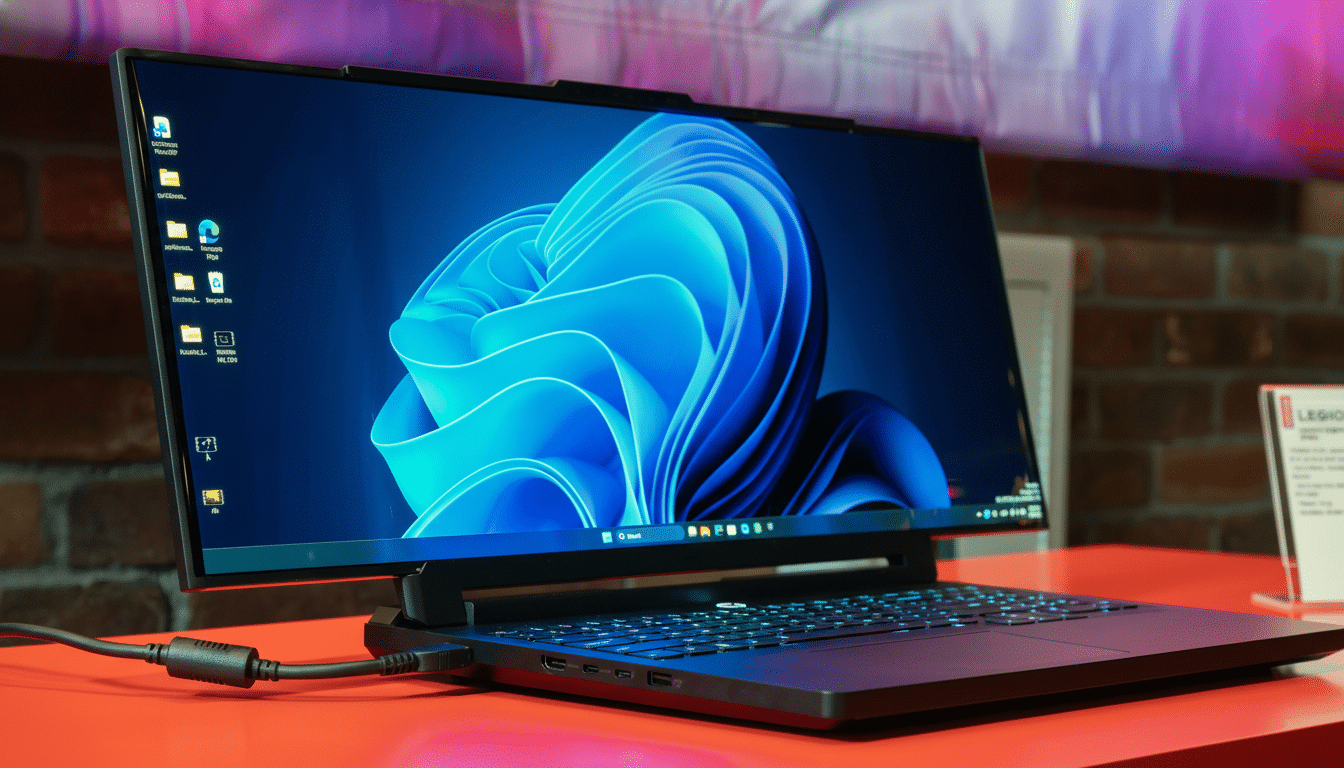
Microsoft’s Copilot is deeply embedded in Windows and Microsoft 365, while Google’s Gemini lies at the center of Android and Google Workspace. The advantage Qira has is that Lenovo has a tremendous range of stuff—think PCs, tablets, and phones—all the way up the stack, so it can conceivably have you doing things across that entire stack right out of the box. IDC still ranks Lenovo as the world’s No. 1 PC maker by shipments, and that footprint could mean fast, preinstalled distribution.
The timing is strategic. Canalys forecasts that 60% of PCs shipped in 2027 will feature AI, marking a shift in form factors as on-device assistants become standard. A reliable, cross-app task completion assistant with solid privacy defaults could end up being a defining layer for Lenovo and Motorola hardware in the same way that Copilot and Gemini hope to be for their own platforms.
Early use cases provide a reality check for Qira
In the demos, Qira performed real-life use cases: she ordered a ride in which she opened the app and entered details of her destination, selected a payment method, and confirmed her request; or sent a text where she selected the right contact, composed her message, and sent it.
These are the types of repetitive, multistep tasks that piss people off and gum up productivity apps—exactly the jobs a personal assistant should be good for.
Challenges to watch as Qira scales across devices
Agentic systems are only as good as their integrations. Qira will require wide adoption among third-party services, strong permissioning, and clear recovery when automations go awry. Reliability on the lowest of low-end devices, latency, and battery life on wearables will be tested in real usage. Admin controls, logging, and policy enforcement will be available to commercial buyers via Lenovo, however, if Qira scales beyond consumer appeal.
Rollout and branding across Lenovo and Motorola devices
Qira will be available on select Lenovo devices at first, and it will come to Motorola phones in the future. The branding will be consistent across the device family: Lenovo Qira on PCs and tablets, Motorola Qira on phones and wearables, but under the hood they’re all going for an identical experience. If Lenovo and Motorola can attain a certain level of cross-device execution, Qira’s fusion of ambient intelligence and tangible agency just might position it as a true competitor to Copilot and Gemini.
“It’s not just another chatbot,” Lenovo VP Dan Dery, VP of AI Ecosystem at Lenovo, says in the release. “This is artificial intelligence that actually gets to know you.” That’s the vision, and if the company turns that vision into something that delivers everyday dependability, then Qira might be some of the most important software Lenovo has released in years.
