


I saw a Lego TIE Fighter cycle through colors and fire laser blasts on its own at CES, and it wasn’t the trippiest lighting display I’d seen. It was Lego’s new Smart Play platform at work, centered around a sensor‑laden Smart Brick that turns old-school creations into responsive — and screen-free — gizmos. The demo was part of The Lego Group’s first-ever CES appearance, and it had the kind of show-floor sizzle you might expect from a company that long ago learned to mix imagination and actual engineering.
Getting Hands-On With Smart Play at the Booth
The Star Wars presentation set the tone. A TIE Fighter, accompanied by a Darth Vader minifigure, pulsated from Imperial red to ice-cold blue and crackled with blaster effects. Roll an enemy close, and proximity cues prompted a volley of sound; pull away, and the ship resumed ambient rumbles. On the next table, an X‑Wing with a Luke Skywalker minifigure spun lightsaber swishes on cue and synced rudder turns to pitch-perfect swoops.
Outside the galaxy far, far away, Lego was also in on Smart Play. Two freestanding bricks changed color to match a color board, then flipped to a distance game where kids raced cars toward an archery target. Closest car did a victory fanfare; crash into a smart figure and you’d get a pratfall shriek. It was part playground and part prototyping lab, with beats that switched fast enough for hands not to get bored and not to hold phones.
How It Works: Inside the Smart Brick’s Sensors and Tags
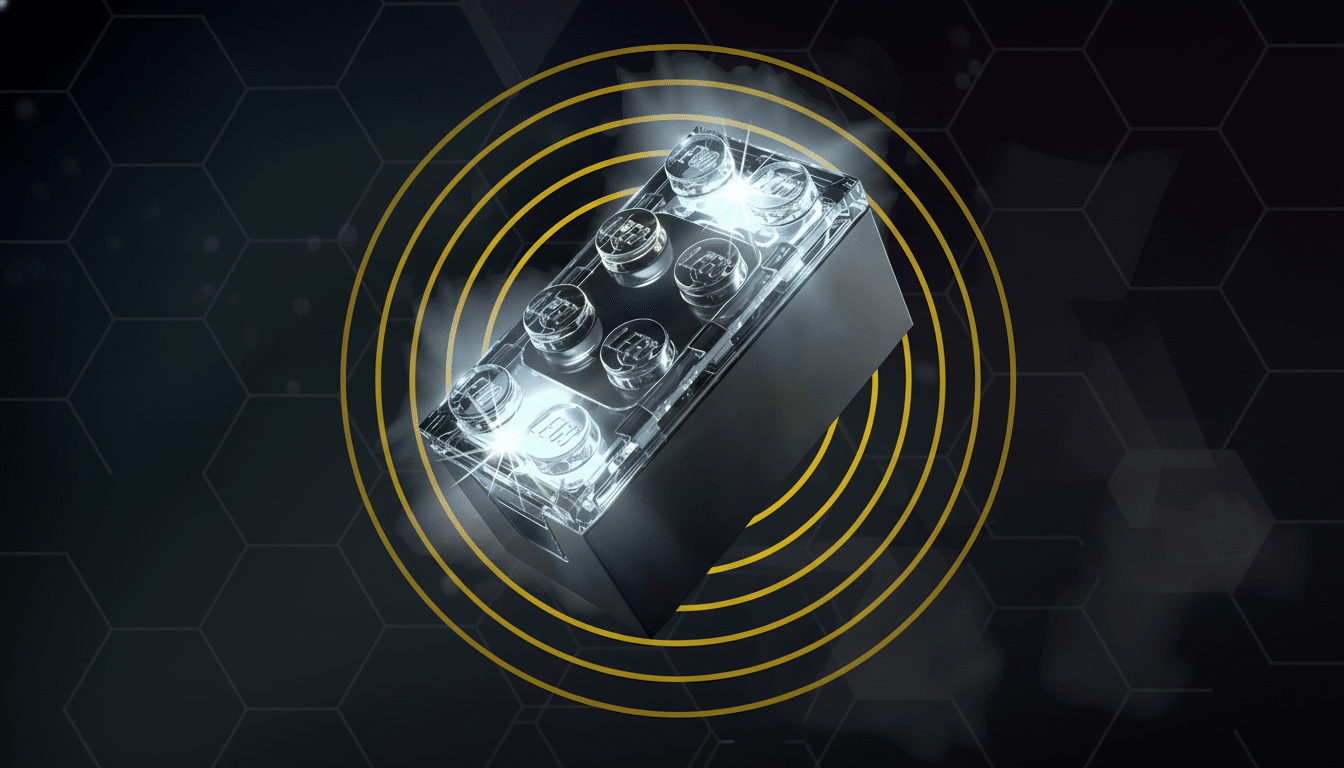
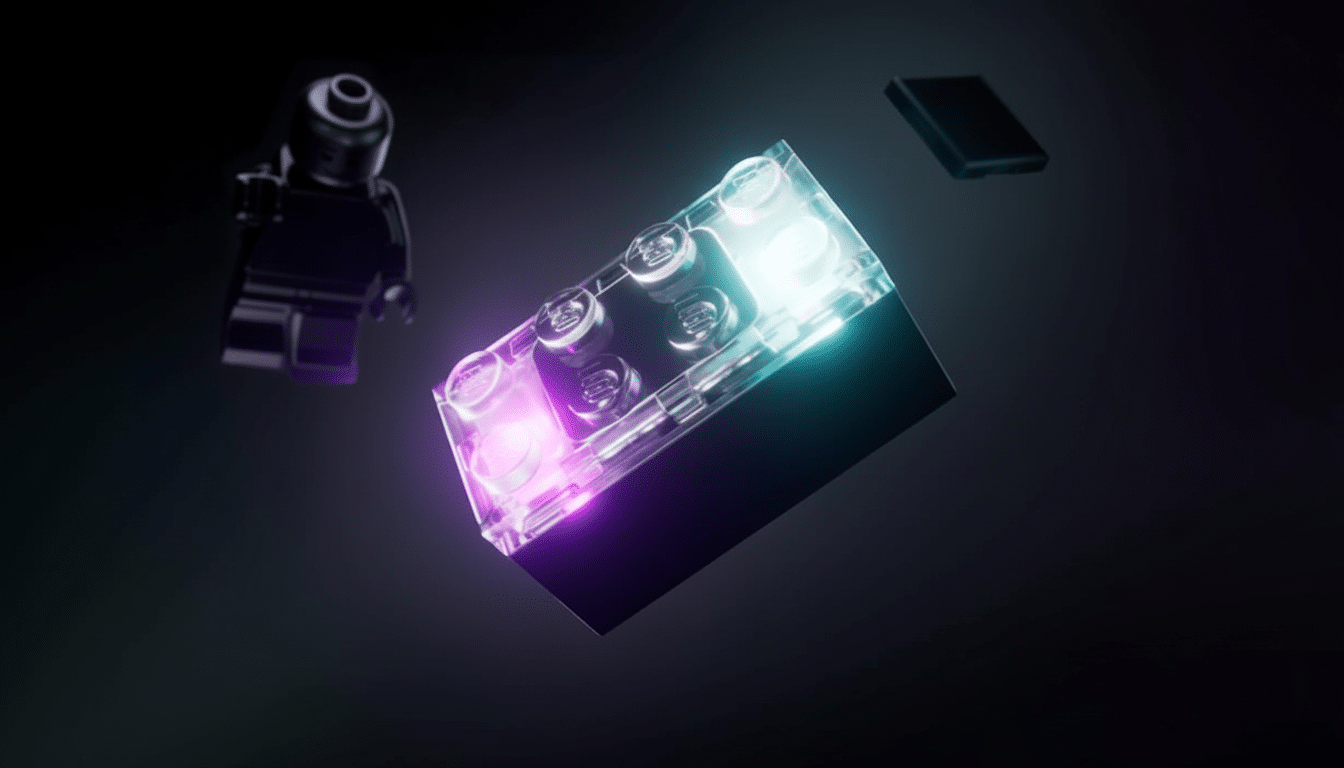
When powered off, the Smart Brick is your typical rectangular Lego brick, with a clear plastic front and drab other three exposed sides. Wake it up by shaking and it wakes up with an internal light show, a speaker for effects and sensors like light, color, sound, and distance. In the demo, I witnessed instantaneous color matching and proximity cues toggling interactions between multiple builds without an app.
The scenario logic is also seemingly saved on swappable Smart Tags that snap into the center of the brick. Tap on a tag and the brick becomes a starship, an animal, or a race car with lights and sounds specially tailored for each. Lego reps highlighted the intuitive nature of play — build first, snap a tag, and dive right in. They did not specify how long the device’s battery will last or how long it will take to charge, or whether each theme requires its own tag, all of which could determine how easily families can grow a collection.
‘Star Wars’ Sets Headline the Smart Play Launch Lineup
To kick off Smart Play, Lego is relying on its ultimate crowd-pleaser. The new releases include a TIE Fighter with Darth Vader, an X‑Wing with Luke Skywalker, and an Emperor’s Throne Room scene for lightsaber duels. In real life, though, the TIE Fighter color cycle sold the fantasy: warm reds during attack runs; cooler tones at idle; reactive blasts when another smart build moved into range.
It’s a tried, tested Lego formula — pair an iconic license with new tech — but the execution is unlike app‑heavy approaches of yore. The audio and light are on‑brick, the interactions are between physical things, and the only “setup” I saw was a tag insertion and a shake to wake.
Why This Screen-Free Approach to Play Matters
Interactive Lego remains nothing new — think Lego Super Mario or the now-retired Mindstorms line — but Smart Play has broken through by cutting screens out of the loop. That’s smart strategy. General U.S. toy sales dropped 8% year over year recently, according to Circana, and categories that continue to engage kids without subjecting them to additional screen time have been more resilient. By making blocks themselves expressive, Lego can maintain the open-ended vibe of building while folding in cause‑and‑effect learning that educators dismissively drape under STEM.
It also aligns with the larger CES storyline of “ambient computing” — in which technology falls into the background. (The trade group Consumer Technology Association reports the show typically draws around 170,000 people.) In the family tech corner, meanwhile, the focus has moved away from app demos into hands-on experiences you can grab in seconds. Smart Play felt in line with that tendency: accessible, modular, and immediately legible to kids as well as grown-ups.
Open Questions Before Smart Play’s Official Launch
Three unknowns will fuel or kill momentum.
- First, price: Families will want to know if Smart Bricks and tags are bundled with, let’s call it, “hardware,” or sold à la carte — and how many they’ll need for meaningful play.
- Second, power: Battery life, ease of recharging, and durability (playing the kitchen-table drop test) are all important factors for toys that flash and squall.
- Third, use of other elements: Will Smart Play “work” with Powered Up motors, or is it entirely its own ecosystem? Lego didn’t say.
But even with those caveats, the on‑floor experience was compelling. The TIE Fighter’s flashing lighting and laser sound effects went a long way to breathing new life into a heavily played starship, and the tag system looks simple enough for kids to be able to run their own battles without requiring adult intervention. If Lego can get pricing and longevity right, Smart Play could become the company’s most accessible bridge between bricks and electronics since Power Functions.
I’ll be curious to see how deep the scenarios go when review units turn up—particularly whether or not cooperative play scales beyond two or three builds. For now, consider it a promising first sortie from an interface that transforms classic studs into living props, tablet not required.
