


Internal emails reportedly point to a future where Ring cameras could help identify and follow specific individuals using artificial intelligence, expanding a tool initially marketed for locating lost pets. The disclosure raises fresh alarms among privacy advocates and smart home customers already wary of how doorbell footage can be searched, shared, and funneled to law enforcement.
According to reporting by 404 Media, messages from Ring founder and CEO Jamie Siminoff describe the company’s AI-powered Search Party feature for dogs as a foundation for something larger, touting ambitions to dramatically reduce neighborhood crime. Ring says the product does not track people today, but stopped short of ruling it out in the future.
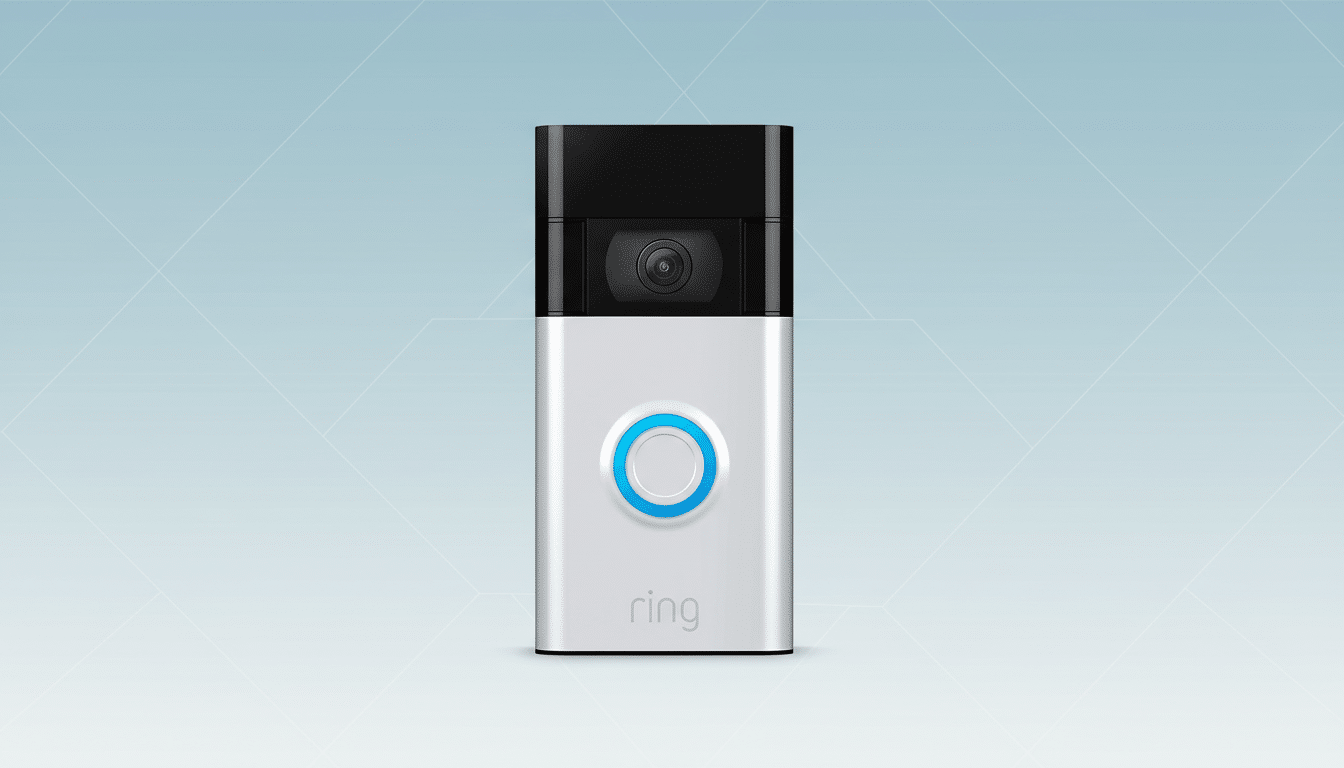
What the leaked emails reveal about Ring’s AI plans
The leaked emails, as described by 404 Media, frame Search Party as a first step. By characterizing the pet-finding tool as a base layer and tying it to crime prevention, the communications suggest Ring leadership envisions repurposing the underlying AI to help locate people or persons of interest. That trajectory would align with the company’s long-stated mission to make neighborhoods safer.
Ring, owned by Amazon, responded that Search Party uses models trained to detect dogs and does not process human biometrics or track individuals. The company emphasized that sharing footage remains the owner’s choice. The absence of a categorical “never” on people-tracking, however, leaves room for speculation about product roadmaps.
From lost dogs to potentially identifying people
Technically, the leap from pet detection to person tracking is not far. Modern computer vision stacks already running on many cameras can distinguish people, vehicles, and animals. Add re-identification algorithms that match a person’s appearance across frames and cameras, and a system can effectively follow someone’s path through a neighborhood. In academic benchmarks, person re-identification models routinely exceed 90% accuracy in controlled settings—though performance drops in real-world conditions with poor lighting, motion blur, and occlusions.
The pivotal design choice is where processing occurs. On-device inference minimizes data exposure but is compute-constrained; cloud processing unlocks more powerful models at the cost of sending more footage offsite. Either path introduces risks: false positives that mislabel an innocent neighbor, or data flows that expand who sees and can request sensitive video.
Even without explicit face recognition, cross-camera “pattern of life” tracking—linking clothing, gait, and accessories—can be highly revealing. Researchers and civil liberties groups have long warned that such capabilities, once normalized in consumer products, tend to expand in scope and application.
Law Enforcement Access And Community Requests
Ring’s relationships with police and public safety agencies are central to this debate. The company’s Neighbors platform has given authorities a way to request footage from users, and a feature called Community Requests enables direct outreach to camera owners during investigations. The Electronic Frontier Foundation and the ACLU have cautioned that streamlined access can bypass community oversight, chilling everyday activity on sidewalks and front yards.

Prior reporting has shown how these pipelines matured. Investigations in past years documented law enforcement portals and marketing partnerships that encouraged agencies to promote Ring. By 2022, civil liberties groups counted more than 2,000 police and fire departments using Ring’s public safety interface. Separately, the Federal Trade Commission ordered Ring to pay $5.8 million and adopt strict safeguards after finding the company failed to protect user videos and allowed improper employee access. Those orders increased scrutiny on how Ring builds and ships surveillance features.
Privacy risks and emerging legal fault lines
Any move toward people-tracking intensifies legal and ethical pressure. States with biometric privacy laws, such as Illinois under BIPA, require clear consent for capturing and using biometric identifiers. Even appearance-based tracking that avoids templates of a face can raise similar concerns when it produces a persistent identifier tied to a person’s movements.
Accuracy and bias remain unresolved risks. The National Institute of Standards and Technology has repeatedly found demographic differentials in face recognition systems, with error rates varying across race, age, and gender. While person re-identification is not the same as face matching, similar dataset and deployment biases can lead to disproportionate misidentifications—problems that compound when footage is rapidly disseminated to neighbors or police.
What Ring owners should watch and do to protect privacy
For households using Ring, practical steps can reduce exposure regardless of what future features bring.
- Enable end-to-end encryption for video where available.
- Restrict shared users.
- Tighten motion zones to avoid public walkways.
- Review whether clips automatically upload to community feeds.
- When Community Requests arrive, scrutinize the scope and timeframe before sharing anything.
Clear, binding commitments from Ring would matter most. A public pledge not to develop people-tracking via Search Party or adjacent tools, transparent model cards describing what AI systems detect, independent audits, and opt-in defaults for any law enforcement sharing are baseline expectations privacy groups say would rebuild trust.
The leaked emails signal an inflection point for consumer surveillance: a shift from cameras that merely alert to motion, toward networks that can follow individuals across streets and hours. Whether Ring chooses that path—and under what safeguards—will determine how far the smart doorbell era pushes into everyday public life.
