


There’s no denying the appeal of a big-screen projector — but while today’s home cinema models can offer up to 100-inch pictures on your wall, most of them require you to sacrifice a corner of your room and spend thousands for every extra little bump in picture size.
The O3 is a tri-laser model — hardly the most common option — but one that can throw a 100-inch, high-quality image from as close as 22 cm, and it only weighs 2.4 kg, with dimensions of 250 × 219 × 107 mm.
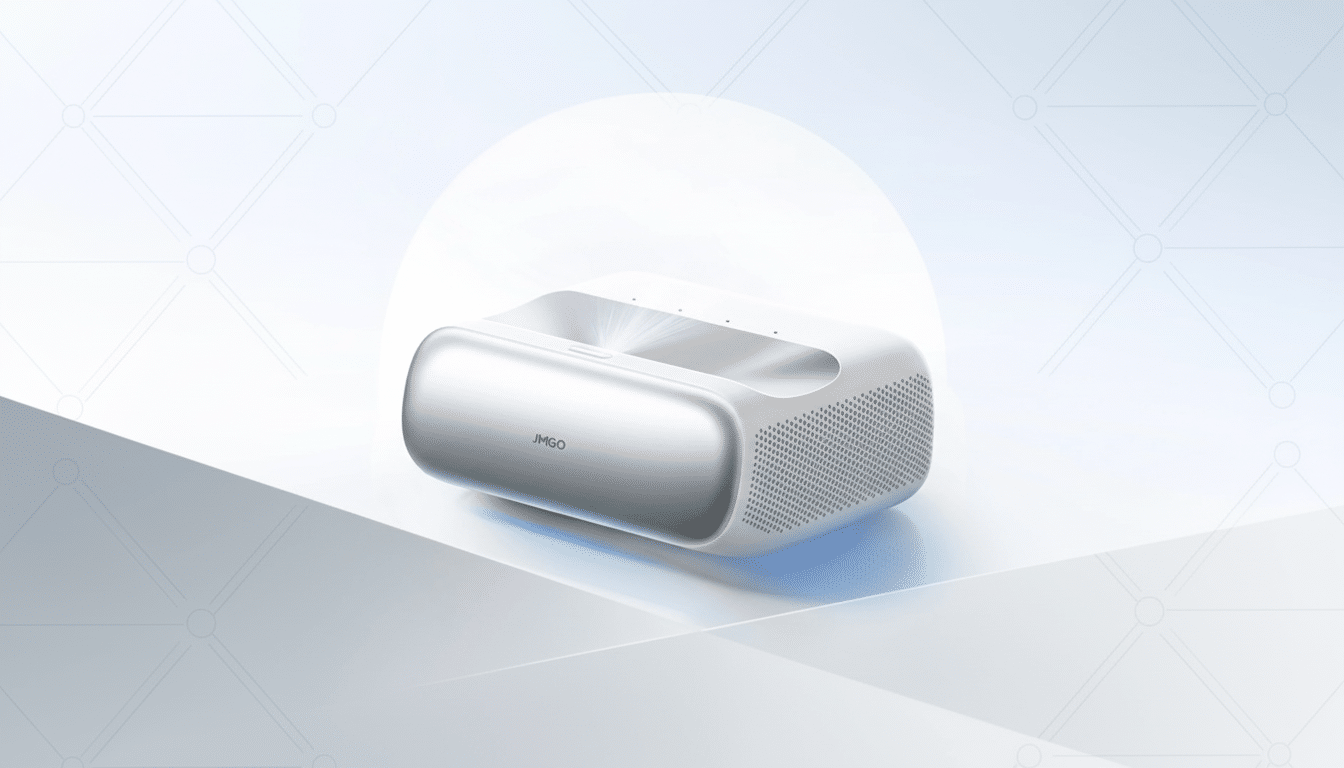
At CNY 3,749 (approximately USD $530), the O3 price comfortably undercuts several UST rivals while delivering features usually found at higher price points. For apartment residents or those with space constraints who have always wanted a deep TV stand, this could be the most accessible way by far into laser UST projection yet.
Small body, big screen: compact UST with short throw
Ultra-short-throw projectors are known for being able to be placed close up against the wall yet still create a cinematic-sized image, but participating models have mostly been rather large boxes. JMGO’s O3 bucks that trend. It has a tiny footprint less than half the size of the company’s larger O2S Ultra, and is significantly lighter, so it can be placed on a small credenza or even a bedroom dresser.
The headline number is of course the 0.18:1 throw ratio. In nontechnical terms, that means a 100-inch image and the chassis just inches away from the wall. It makes a difference in smaller rooms, where every millimeter counts, and renters have more options to cut down on drilling or mounting hardware.
Tri-laser performance on a budget in a compact UST
On the inside, the O3 has JMGO’s MALC tri-laser light engine teamed with a 1080p DLP chip. Tri-laser systems are favorable for vibrant primaries without the brightness decline caused by color filters in single-laser designs. According to JMGO, it delivers 1,400 ISO lumens with 110% of the BT.2020 color space with a 10,000:1 contrast ratio.
Those numbers are unusually ambitious given this price. Coverage claims moving past 100% BT.2020 are used too loosely; even though they may refer to gamut area, not true color volume at D65, you should still have a wider-than-typical palette that will be richer to watch for those on budget USTs that typically only measure 90–95% of DCI-P3. Rated at 1,400 lumens, following the ISO 21118 standard for imaging products, this indicates best performance in a dark room or with an ambient light-rejecting screen.
DLP’s natural sharpness makes 1080p content still look crisp at reasonable sizes, and a good scaler can make streamed 4K sources appear clean without going full native 4K. Contrast is the big kicker here rather than pixel count, and placement flexibility even more so.
Friction-Free Setup and Intelligent Tools
JMGO bundles the O3 with a range of convenient functionalities:
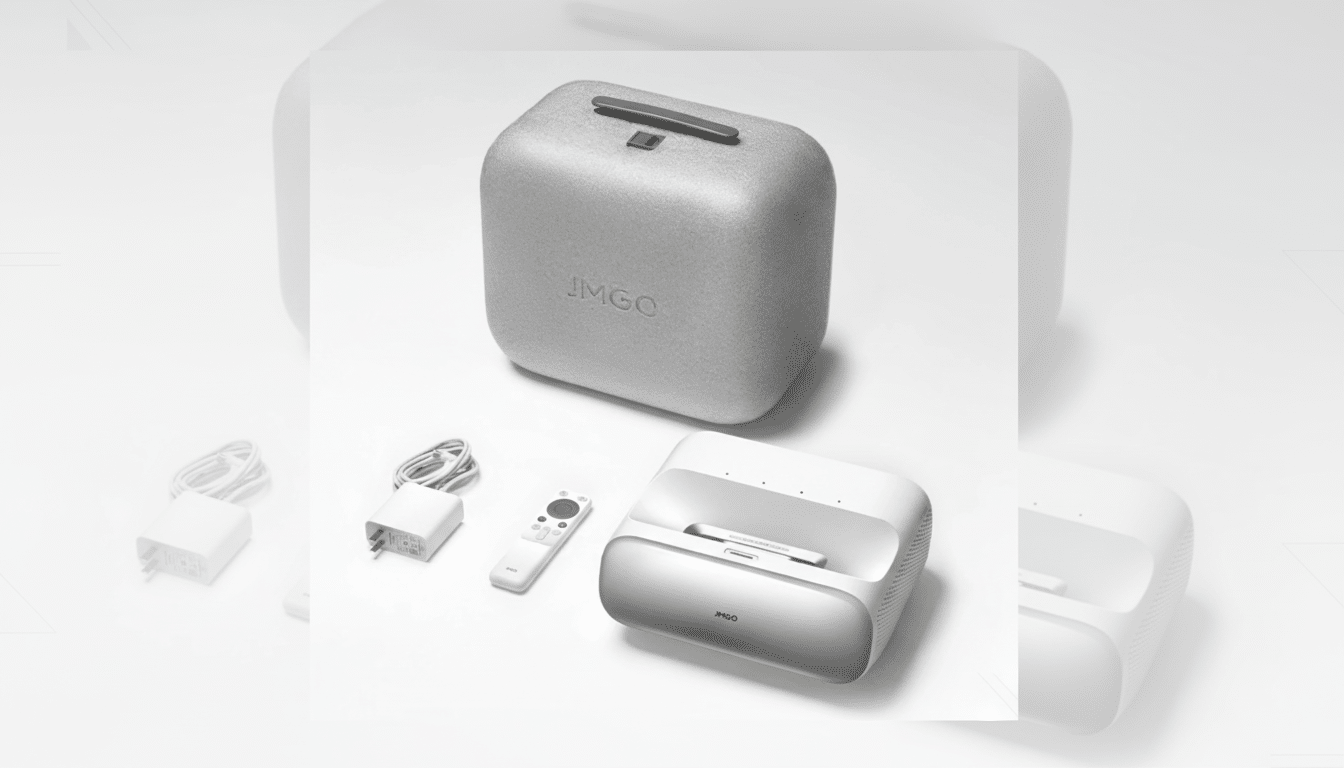
- Auto-focus
- Auto keystone correction
- User interface keystone adjustments via remote control
- Auto screen fit
- ±45° 4D digital adjustment
- Wall color calibration
- Black level enhancement based on AI
These adjustments mitigate the amount of fine-tuning required by hand, which is ideal for multi-purpose rooms where the projector may be adjusted or moved regularly.
The HDMI 2.1 inputs are among the headline connectivity here. The projector can accept signals up to 120 Hz, which could be helpful for console menus and very-high-frame-rate games, but of course its native resolution is still just 1080p and there are no input lag numbers provided. Wi‑Fi 6 will suffice for your streaming needs, and the built-in 20W speakers should be fine for bedrooms or dorms, despite the usual advice to bring in a soundbar for richer sound.
Price outlook and market impact for JMGO’s O3 UST
For about $530, the O3 is redefining entry-tier UST expectations. From well-known home theater brands, a tri-laser model is frequently over $1,500 and can go as high as $3,000 when paired with an ALR screen. By contrast, JMGO’s pricing offers a lower barrier to entry for those curious buyers looking for the UST experience but having second thoughts about flagship cost.
The timing is savvy. These include Futuresource Consulting, whose analysts have seen strong gains in UST shipments as living rooms welcome ever-larger screens, and the Consumer Technology Association, which has recorded consistent demand for 75-inch-and-larger displays. A small UST that fits the smaller furniture and budget perfectly fits into that trend, especially in urban markets that are defined by a lack of space.
Availability and what to watch for with the JMGO O3
For now, the O3 is available only in China. JMGO hasn’t said anything yet about international sales, but if a global edition does pan out, I’d expect to see the China-targeted Bonfire OS give way to something more internationally recognized like Android TV or Google TV, and regional certification and language packs as well.
There are a few practical notes for prospective buyers to consider. At just 1,400 ISO lumens — plan on low-light conditions or use a proper UST ALR screen to keep your contrast. If you’re a gamer, look out for official input lag statistics. 1080p makes sense at this price, but high-resolution shoppers have plenty of larger 4K TVs to consider on clarity — the O3 responds with size and color richness, along with room-friendly placement.
Small, colorful and aggressively priced, the JMGO O3 is a teaser for what the UST category will be heading towards. Should it find itself in broader markets with a similar proposition, we may yet see the pace of chunky living room projectors replaced by furniture-loving laser units grow faster.
