


At CES, I got a chance to try the new Infinix AI glasses myself, and what leaps right out of the spec sheet today isn’t its specs—it’s style. The company’s arms-first design allows you to swap the brains, mics, speakers, and battery between three included frames for real variety in how the glasses look and feel without sacrificing features. This is a welcome twist in a category that all too often insists on tech over taste.
Infinix is releasing two styles, the camera-forward AI Glasses Pro alongside a camera-free AI Glasses model relying on audio and assistance. Both are designed to be worn like everyday glasses, with the computing core hidden in the stems instead of a chunky visor or temple pod.
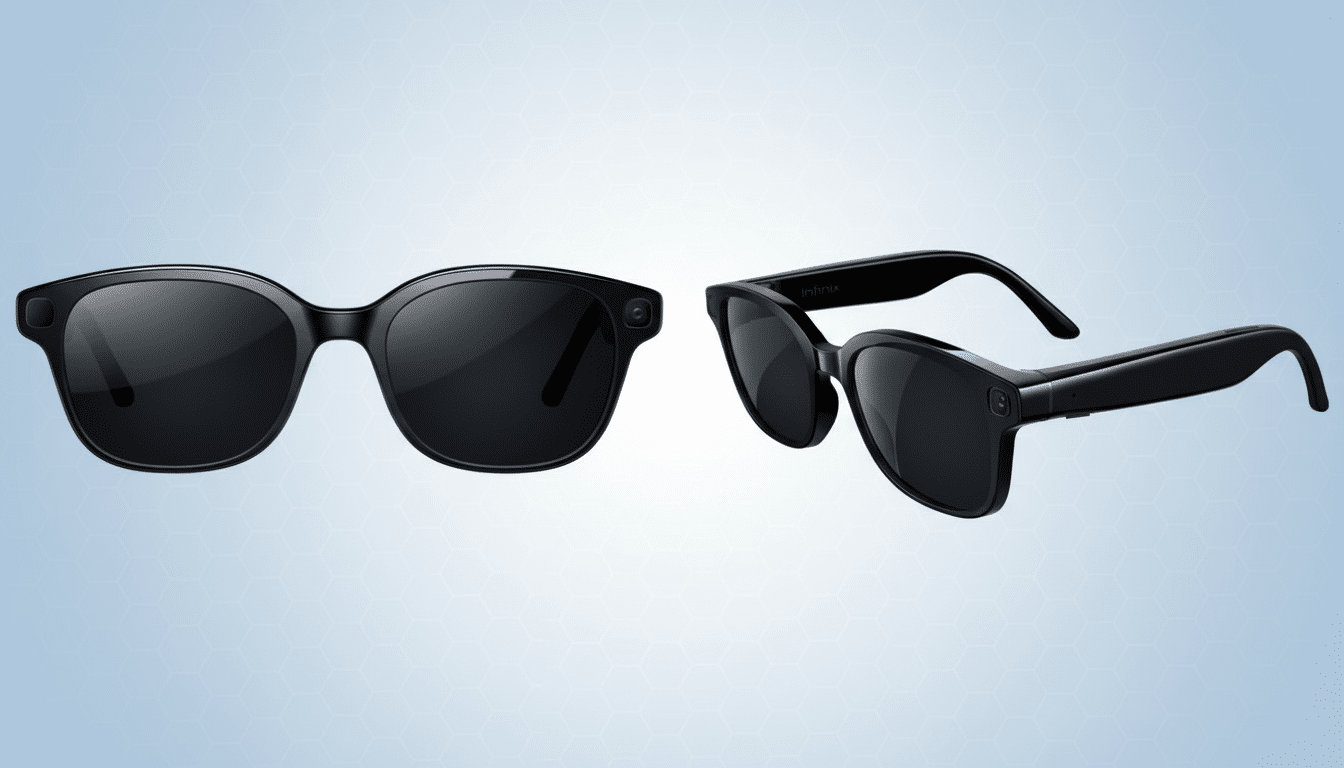
Modular design lets you swap smart stems across frames
The frames are the headline. You receive three unique looks in the box, two of which have UV400 protective lenses, and you can move those same smart stems across them. That’s one device that can take you from casual to business or even outdoors without having to purchase an entirely separate pair of smart glasses—a relatively simple idea executed impressively well.
In your hand, the swappy action feels deliberate. The insertion points are snug (which is comforting for those who don’t want the arms to pop loose unknowingly), although I found one frame stubborn during reattachment—a detail frequent style-switchers may want to monitor. The stems charge via pogo pins at the tips, and each has a little status LED to tell you about power levels and charging, a nice touch when you are juggling frames.
Weight is a major factor in eyewear comfort, and the AI Glasses Pro weighs in at just 35 grams. For perspective, camera-equipped competitors like the Ray-Ban Meta smart glasses typically land in the high 40s or so, depending on frame style. That lower weight makes a difference over the course of a full day, especially for wearers who are sensitive to pressure on their nose bridge.
Two styles target different comfort zones and privacy needs
The Pro variant prioritizes capture. It includes a full HD wide-angle camera that’s designed to help you capture every frame of the action, along with a dual-chip form factor—one chip handles tasks not related to imaging, while the other is specifically for image processing, delivering accurate and clear color images with responsive performance while recording. Controls are simple enough: a touch zone goes down the right temple to control the assistant activation and volume, an inconspicuous button on the underside snaps vertical photos and videos, and another input surface is added in a left-side touchpad.
If cameras make you or your office uncomfortable, the standard AI Glasses pass on them entirely. This model doubles down on open-ear audio, real-time translation, and voice tools. It’s a four-microphone array with noise cancellation, so it should isolate your voice during calls and dictate notes well enough to not make you want to pull out your phone every time.
The open-ear speakers have the calculated trade-offs: you keep your situational awareness and don’t have to cram silicone ear tips into your ears, but the bass is leaner than in-ears and volume discipline is required in quiet spaces. That said, for spoken content, navigation prompts, and short voice replies the tuning felt perfect.
AI powers real-time translation, capture, and assistance
Both models are driven by Folax AI, Infinix’s assistant, which delivers on natural-language requests for activities such as taking a photo, starting a recording, or playing music.
The company is pitching an “AI lens” feature that can contextualize the world in front of you—think menus, objects, or signage—but not all the features were fully live on the show floor.
The marquee function is real-time translation among 169 languages. Infinix attributes its machine translation chops to high rankings at the Ninth Conference on Machine Translation, a reputable academic benchmarking conference in the field. In addition to translation, one-tap voice and call recording with immediate transcription transforms conversations into searchable text—a feature productivity-minded users will appreciate, especially when used offline.
Battery case capacity, charging method, and usability notes
It’s more than just a shell of a carrying case. And with an in-pack 2500 mAh battery of its own, it can recharge the glasses a number of times—up to nine complete top-ups by Infinix’s estimate—with each charge taking roughly an hour. A discreet red light comes on around the magnetic latch when you’ve got things sealed well and charging, eliminating the “Wait, did it actually start charging” concern that plagues most wearables.
They all have batteries in them, so symmetry matters to power delivery and charging; the pogo-pin system keeps that simple. They open up with a proprietary cable instead of USB-C on the stems themselves—a trade-off for a slimmer profile, but one extra cable in your bag.
Early verdict and market context for Infinix AI glasses
The modular method is the tale. Using decoupled compute from frames, Infinix mitigates aesthetic trade-offs that plagued smart glasses. It also leaves the company space to grow its frame catalog in the future without requiring people who’ve already invested in the existing models to buy new electronics—a pragmatic way toward longer product lifetimes.
There are caveats. The frame’s attachment points will have to prove their durability over time, and while open-ear audio isn’t as private as earbuds it likely remains less obnoxious than larger speakers that go on or in your ears. Still, providing a camera-free version along with a Pro, which is equipped with a camera, makes sense: some places of business and performance ban cameras; you may not particularly like the idea that somebody could be watching in via the video interface.
Pricing and local availability details are yet to be confirmed, but what we can say is that, from this hands-on, Infinix may have found a believable angle in a crowded space: real style choice on the very first day, without overly simplifying AI. If they’re actually good at translation and vision as well, and the fit-and-finish pans out OK, those are the kinds of things that push a gadget closer to being something people have grown tired of testing and start wanting to wear.
