


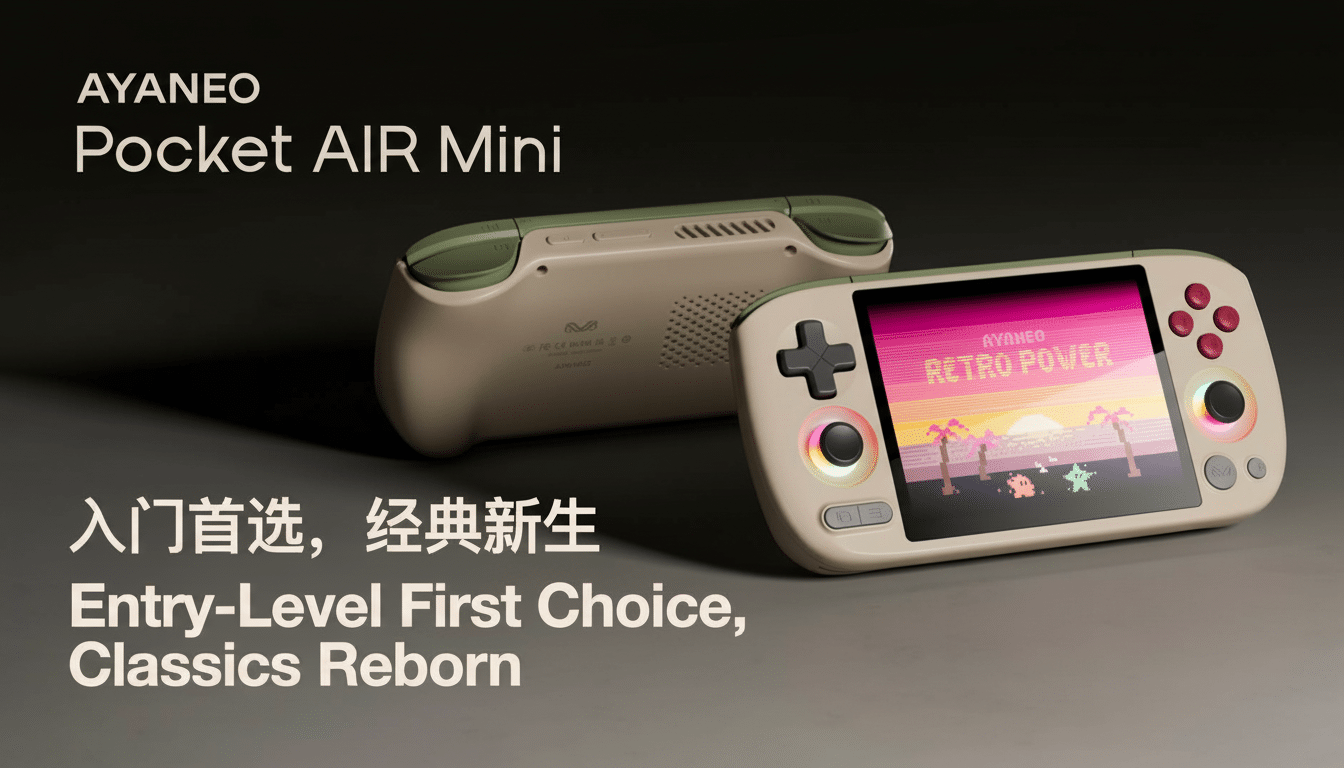
The supporters behind new gaming handhelds are discovering that perhaps the riskiest element of crowdfunding is not manufacturing. A recent update to Indiegogo’s campaign regulations has delayed shipments for the AYANEO Pocket AIR Mini, and it is just one example of how rules can serve as an unexpected bottleneck when your hardware is ready.
AYANEO is also blocked from fulfilling the campaign — the company has already received 15,035 pre-orders for Pocket AIR Mini as of press time — until Indiegogo conducts a new mandatory post-campaign process.

The holdup isn’t parts shortages or assembly lines — it’s the checkout and verification pipeline.
What Changed in Indiegogo’s Crowdfunding Checkout
Indiegogo recently changed how campaigns are run, and creators say this update brought on both bugs and tighter sequencing. Some projects note in campaign updates, and creators report seeing prelaunch signups vanish, short links go bad, and order data becoming jumbled — problems that appear to have largely been fixed. Now, the more profound effect is policy.
Campaigns are requested to hold off on collecting addresses and shipping fees until after the funding window closes. That data is then the basis for a platform review and an approval step. Creators can’t ask backers for final details or begin to print labels until the platform greenlights the requests. In reality, that process can add at least several days even when troops are standing by with pallets in hand ready for delivery.
For hardware makers who used to ship in waves during live campaigns — and often leveraged that as a competitive advantage — the sequencing flips fulfillment on its head. The outcome: merchandise could be ready, but tracking numbers are on hold until the platform’s post-campaign checks go through.
AYANEO Pocket AIR Mini Backers Hit With New Bottleneck
For its part, AYANEO has been the type of company to manufacture working prototypes before opening up pre-orders, with campaign hosts that do move early units while campaigns are still active. The handbook does not jibe with the new rules. The company informed backers that it is unable to move forward with collection until Indiegogo finishes its review. The shipping queue only starts once we’re approved; Indiegogo orders go out first, followed by web store orders.
For a campaign with five-figure pre-orders, even just a brief hold on the platform adds up fast. A few extra days for review, plus more for address collection and payment reconciliation, can sometimes move the first wave well beyond what many buyers expect at this point — especially if they are further back in the queue or live in regions with lengthier last-mile logistics.
The irony: by all accounts, it’s not about product readiness. It’s a clearance lock, wedged between finished goods and final-mile delivery.
A Broader Warning for Handheld Makers and Backers

Portable gaming has seen a resurgence of boutique devices from companies like AYANEO, AYN, and OneXPlayer.
A lot of these machines rely on crowdfunding to test the waters and fund initial runs.
The backers of previous projects are no strangers to the typical foibles of manufacturing — screen allocations, battery binning, thermal tweaks — but those were supply-side problems. What we’re witnessing now is platform-side dysfunction that touches even perfectly polished products.
Creators say the new guardrails are meant to cut down on fraud, reconcile order data, and better protect consumers. Those are worthy aims. But when protocols prohibit the collection of addresses until a campaign closes and reviews are wrapped up, the “time-to-door” stretches out for each individual buyer — not only those who pledged last. For those companies that compete on cadence — shipping earlier, iterating sooner — the critical path becomes platform compliance.
The message for the category is clear: fulfillment speed can now be influenced by platform choice. With additional releases stacking up each time a new handheld launches, a platform’s operational rhythm could be just as important as specs or price.
What Backers Should Do During Post-Campaign Reviews
Backers, watch for the address confirmation request, which comes after the platform review is cleared. Checking that payment options and shipping information are valid can prevent dropping out of the first wave. Be careful of unofficial forms or third-party spreadsheets; trust platform messages and the maker’s verified channels. If you have moved recently, have documentation ready in case the carrier or fulfillment center requests an address check.
It’s also wise not to raise hopes too high. Since there are tens of thousands of orders, fulfillment will be going out in batches. Inventory can be prepared, but label generation and courier handoff do not begin until the platform gate opens.
What Platforms Could Improve to Speed Fulfillment
There’s a compromise that could keep buyers safe without bringing shipments to a halt. Platforms might enable address collection in advance with funds held in escrow, lock changes after a cutoff date, and run simultaneous fraud checks so fulfillment would start as soon as campaigns ended. Clean dashboards, cleaning up the order IDs, and integrations to the major 3PLs would also curb late-stage errors as well as support tickets.
For now, the delay in the Pocket AIR Mini tells a textbook story of how policy can ripple through physical logistics. The devices are real, there’s a healthy demand for them, and factories are up and running. The bottleneck is in the software layer connecting a pledge to a tracking number — which is not where many customers expected the slowest link in their supply chain would reside.
