


HP made battery life the show-stealer at CES, announcing a new benchmark for a mainstream laptop — the ability to surpass 20 hours on a single charge and do so without gaining weight or causing tight pants. The headliner: between 25 and 45 hours of use on a single charge for the new OmniBook 3, a figure aging members of the public should dismiss as overwhelmingly absurd, and introduced alongside an OLED-first remodel that’s also suspiciously thin across the board.
What’s interesting about the feat is HP has put an emphasis on portability. Instead of cramming in a whale of a battery pack, the company cites generational improvements in silicon efficiency across the board, OLED panels, and tight platform tuning. The result is a family that is modern in appearance and feel, as opposed to tunnel-sprinted.
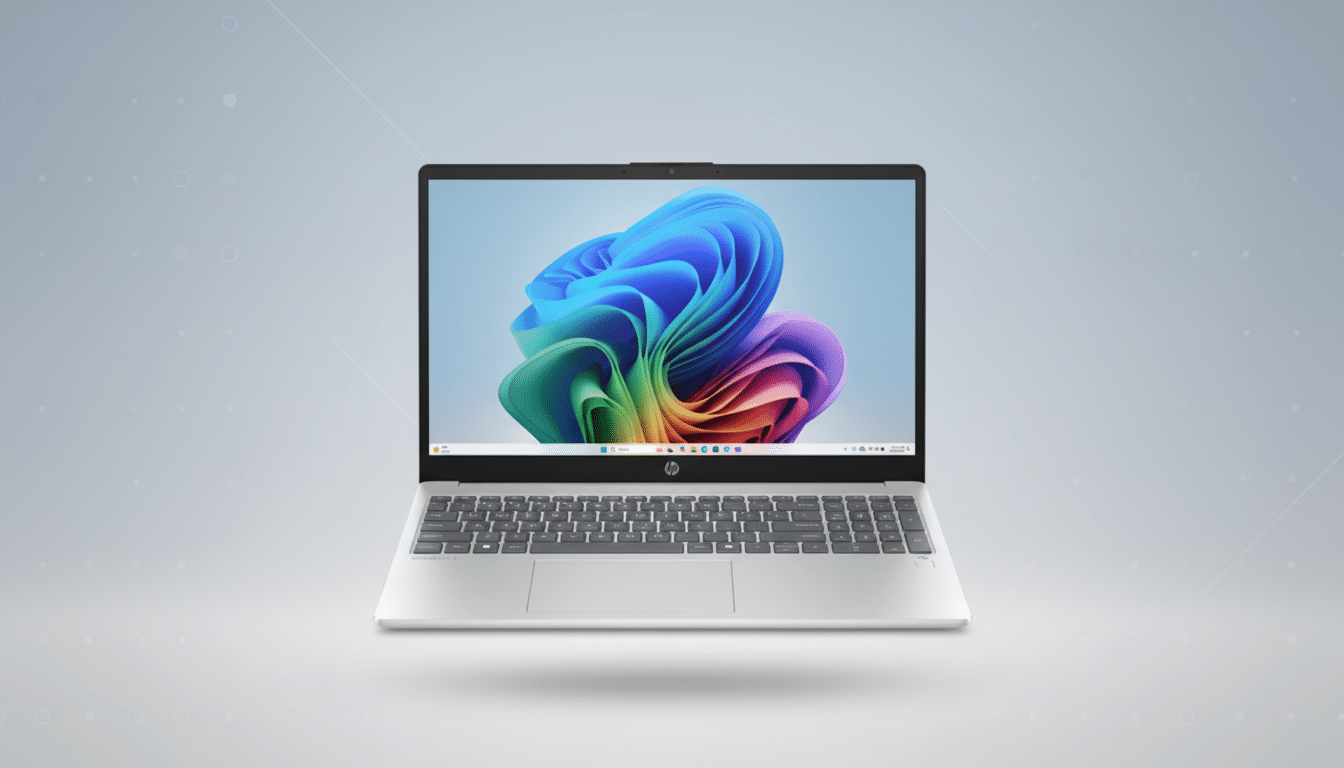
HP’s record battery claim and the new silicon behind it
At the heart of the story is Qualcomm’s new Snapdragon X2 platform — and this time around, HP is bringing it to every new OmniBook model. Last fall, X2 was positioned by Qualcomm as an Apple M4 rival, with early demos and briefings promising significant improvements in performance-per-watt and on-device AI throughput. If those gains are meaningful in shipping units, that’s a key part of HP’s battery story.
The flagship is the OmniBook Ultra 14, which comes in versions equipped with either Snapdragon X2 Elite or — when it launches later this year — Intel’s Panther Lake; so buyers can decide whether they want that Arm-first efficiency or next-generation x86.
It’s a hedging strategy, really: hedge on architecture while standardizing on OLED panels and aggressive power management through the stack.
Lighter and even thinner across the new OmniBook line
HP is eager to point out that endurance isn’t coming at the cost of heft. The OmniBook Ultra 14, being used as a showpiece for the new design language, is 5% smaller than Apple’s own M4-packing 13-inch MacBook Air and comes in at a mere 2.81 pounds, according to HP. That’s matched with a sharp 3K OLED display, three Thunderbolt 4 ports (two of them full-speed), support for an 8K external monitor, and configurations up to 64GB of RAM — specs that would have been stamped “pro” two years ago but are now wrapped in an ultraportable shell.
Most importantly, though, OLED is now standard on both the OmniBook 14- and 16-inch (both of which also have Flip 2-in-1 models). Besides richer contrast and color, high-end OLED panels in 2020 can reduce power draw with per-pixel lighting and adaptive refresh, particularly when used alongside dark UI themes and content-aware dimming.
Why HP’s 45-hour battery claim is believable
HP’s assertion for the 16-inch OmniBook 3 — up to 45 hours — sounded like boasting, but there is context. The OmniBook 5 from last year was clocked by reviewers at ~25 hours in mixed use, which is way past the Windows average. But with the X2 platform, tighter panel power control, and platform-level optimizations, we can’t say it’s a large jump. Sellers often quote productivity tests or continuous local video playback in MobileMark-style runs; real-world results will depend on usage, brightness, and connectivity.
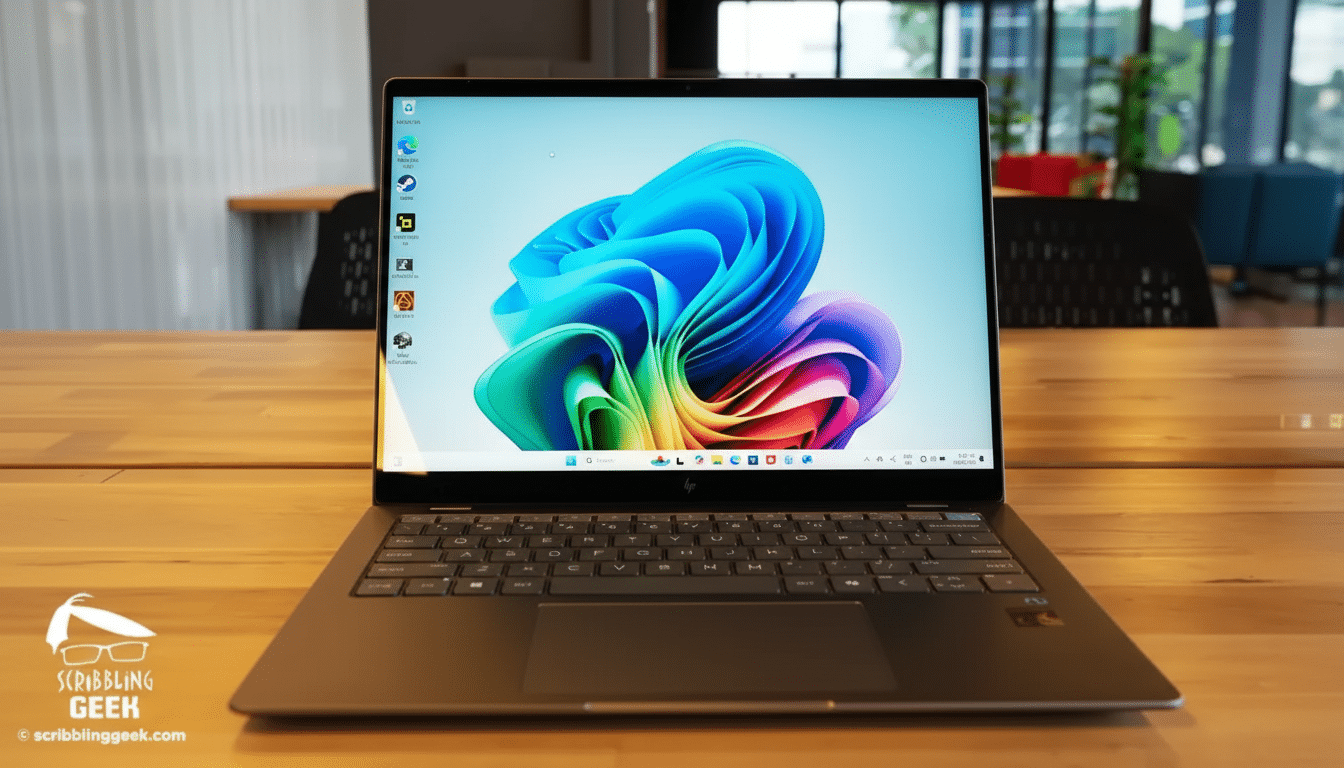
For reference, Apple claims the MacBook Air can last up to 18 hours on video playback, which independent testing has reaffirmed on many occasions. If HP’s 45-hour claim follows a similar methodology, it would qualify as a step-change for Windows laptops, especially in the 16-inch range, where larger displays typically punish your run-time.
Pricing and availability for the new HP OmniBooks
Leading the charge is the OmniBook Ultra 14, which — starting later this month — can be had for $1,550. The cheaper OmniBook 3 and midrange OmniBook 5 will follow in February, beginning at $500 and $850. More premium OmniBook 7 and OmniBook X series systems are also coming in the spring, and pricing will be set prior to release.
What the new HP OmniBooks could mean for buyers
If the lab results prove out in other settings, HP’s new OmniBooks could set expectations for Windows endurance — think actually getting through multiple days of work or study on a cross-country flight for knowledge workers, students, and road warriors by which you will measure your laptop’s battery life from now on.
The bigger decision may be architectural: Arm-based Snapdragon X2 will offer impressive efficiency and powerful AI acceleration, while Intel’s Panther Lake can satisfy anyone who values legacy x86 software compatibility.
In any case, the headline is plain: Battery life is back at the top of the laptop story — and HP just made the bar higher without raising how heavy it supposedly feels.
Independent testing from organizations that rely on standard suites of tests like UL’s MobileMark and Procyon will say how the 45-hour claim translates to real-world workloads, but the trend is clear — and it spells thin, light, and long.
