


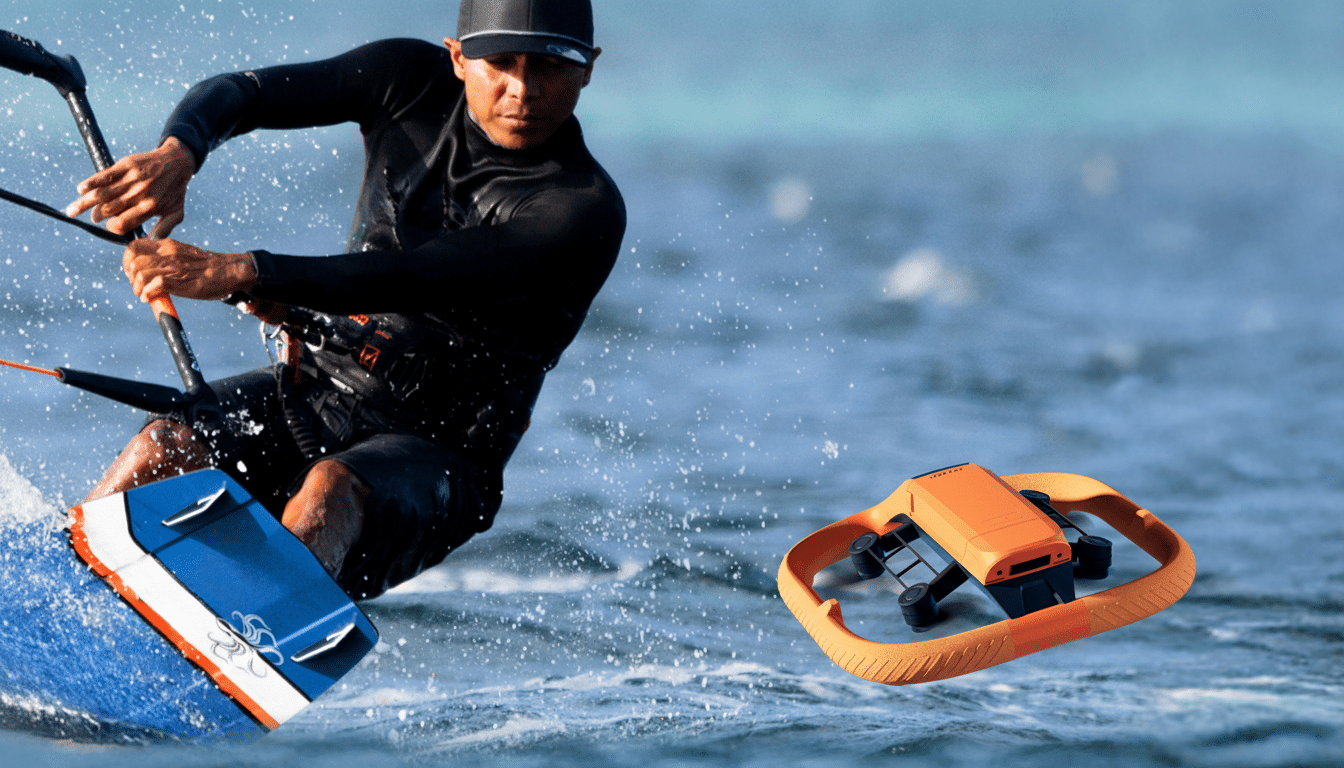
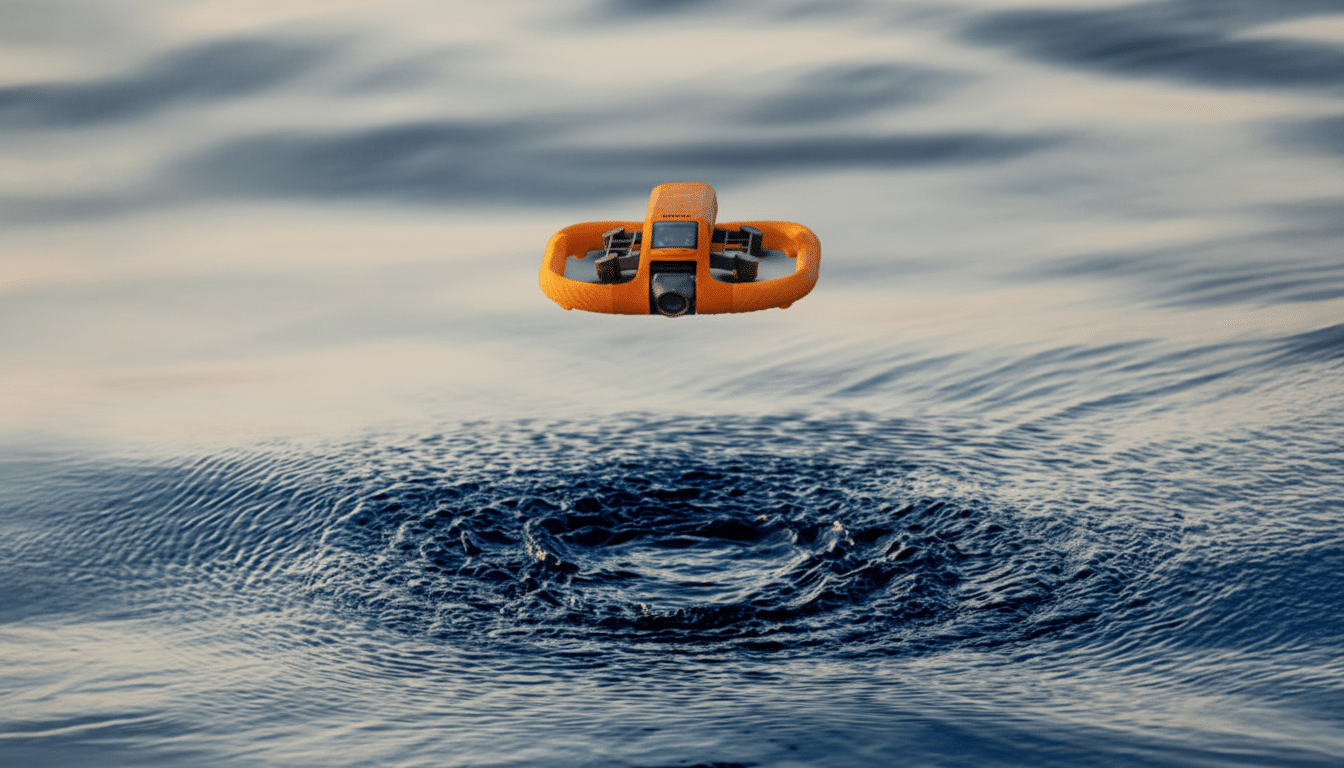
HoverAir’s much-ballyhooed Aqua waterproof selfie drone seems largely sidelined in the United States now that a recent policy change has prohibited new approvals for foreign-made drones. The device is an orphan in the Federal Communications Commission’s equipment authorization database — a must because all radio-emitting products for sale or marketing in America have to meet FCC scrutiny — which means its future at home is unclear.
Why the HoverAir Aqua lacks U.S. approval and sales
Every single drone that transmits radio signals must receive an FCC equipment authorization before it can be sold in the U.S. An FCC database search does not show a grant for the HoverAir Aqua. Because the device does not have an FCC ID, even selling or advertising such a device to U.S. consumers would be considered illegal under 47 C.F.R. 2.803 with respect to marketing and importation.
Complicating the issue is an announcement from the FCC that it has now expanded its “Covered List” regime to incorporate foreign-made drones on a forward-looking basis, essentially eliminating future approvals in that category. The FCC Public Safety and Homeland Security Bureau administers the Covered List, which can include equipment that poses a national security risk and therefore cannot be provided by a U.S. operator using the Secure Equipment process to receive Commission authorization.
Crowdfunding meets compliance as Aqua hits barriers
That the Aqua was a waterproof, fence-style selfie quadcopter and that it was being marketed as the first of its kind for boats, beaches and rain made sure to get people’s attention. It raised more than $2 million from some 1,800 early backers on Indiegogo, which offered presale tiers for the device at $999 to $1,399. As Indiegogo itself warns in its guidelines, donations are not purchases — a subtlety that suddenly means something to U.S. backers who hoped for summertime video footage from a drone that could potentially never legally ship here.
HoverAir has indicated it is keeping an eye on the rules and consulting with regulatory advisers to determine next steps. The company’s current line of X1 models, such as those for the X1 Pro and Pro Max, seem to be OK because they’re already FCC-approved and can continue being sold. The Aqua, by contrast, is a new platform and carries no prior grant — which makes all the difference under the tightened regime.
A broader U.S. crackdown on foreign-made consumer drones
The Aqua’s plight comes as the U.S. clamps down on drones made by foreign rivals. The FCC’s restrictions are part of a rising concern among agencies such as the Department of Homeland Security and Department of Defense around data pathways and supply-chain control. DJI has been the most high-profile target to come up in policy discussions for years, with industry surveys repeatedly pegging its global share even higher than this threshold (above 70%) — but this more recent move involves a much larger swath of potential applicants: any new foreign-manufactured drone asking for U.S. authorization.
Crucially, FCC approval is distinct from aviation rules. Without the FCC’s permission for comparable radios, even a drone that fulfills the Federal Aviation Administration’s Remote ID and operational requirements can’t be sold in the United States. For this reason, the mechanism of change lists becomes a key gate to the launch of products regardless of their compliance with airspace.
Impact on U.S. buyers and the consumer drone market
For shoppers, the immediate effect is fewer options, particularly in niche categories like waterproof aerial platforms. Ditko encouraged people to buy other models that do not rely on foreign manufacturing; however, rugged or amphibious designs have the same approval barrier. Enterprise-oriented programs, like the Defense Innovation Unit’s Blue UAS project, have nurtured a lineup of domestically sourced platforms, but these models tend to prioritize mission needs over consumer-friendly size and price.
The biggest question for backers is: What happens to their money? Campaign platforms advise creators to deliver or refund, but they don’t back up such promises with enforcement. If a manufacturer can’t secure legal compliance, it could be required to give refunds or something else special for U.S. backers. There has been no public announcement of any refund plan being established by HoverAir for U.S. Aqua backers, so U.S. backers are still in limbo.
The larger U.S. drone ecosystem is still substantial — FAA records list hundreds of thousands of registered drones — and buyers can still find plenty of powerful, fully compliant models. But innovation can also flow from a smaller, niche product like the Aqua. When these launches are thwarted, experimentation is stifled and competitive pressure on incumbents eases.
What’s next for HoverAir and its Aqua drone in the U.S.
On paper, a manufacturer could choose to go for domestic production, supply-chain audits or government-vetted security controls under increasingly rigorous policies, but those routes are intricate, expensive and slow. Absent a reversion of policy, the most likely near-term outcomes for the Aqua are continued availability outside of U.S. markets in regions that accept its regulatory approvals; a new design to support qualified supply chains; or a shift that provides domestic backers with an alternative product already approved for sale.
For the time being, it’s clear that Aqua can’t launch in the U.S. without an OK from the FCC. The episode illustrates a new normal for the drone industry, where not only aerodynamic innovation but also regulatory origin matters, and one in which future product roadmaps will live or die with decisions made long before the first prop ever spins.
