


Hinge is preparing to pilot a Tinder-style facial recognition system designed to verify that profile photos match real users, a move its parent company Match Group framed as a push to curb impersonation and scams. The trial centers on Face Check, a video selfie-based verification flow that Tinder has already rolled out widely and plans to make global by the end of this quarter.
What Hinge Is Rolling Out With Face Check Verification
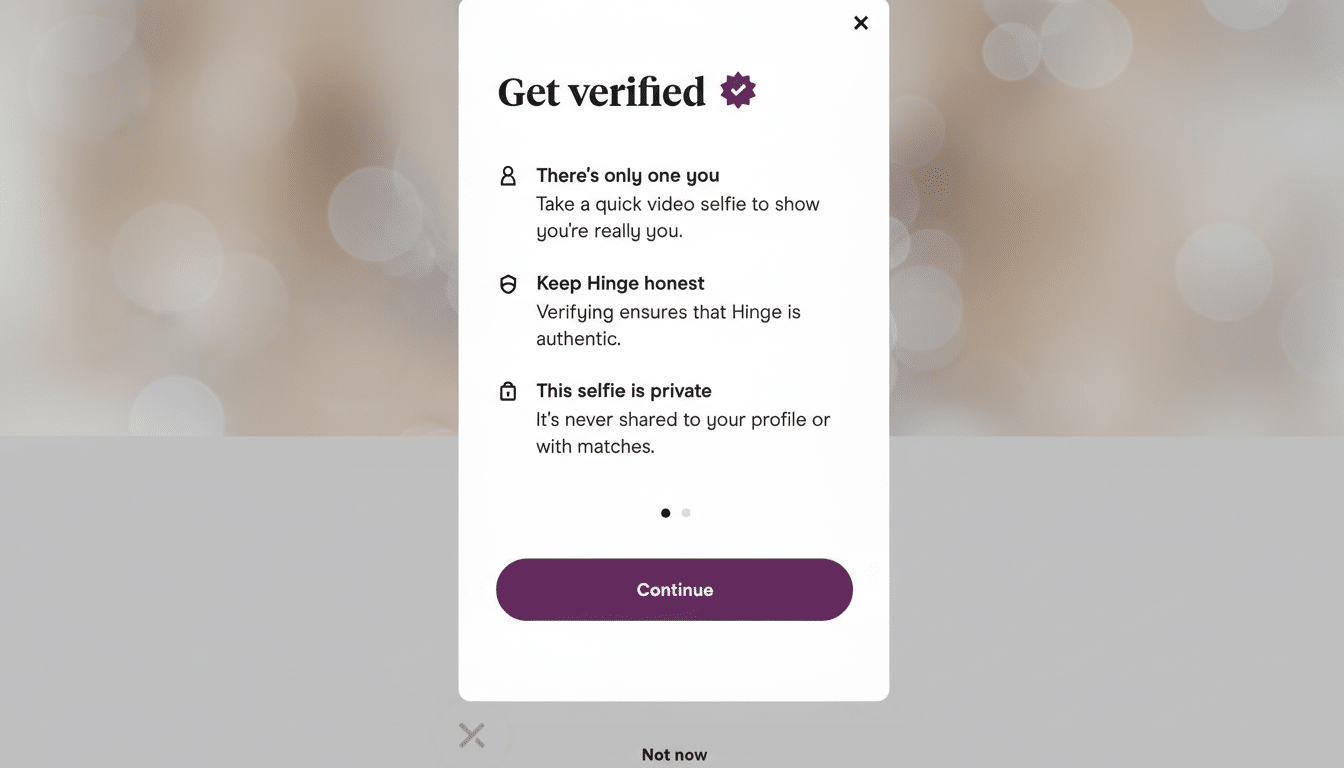
Face Check asks users to capture a brief video selfie, which is assessed for “liveness” and compared with photos on the profile to confirm a match. Accounts that pass receive a visible badge, signaling to others that the person pictured is the person messaging. Match Group has not publicly detailed whether the Hinge pilot will be opt-in or mandatory in test markets, but it is framing the feature as a safety layer against catfishing and spam.
The company points to Tinder’s results to justify the expansion. Where Face Check is live, Match Group says interactions with “bad actors” have fallen by more than 50%. While the company doesn’t break out the exact methodology behind that figure, the direction aligns with what digital safety experts see when apps add liveness checks and make verification signals more prominent: casual scam attempts become less effective, and serial abusers lose reach.
Hinge is also readying a separate feature called Direct to Date aimed at setting expectations early and speeding up IRL plans. Taken together, the updates suggest a strategy to tighten trust signals upfront and reduce the back-and-forth that often stalls conversations.
Why Match Is Betting on Face Checks to Boost Safety
Romance and impersonation scams remain a persistent problem across social platforms. Consumer protection agencies have warned that losses tied to romance and confidence schemes have topped $1 billion annually in recent years, with criminals frequently moving victims off-platform to avoid detection. Verification that raises the cost of creating believable fake personas can blunt those tactics and helps platforms triage riskier, unverified accounts.
The timing is notable for Hinge, which continues to outpace stablemates on growth. Match Group has highlighted that Hinge’s paying users and direct revenue have risen both quarterly and year over year, even as Tinder’s comparable figures have softened. Investing in higher-integrity profiles helps protect that momentum and differentiates Hinge’s brand as the app “designed to be deleted.”
How The Tech Works And Where It Can Fall Short
Modern face verification systems typically combine two pieces: a liveness test to confirm a real, present human (for example, a short video or guided prompts), and a face-matching model that compares the capture against profile photos. Liveness checks are meant to defeat simple spoofs like printed photos or screen replays, a method security researchers say significantly reduces low-effort abuse.
However, the technology is not infallible. Independent evaluations like the U.S. National Institute of Standards and Technology’s Face Recognition Vendor Test have found that accuracy varies by algorithm and can show demographic differentials. Leading providers have narrowed these gaps in recent years, but transparency about error rates and appeals processes remains key when access to core features may depend on passing a scan.
Privacy and Policy Questions for Hinge’s Face Scans Ahead
Biometric data is sensitive, and how it is stored, processed, and retained will be decisive for public trust. Users will want clarity on whether Hinge keeps raw biometric templates, how long any data persists, what third-party vendors are involved, and whether the system is audited. Legal frameworks such as the EU’s GDPR and state laws like Illinois’ Biometric Information Privacy Act impose strict consent and disclosure requirements, which can shape how verification is implemented across regions.
Civil liberties groups have also urged platforms to prevent “function creep,” in which a tool introduced for safety quietly expands to purposes like ad targeting or automated moderation. Clear, narrow purpose limitations and easy opt-out or deletion controls are now table stakes for responsibly deploying face verification at scale.
What Daters Should Expect From Hinge’s Verification Pilot
If Hinge mirrors Tinder’s path, verified badges will become more common and may gradually gate certain features for unverified accounts in high-risk scenarios. Expect prompts to complete a video selfie during onboarding, reminders in the profile editor, and clearer labels while browsing. Users who care about privacy should watch for in-app disclosures on retention and data use, and consider enabling additional safety tools like in-app calling or reporting for suspicious behavior.
For Hinge, the bet is straightforward: visible proof-of-personhood reduces friction and fraud, which lifts trust and conversion. For daters, the trade-off is equally clear—share a brief biometric sample to gain a safer, more credible experience. The pilot will test whether that bargain resonates, and whether the over 50% fraud reduction Tinder cites can translate to Hinge without undermining user comfort.
