


Chinese lidar maker Hesai is doubling annual production capacity to 4 million units — from 2 million, a rapid pace aimed at solidifying global leadership at a time of accelerating shakeout in the sensor market. The company passed the 1-million-shipment mark last year, and is now relying on expanding automotive programs and an increasing pipeline of robotics systems to fill new capacity.
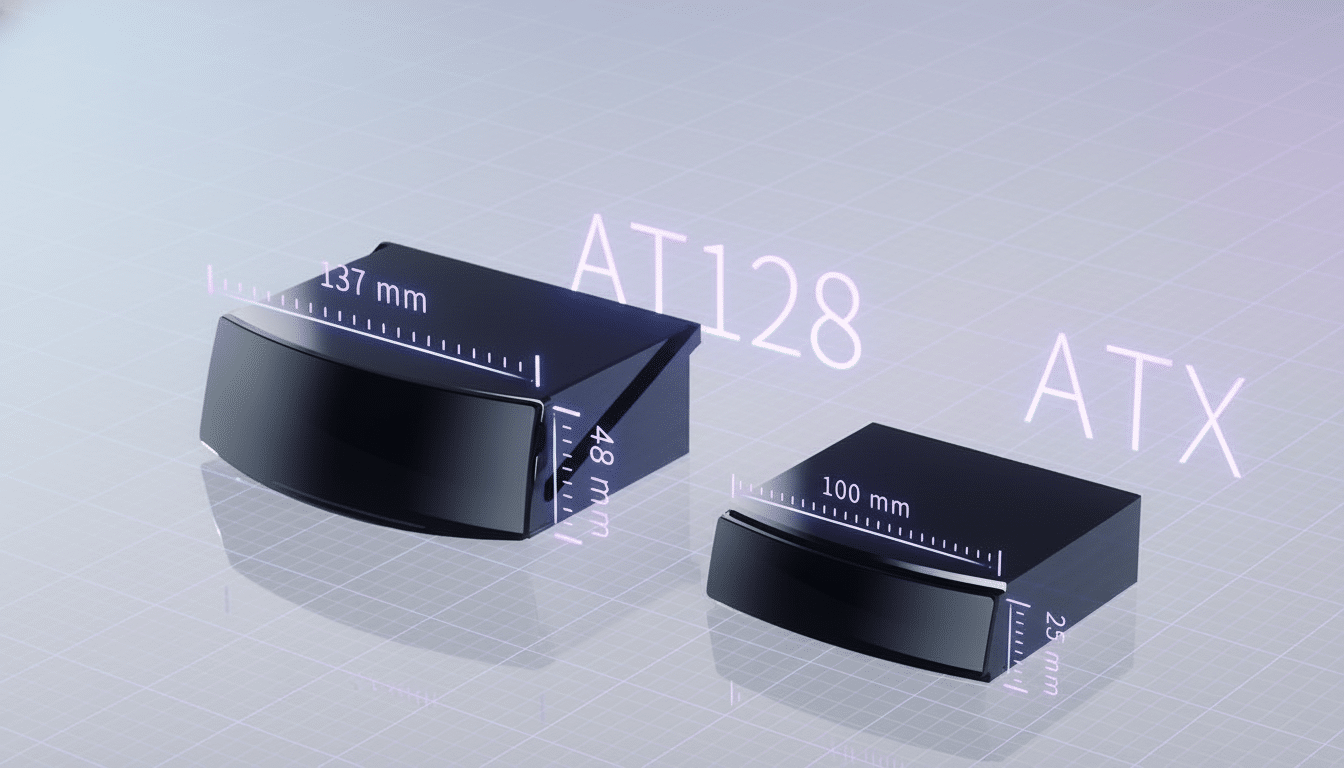
The company’s executives said the move was driven by increasing demand for technology across advanced driving assistance systems and mobile robotics. At the Consumer Electronics Show in Las Vegas, Hesai highlighted a list of new design wins and an expanded order book for its newest automotive-grade ATX sensor while exhibiting JT-series lidar for robots.
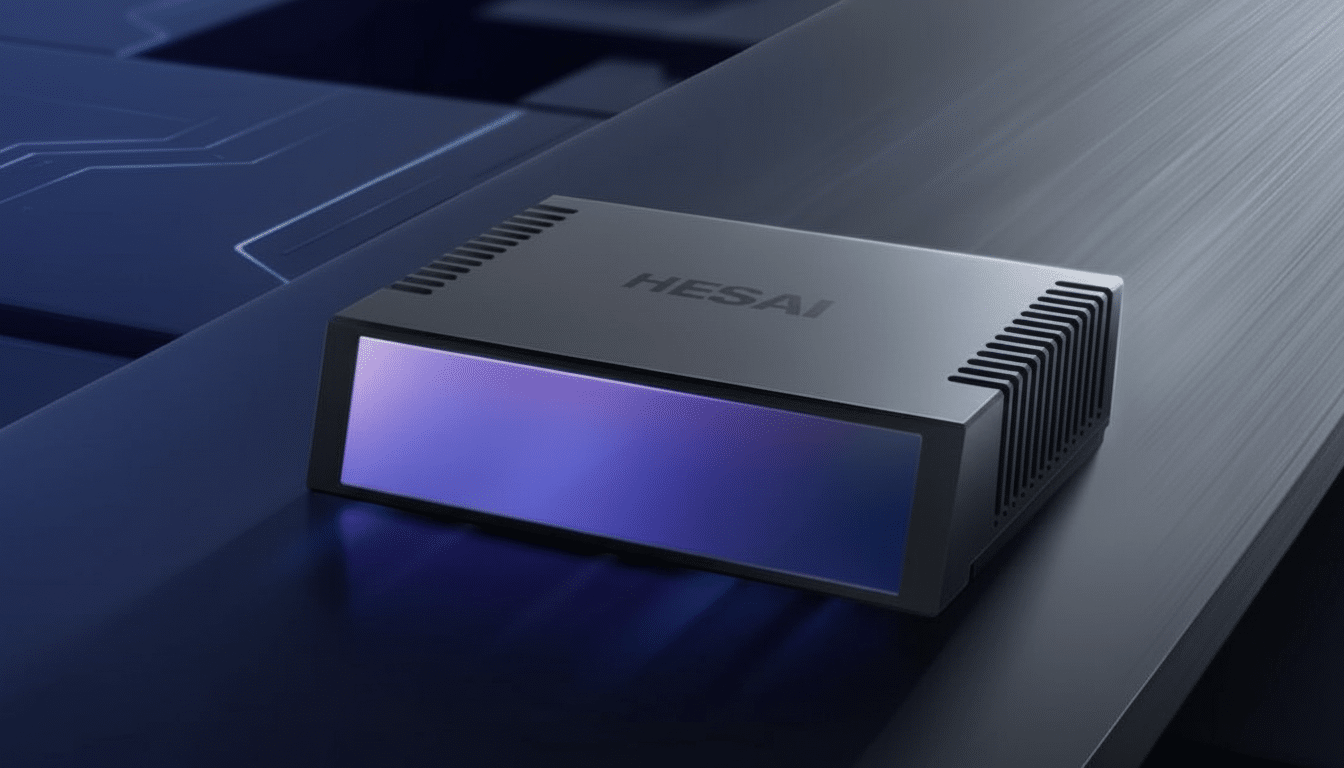
Production Targets And Context Of The Market
Scaling up to 4 million units is consistent with a market that’s rapidly consolidating around a few cost leaders. Hesai says it has taken 4 million orders of the ATX in total, and suggests that unit costs have come down 99.5% over eight years — the kind of curve high-volume, highly automated lines can reach.
Technical strategy is key in positioning itself on cost. Hesai’s mainstay automotive lines are of 905 nm architecture compatible with silicon-based detectors and a mature supply chain, rather than relying on more expensive InGaAs components deployed by some Western rivals in their 1550 nm approach, Hesai said. The math is simple enough: a lower bill of materials (BOM) combined with higher yields pave the way for mass-market pricing for ADAS.
The company is dual-listed on Nasdaq and the Hong Kong Stock Exchange and has raised hundreds of millions of dollars to build capacity, test infrastructure, and an in-house software and calibration stack — keys to reliability and manufacturing repeatability for units that could reach in the millions.
Automotive Adoption In China And Market Dynamics
China’s electric vehicle boom is creating a tailwind. Lidar now appears in about 25% of the new electric cars sold in the country, Hesai says, and many soon-to-be-released models will feature three to six sensors per car. That multi-sensor topography expands the eligible market well beyond single long-range roof units to an even blend of forward, side and corner coverage.
Hesai says it has 24 automotive customers, including one of Europe’s leading automakers, in addition to supplying top autonomous driving programs in China. It also includes robotaxi and autonomy partners, like Pony.ai, Motional, WeRide and Baidu — indicating a broad automotive and mobility footprint.
Outside China, though, lidar adoption has been inconsistent. Luminar’s recent Chapter 11 filing highlighted the challenge: even marquee programs can unravel when vehicle launches slip or cost targets tighten. Bankruptcy filings reveal that a headline deal once anticipated to ultimately reach 1.1 million units failed to make it much past 10,000 deliveries following delays and cost overruns — among many others factored into the $5 billion in claimed damages.
Robotics Becomes Second Growth Engine For Hesai
Hesai is moving beyond cars into logistics, industrial and consumer robotics. At CES, it showcased a robotic lawnmower and a quadruped walking on its JT-series sensors and teased installation in the works for up-and-coming humanoids. Robotics typically move faster than automotive, with shorter vehicle validation cycle times and less certification overhead, so a good target to fill capacity whilst ADAS volume ramps.
Competitors see the same opening. Ouster, which acquired Velodyne during industry consolidation, has targeted a $14 billion opportunity in robotics across warehouses, last-mile delivery and defense. This is less a moment for lidar’s headline-grabbing range, and more about proving reliability and ruggedization as it pulverizes the cost/size/power trade-off with software that works well with cameras and radar.
Industry Consolidation And Pricing Pressure
The lidar field is shrinking. Luminar’s reorganization and previous hookups like Ouster–Velodyne are symptoms of a sector in which price compression is unforgiving and capital-intensive ramp-ups are not optional. Luminar, for its part, pointed to pricing pressure from competitors based in China as a main reason it has grappled with building a self-sustaining business.
For survivors, scale means more clout with automakers and Tier 1s, better component sourcing and more amortization of R&D across product lines. For vehicle makers, this means more affordable average selling prices and greater opportunity for multi-sensor low bill-of-materials cost designs.
Regulatory Backdrop And Global Reach For Expansion
Hesai’s international aspirations confront political headwinds. The U.S. has accused the company of links to China’s military-industrial complex, a charge Hesai denies. But there is no outright ban of its products by major markets and a watching brief can hamper its ability to sell product or enter into partnerships with Western OEMs and Tier 1s.
Either way, dual listings and diversified customer bases offer alternate paths to scale. Sustained momentum in China, selective wins in Europe and deployments of robotics around the world could potentially balance any access issues in North America.
What Doubling Output Means For Hesai And Its Clients
On execution, 4 million units of annual capacity would place Hesai as the default supplier for multi-sensor EV platforms and a volume leader in robotics.
The next investor and partner checkpoints:
- Transition from the ATX order book to shipments
- Gross margin resilience in a declining ASP cycle
- Yield and reliability metrics at scale
- Design win evidence beyond China
The lidar shakeout is hardly over, but the playbook is clearer: ship millions of reliable units at automotive price points and pair them with a roadmap that serves robots as readily as cars. Hesai is betting that amplifying the scale of its business is how this story ends.
