


NEW: Finally, new photos of the long-rumored Google Pixel 4 5G prototype solve a years-old mystery. Needlefish is, from the look of things, a drastically reconfigured Pixel 4 XL chassis with new mmWave-style antenna rigging outside the shell, plus what appears to be a beefier battery within, and an external X55 modem attached out back; an engineering mule tailored specifically to teach Google how to ship 5G phones before its broader consumer model was still ready.
Hardware Hints in the Pixel 4 5G Prototype
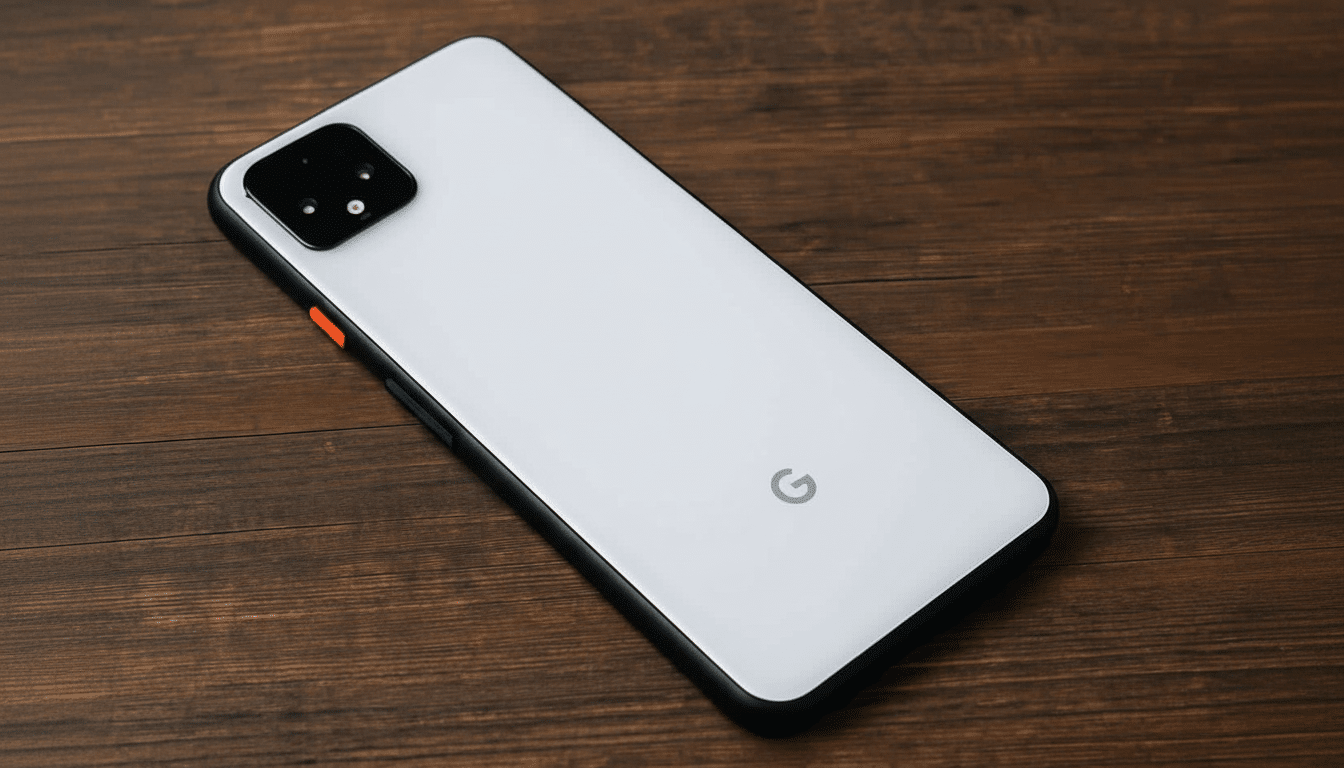
On the outside, the prototype looks like a Pixel 4 XL with a top bezel that houses various components — as before, it appears there’s room for the front-facing camera, IR components for face unlock, and also all of Soli. The visible forehead and a back shell that’s supposed to open all the way up from behind match only the service technique utilized on Pixel 4s.
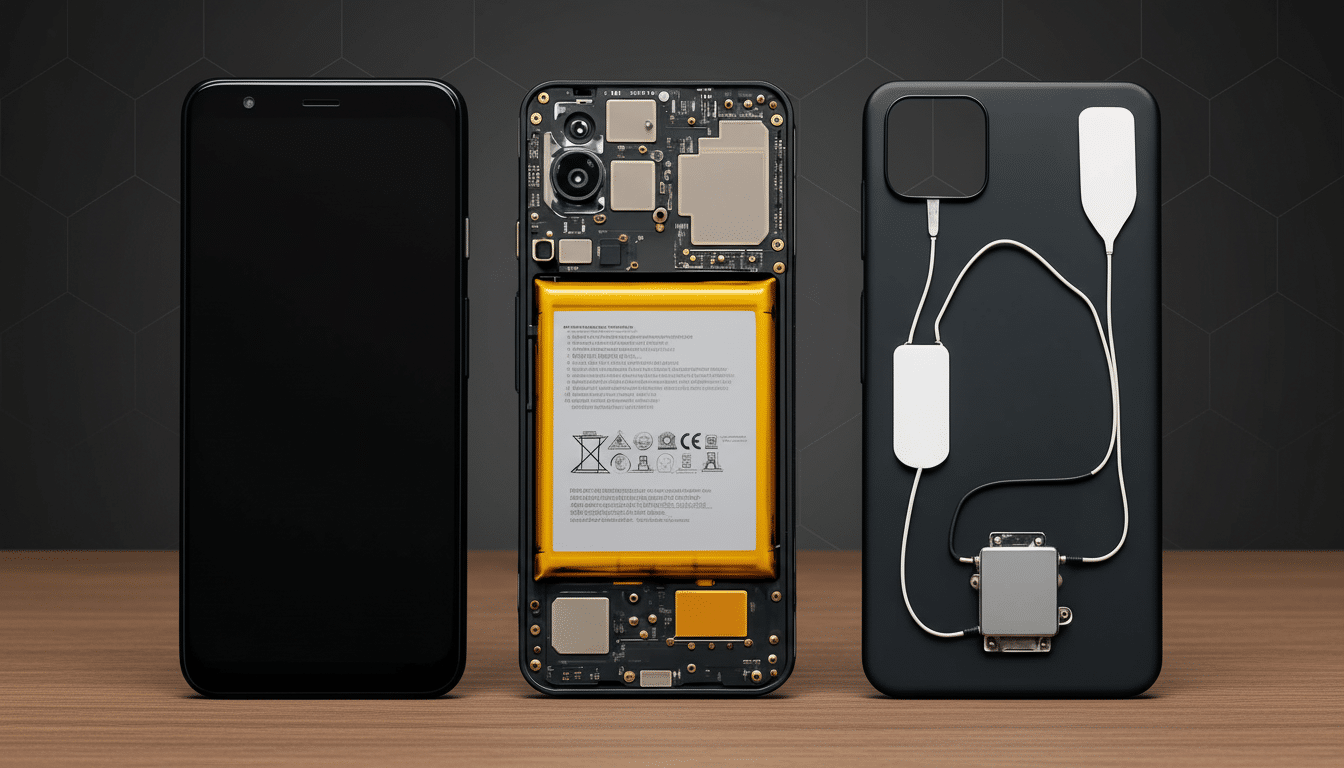
Open it up and the differences become apparent. There are separate mmWave antenna modules at the top right and lower left (where they exist on just about every phone) — that’s par for the course to maintain a line-of-sight connection no matter how you hold it. Initial mmWave phones included three or more modules to skirt hand-blocking; these positions on this unit correspond to standard reference designs shared by Qualcomm, and observed in FCC equipment uploads for other phones.
The battery pack is rated at 3,800mAh — a little larger than the 4 XL’s (arguably mid-sized) 3,700mAh cell and likely an attempt to balance the additional drain of 5G. The pack’s model number is also listed as G025B, which implicitly links it to the Pixel 4 lineup with a different suffix to indicate another variant.
Why Google Built It and Then Left the Prototype Behind
Fastboot screens indicate 8GB of RAM — 2 more than retail Pixel 4s — and a modem string that starts with “g55,” something Google has previously used as shorthand for the Qualcomm X55. That suggests a Snapdragon 855 working alongside an external X55 modem, the rather exotic combination employed by niche devices such as the OnePlus 7T Pro 5G McLaren.
External modems bring design taxes: more board area, higher idle power, and more RF complexity. Teardowns by industry groups such as iFixit and Counterpoint Research have revealed how mmWave modules and discrete basebands consume internal volume, leading to trade-offs in battery life and thermal headroom. For a high-end phone, those compromises make sense only if the market payoff is in sight.
Google’s mainstream avenue to 5G, at the time, was part of the first wave of integrated modems within Snapdragon 7-series silicon — promising better efficiency and simpler board design. By waiting for that integration, it avoided a premature launch based on stopgap silicon — which is why this 855+X55 Pixel never arrived on store shelves.
What the Needlefish Codename Reveals About This Unit
The “U3” fastboot codename is different from the “C2” for Pixel 4 XL (coral) and “F2” that appears to be for the smaller Pixel 4 (flame), meaning this is an internal build as opposed to release-ready SKU names.
The unit that’s pictured here has EVT1.4 written on the top — Engineering Validation Test — later than the EVT1.2 milestone several of them reach prior to going in for Design Validation Testing. That added cycle supports the learning-vehicle theory: 5G, particularly mmWave, calls for several rounds of calibration for antennas, beamforming, and thermal tuning.
5G also comes with more stringent carrier requirements set up by items like power class, band support, and over-the-air performance in-hand grips. The standards are set by groups such as 3GPP, but every operator’s test matrix is another complication on top. Needlefish and similar prototypes allow teams to validate things like IMS, EN-DC handover, and SA/NSA behavior without the encumbrance of a retail deadline.
Specs Snapshot From the Unit, as Seen in Photos
From the photos and bootloader information, we can see that the canceled Pixel 4 5G would have blended a Snapdragon 855 application processor with a Qualcomm X55 modem, alongside 8GB of RAM and what looks like a 3,800mAh battery. The screen and front sensor array are cut from the same cloth as the Pixel 4 XL’s 90Hz OLED with Soli-aided gesture sensing and secure face unlock. It reroutes RF paths between the logic board and mmWave modules, which don’t appear on the retail Pixel 4 products.
In reality, that configuration would have brought sub-6 and mmWave 5G but at the expense of efficiency. For years, Qualcomm’s own guidance has signaled this: integrated modems drive down latency and power and also cost in board space — factors nearly impossible to ignore when one is putting together wafer-thin, light flagships.
What It Tells Us About Early 5G Phone Development
Needlefish fits squarely into the industry’s early 5G narrative. The first spate of 5G-ready phones hunched over external modems while chipmakers tried to deliver integrated ones. Most brands shipped subsets of mmWave models for certain carriers, and then shifted to integrated platforms for broader devices. GSMA Intelligence analysts have consistently pointed out that mmWave activations continue to be limited to a few markets, further making the argument for prudent deployments.
For Google, this prototype was a test bed: to master mmWave antennas, calibrate RF software stacks, and study real-world power budgets. Lessons learned later emerged in the form of subsequent Pixels that struck a better balance between 5G capabilities, battery life, and price. We seldom get to witness that learning process up close — this is one of those rare times in which the curtain lifts.
