


Grammarly, its and, is is in Grammarly can now do more than English: It’s now giving full spelling and grammar checks in five languages in all: Spanish, French, Portuguese, German and Italian. There are also paragraph-level rewrites for tone, style and flow, as well as in-line translation into 19 languages, and the service is available to both free and paying users. The company added that it had tested the update on about a million people and that it recently reported having 40 million daily active users, an indication that it is trying to bolster engagement internationally.
Why these five languages are significant
Between Spanish, French, Portuguese, German and Italian, there are hundreds of millions of native and second language speakers across Europe and the Americas, capturing a significant share of business communication, education and customer support use cases. By now, I have cited CSA Research’s “Can’t Read, Won’t Buy” report so many times I’ve lost count, and its results have also been confirmed by our own data: Most people would rather buy stuff and would rather get support in their native language, a fact that also influences the way in which employees should write for their customers and coworkers.
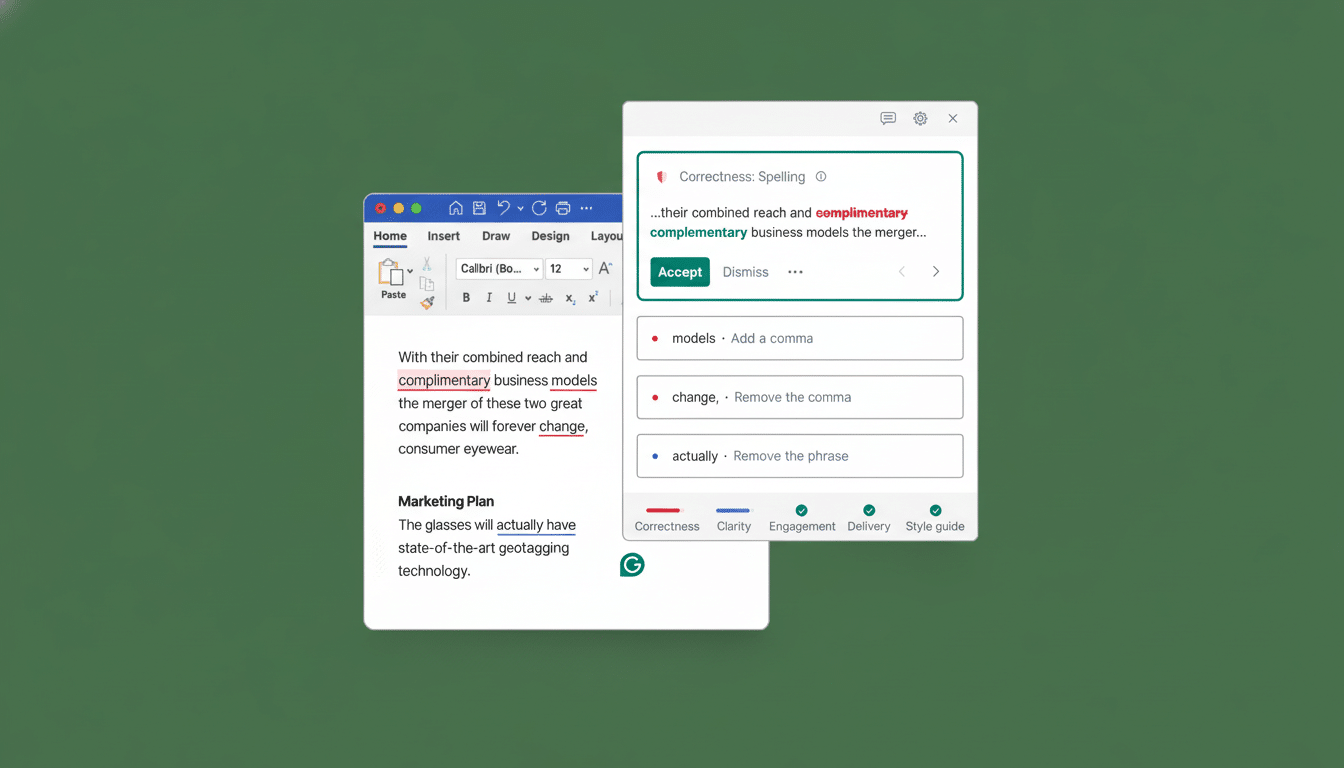
Grammarly’s pitch is simple: it should function anywhere people write and in the languages they use every day. The company says its assistant now runs across more than 500,000 apps and websites, so language is not an optional add-on — it’s a distribution play that will make the product useful in many more workflows, from email and CRM systems to LMS platforms and messaging suites.
What’s included at launch
And in addition to standard spell- and grammar-check, the update will make paragraph-level suggestions for softening, formalizing or clarifying text in the new five languages as well. For example, a sales rep writing a proposal in Spanish can dial up the formality for a conservative prospect, while a support agent in German can condense a long explanation into a clearer note with next steps. Quick glance and write with in-line translation and drafting in-lieu of switching tools.
As with any multilingual writing assistant, corner cases are important. There are regional differences — Latin American vs. European Spanish, say, or Brazilian vs. European Portuguese — with different vocabularies and stylistic standards. Grammarly has not described how it accounts for regional preferences, nor has it reported its precision/recall or benchmark results for its new checkers. The company said the pilot resulted in positive feedback and did not specify accuracy or how long the watches were worn.
What teams and organizations can take away
For dispersed teams, this change reduces the friction of writing in a language that isn’t your first and then reviewing that content around the world. Customer-facing functions are slated to benefit first: support centers filtering tickets in Portuguese, marketing departments translating French landing pages and HR offices distributing policies in German can all corral themselves to one tool for efficiency and pacing improvement.
Adoption will also rely on workflow fit and governance. Gartner found a spike in adoption of collaboration tools by knowledge workers, which ups the ante for assistants to neatly fit into — email, chat and documents — without disrupting workflow. Businesses will take a close look at how you are handling data, training models and admin controls. Grammarly is selling enterprise-grade security and centralized management, although buyers will be seeking clear regional data residency options and auditability as multilingual usage grows.
Competitive landscape and issues around accuracy
Grammarly enters a crowded arena. Microsoft Editor works with many languages in Office and in the browser; Google provides grammar suggestion in several languages within Workspace, and LanguageTool covers dozens of languages and dialects; DeepL Write is constraints on top-quality style rewrites in the European languages. What makes Grammarly different, and what remains its unique selling proposition, is how it plugs into multiple applications and combines grammar checking with context-aware tone rewriting — something that can be worth its weight in disputes, when you need to churn out cross-border collaborations quickly.
The question mark is measurable quality. The accuracy is supposed to depend on idioms, sentence rhythm, and area-specific wording. A compliance memo in French, a developer manual in German and hospitality marketing copy in Italian all require different registers. Independent evaluations — including on corpora that have emails, support transcripts and long-form documents — will help determine whether Grammarly’s suggestions are precise enough to be trusted without the heavy hand of humans.
What to watch next
Grammarly, for its part, says it intends to expand multilingual support to its broader set of AI features, potentially making it possible to do cross-language drafting, summarization and style transfer at scale. If they enable companies to reliably manage regional variances and industry jargons fast, you can expect the quick adoption by customers in areas such as operations, sales, and procurement—where the speed and clarity of response are directly correlated to revenue and satisfaction.
For now, the move into Spanish, French, Portuguese, German and Italian is a practical step: go meet users where they are already writing and reading; lower the cost of code-switching by providing the same tone and correctness across markets. If the accuracy pans out, Grammarly’s multilingual push might change the default approach from “write then translate” to “write once, publish anywhere.”
