


Google is unleashing a focused update to Gemini’s real-time voice stack with the aim of making the conversation you have with Google’s AI feel more like speaking to a human, and less like dictating your will to a robot. The release tunes Gemini 2.5 Flash Native Audio ASR for live voice agents and focuses on the ability to manage multi-step, intricate workflows as well as subtle directions and nuanced prompts — all while maintaining a smooth, humanlike dialogue.
What’s new in Gemini 2.5 Flash Native Audio
Google’s lights in its particular tunnel could be said to be threefold; they’re areas consumer voice assistant devices have had trouble with historically: multistep task completion, following an instruction and a route that doesn’t sound rehearsed — and turn-taking that sounds natural rather than by rote. In concrete terms, this means that Gemini should be better at stringing actions together — confirming an appointment, checking availability across calendars, and sending a summary — without losing context or forcing users to start over again.
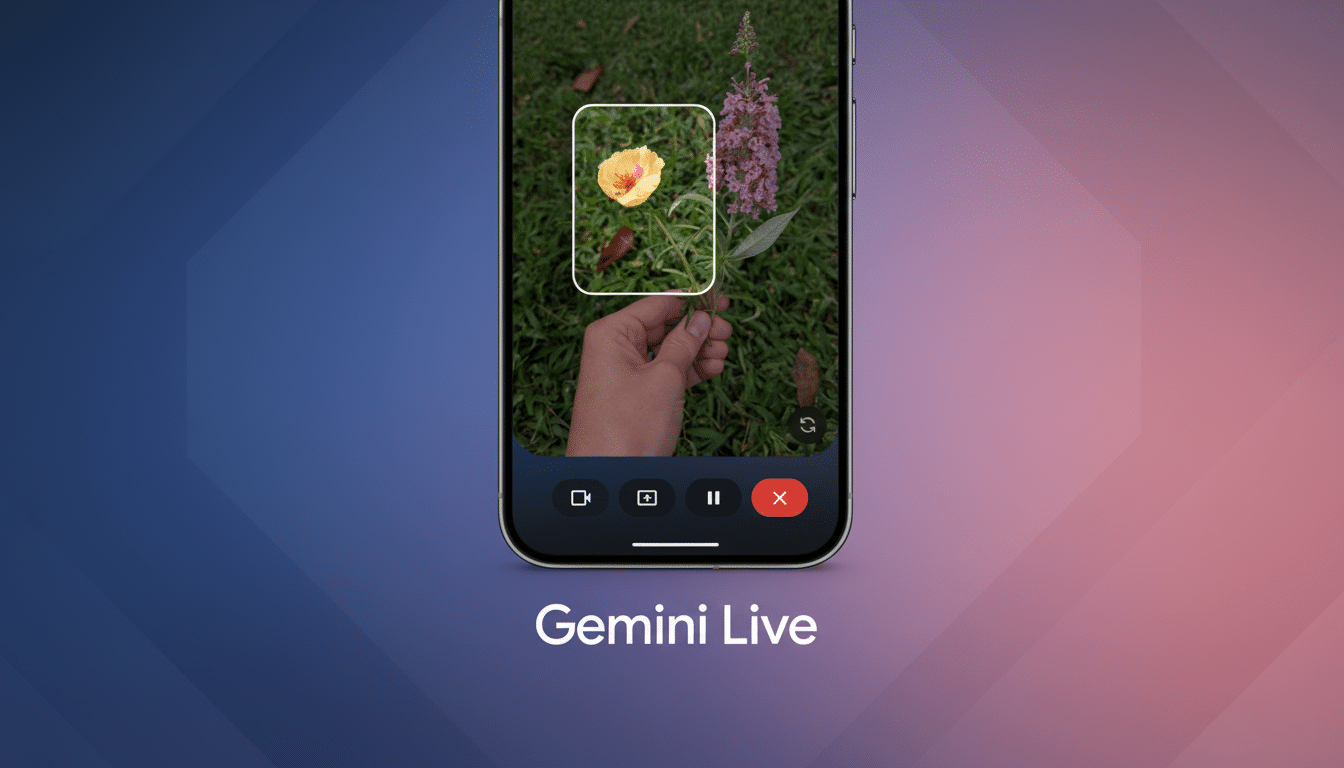
Two changes to improve the quality of those conversations are remarkable. For one, Gemini Live doesn’t kick people off when they pause on a thought — alleviating a common issue with other voice systems where the endpointer is too sensitive. Second, if a user mutes their microphone when Gemini is speaking, this will also decrease potential interruptions, and it can create a more seamless transition between the human turn and the model’s turn. Josh Woodward, who oversees teams at Google Labs, Gemini, and AI Studio, privately shared with me some of these as an effort to make the interactions “feel more organic.”
The “Native Audio” tag is significant. Without cobbling together various loops for speech recognition, text reasoning, and speech synthesis — rather, the pipeline is designed for low-latency, streaming audio in-out. That architecture tends to make such awkward gaps smaller, as well as to improve timing of backchannels like “mm-hmm,” and to ease the flow of context across long turns.
Why this leap matters for natural, real-time AI voice
Conversational AI stands or falls on a couple of dimensions users experience immediately: responsiveness and reliability. Even robust language models can stumble in live voice if the system misses a brief aside, loses context between turns, or over-eagerly inserts itself while the user is thinking. By dialing down on instruction following and turn-taking, the update zeros in on those unassuming UX layers between a demo and a reliable assistant.
The enterprise upside is significant. Contact centers, automotive assistants, and field service applications require voice agents that can handle branching workflows with non-brittle handoffs. Gartner predicts large cost reductions in the coming years in terms of labor when it comes to AI conversational for service operations, “That is based on improvements in quality that reduce transfers and repeat contacts.” Better following of the user’s guidance, and gentler interruptions, are the failure modes that companies attempt to eliminate.
For end users, the gains manifest themselves in common tasks like glass-box searches. Think about telling Gemini: “Reschedule my dentist appointment to next week but not in the afternoons … Text me (the new time) and add where I can park.” The system has to parse constraints, query multiple tools, validate the result, and provide a summary — yet it still needs to be possible for you to interrupt with “actually make that Thursday” without kicking everything into its proverbial beer stream. That’s the bar to which this release is playing.
Where the update lands first and who gets it
The rollout includes Gemini Live for end users, Search Live for conversational search experiences, Google AI Studio for prototyping, and Vertex AI for production workloads. That distribution is important: developers can try out the new behaviors in Studio, and then roll them out with Vertex AI’s governance and logging controls on enterprise deployments.
Look for developers to hang new apps off this bad boy for shinier call routing, appointment management, and tool-assisted conversations. With function calling and enterprise connectors, tighter instruction following leads to less “sorry, I didn’t catch that” and more successful end-to-end flows.
How it compares in a fast-moving authority business
The race to perfect live, multimodal conversation is accelerating, with competing offerings boasting end-to-end audio and millisecond-level lag. Real-time models from other labs have demonstrated natural prosody, barge-in handling, and coordinated tool use. Google’s update hits on that moment by simply polishing the basics — turn-taking, compliance, and executing a workflow — rather than following flashy demos for their own sake.
Importantly, the changes come across consumer and enterprise surfaces. That dual-track approach tends to accelerate iteration: everyday use uncovers edge cases with a high degree of speed, while business deployments are a crucible for reliability, security, and observability.
What to watch next as Google expands voice AI
Next key questions are: how robust performance is with noisy data, under different accents or dialects, and over very long conversational sessions. Enterprises will also be looking for more stringent guardrails, auditability, and redaction capability as voice agents continue to move into sensitive areas such as healthcare and finance.
Google also teased enhancements to its Translate experience, suggesting this may be part of a larger push for speech-first tools. If this Gemini update is what it claims to be, then users should experience fewer interruptions, clearer follow-through on tasks, and voice interactions that finally feel like a back-and-forth, rather than an ATM transaction.
