


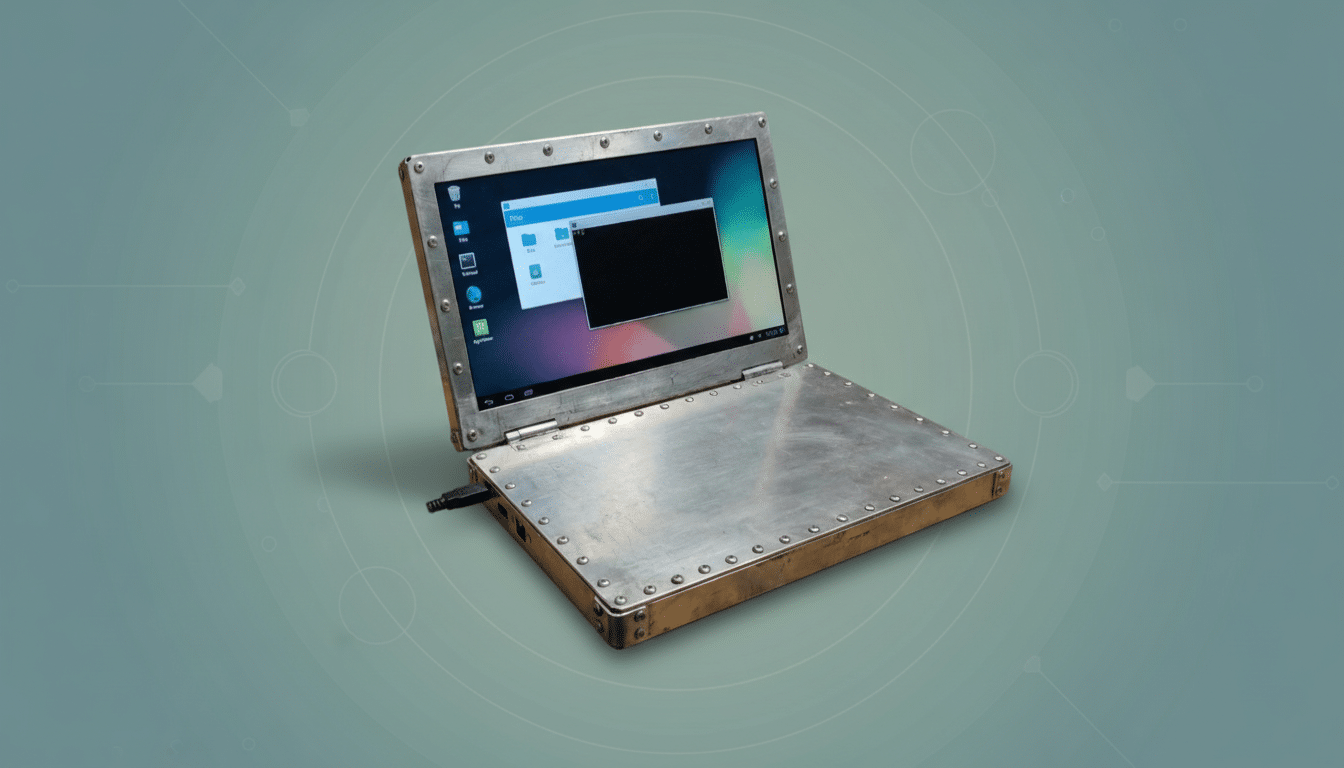
Android world has been abuzz over speculation that Google is developing its Aluminum OS as ChromeOS’ potential replacement on low-power laptops. Here is the contrarian take winning converts among industry watchers: Google should not build it. The better bet is to double down on cross-platform interplay, where gains are already in evidence and behaviors are deeply ingrained.
Why interoperability beats reinvention for Google’s OS plans
Google has been on a steady march to make Android a better citizen on other platforms. Quick Share now works on Windows; Fast Pair simplifies setting up devices, and Android games running on PC show off how services can jump from screen to screen without a whole new operating system. They’re nifty wins that minimize friction and take advantage of the hardware that people have now.
To be even more jarring, building a desktop OS means that users have to change domains altogether. Building bridges… meets them where they are. The second path is the faster adoption curve, fewer bells and whistles to add and thus costs less in behavior change, avoids the years-long cycle of polish drivers–window–app compatibility that buried so many “new OS” adventures.
Market realities and user habits favor bridge building
Desktop platforms are a castle of routine. According to StatCounter numbers, Windows is just above 70% in terms of global share, macOS is close to 20%, while ChromeOS and Linux are in the low single digits. Close competitors IDC and Gartner have long emphasized the gravitational pull of incumbent systems in enterprise, where standardization, security tooling and training make decisions.
Chromebooks did nail down a solid niche in education — Futuresource Consulting has underscored time and again how these devices account for the lion's share of US K–12 — but that momentum hasn’t fully translated to the consumer or business mainstream. So long as ChromeOS is a minority installed base, an Aluminum OS reboot won’t just magically warp the inertial pull where legit companies stick to Windows or macOS.
The app gap and big-screen pains limit desktop promise
The claimed headline feature of Aluminum OS is support for native Android apps rather than execution in a container. On paper, that’s a tremendous library on day one. All that said, the story of Android and big-screen computing has yet to be told in practice. Even with things like Android 12L, adaptive layouts and even some overlay behavior still just isn’t consistent, and a ton of the most popular apps don’t stretch well to tablets, foldables or window-style desktoping.
Lacking a solid set of desktop-class tools — file managers, creative suites, development environments, advanced productivity — any new OS is up against the chicken-and-egg problem. There may be no users without optimized apps, and there will certainly be no optimized apps without developers. ChromeOS is familiar with this narrative.
Linux and AI support are not magic bullets for success
One possible lifeline is robust Linux app support. The Linux container in ChromeOS is the proof of concept already, and the Linux ecosystem provides you “real work” staples. But elevating a bunch of Linux apps into a clear consumer-grade desktop requires heavy lifting: consistent theming, liberties to make use of the GPU, wide support for different drivers and not just what ships with your hardware or for power management, support for peripherals, and long-term commitments around updates. It’s doable but not trivial.
What about an AI-first OS? Tempting, especially with on-device models and Google’s new Gemini version. But turning AI into the actual substrate — not merely a layer — demands efficient offline inference, intelligent scheduling, and privacy-by-design. Meanwhile, incumbents are scrambling to weave AI into Windows and macOS. Overpromising in this area threatens to send the whole system through another hype-to-disappointment cycle, as recent AI gadgets like Humane AI Pin and Rabbit R1 have painfully proven.
A smarter path for Google is cross-device integration
There’s a more viable path: Make Android the best companion experience for work and play. But one possible fleshed-out scenario is that you’d have a polished desktop mode that feels official and universal (an answer to Samsung DeX, Motorola Ready For), so any phone can power a multi-window workspace if you plug in at your desk or on a wireless dock. If one believed the head-popping promises of 1990s tech evangelists, that’s a “PC in your pocket” tale with instant utility.
Growing the cross-device suite:
- Consistent notification sync
- Universal clipboard
- App streaming to aid in phone-to-PC migration
- Cross-platform file transfer
- Camera and mic handoff functionality amped up à la Apple devices
- Better integration with productivity suites
Collaborate with Microsoft for Windows features that emulate Phone Link functionality and collaborate with industry groups on standards like Bluetooth LE Audio, UWB and cross-ecosystem discovery to make setup feel seamless.
There’s a great multiplier effect here: It eliminates hardware churn, plays to how people already use computing devices and grows the value of Android without begging anyone to ditch Windows or macOS. Aluminum OS, then, just seems like an expensive sidestep into a saturated market the likes of which battle around distribution, developer incentives and behavior change. If the plan is to make Android ubiquitous everywhere, interoperability — not reinvention — should be taken as a priority.
