


Google seems to be testing spoken responses from the Pixel home screen search bar, suggesting a wider voice-first move for its flagship page over the horizon.
In testing we’ve done with the Google app beta, it seems like the widget is now speaking back for a small set of queries, showcasing on-screen results alongside an audible voice response.
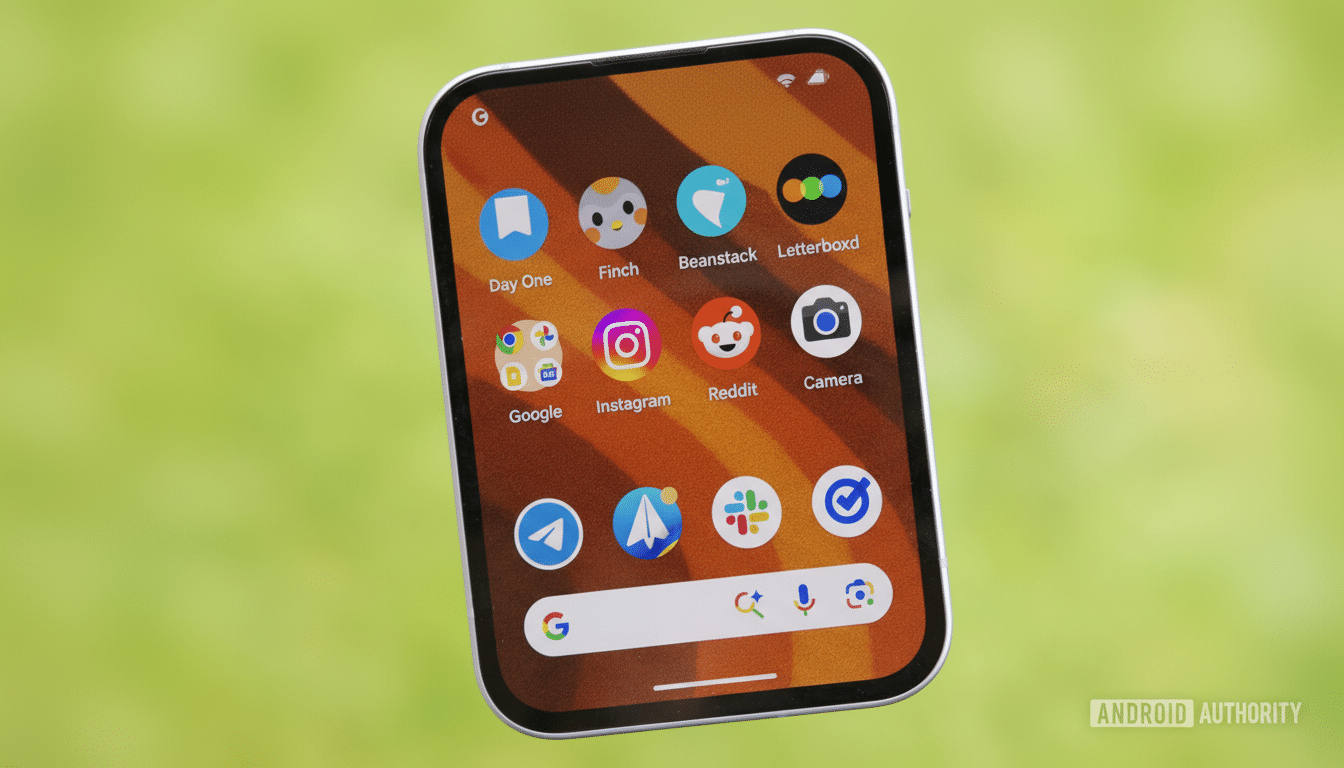
What’s New in the Pixel Search Widget Voice Features
Right now, tapping the mic icon inside that Pixel search box gives you a set of text-based results for hands-free tasks (like what song is playing), at least in the stable version.
In the most recent Google app beta (v16.50.55 series), the widget can respond vocally to voice requests and song queries, while continuing to display its ordinary card content and snippets.
Testers are also seeing a new floating control at the bottom of their screen with buttons for quickly dismissing or continuing a conversation. But there’s an added interaction in this overlay: Tapping the mic seems to bring the session into AI Mode, which opens up a full conversational interface. It stops speaking as soon as you start transitioning, though, which is an interesting behavior in terms of where and when Google might want voice to function.
Another novel approach: When you get an AI Overview, the voice response doesn’t simply read the on-screen summary via text-to-speech. The answer in spoken word doesn’t match perfectly; therefore, it could mean that the system is coming up with an answer meant for speech, not copying over exactly what was written.
Why Voice Is So Important for Search on Mobile
Voice is more and more central to the way people use their phones — not least when they want information quickly as they multitask. Studies from Voicebot Research and PwC have found that a majority of smartphone users have tried voice assistants, and many use them frequently. When your hands are full or your eyes aren’t on the screen at all, voice can be faster than reading.
There’s also an accessibility upside. Audio from default search input minimizes barriers for users who listen to content being played or are used to a subscription-like experience. By slamming voice straight into a widget, Google could shrink the distance between an off-hand question and a full-blown AI-powered conversation.
How This Fits Into Google’s Broader Push on AI
The behavior appears to jibe with Google’s overarching transition from a genteel assistant to a Gemini-led experience. AI Mode in the widget seems to be a lite variant of that conversational layer, only launched when users explicitly summon it and still tethered to standard search results. That spoken responses can vary from AI Overviews indicates a model tuned for audio and not merely a reader for text summaries.

On Pixel hardware, this could potentially tap into Google’s on-device AI work. Recent Pixels rely on on-device models for functions such as transcription and summaries, thus minimizing latency and protecting privacy. Whether the widget’s voice output operates locally or in the cloud is to be determined, but the company has everything it needs—from sophisticated text-to-speech systems to bite-size multimodal models—to make low-latency audio answers feel seamless.
Real-World Scenarios to Expect with Voice Replies
You ask the widget to name a song playing in a café, and rather than silently giving you the title and artist information, it could say the answer out loud and provide a tap-through to listen.
Fire off a fast question, such as “What’s the UV index now?” and you’d get your quick answer paired with the stock card. If you require further detail, the floating mic can hand you off to AI Mode for a more in-depth back-and-forth.
The handoff logic that determines when the widget speaks, stays silent, and escalates to AI Mode, in particular, seems half-baked. The overlay controls are a little bit clunky, and the stop-start of voice in AI Mode shows that it’s still very much a project that is being worked on.
What to Watch Next as Google Expands Voice Search
Google frequently restricts new behavior behind server-side flags, so even if an app update is rolling out to you now or appears to be available, it may not be available for everyone. If the company carries on, you can expect improvements to the overlay UI, clearer indications about when audio will kick in, and user controls for voice preferences. And battery and data use will also be a consideration, particularly if voice replies rely on cloud processing.
To Pixel users, the pitch is simple: More time gazing at the glass in your hand and less of what’s on it, wrapped around snappier, more conversationally fleeting answers from the front door you already crack open dozens of times a day.
If Google gets the balance right between speed, accuracy, and context, the talky little search widget may quickly prove itself a most useful home screen upgrade.
