


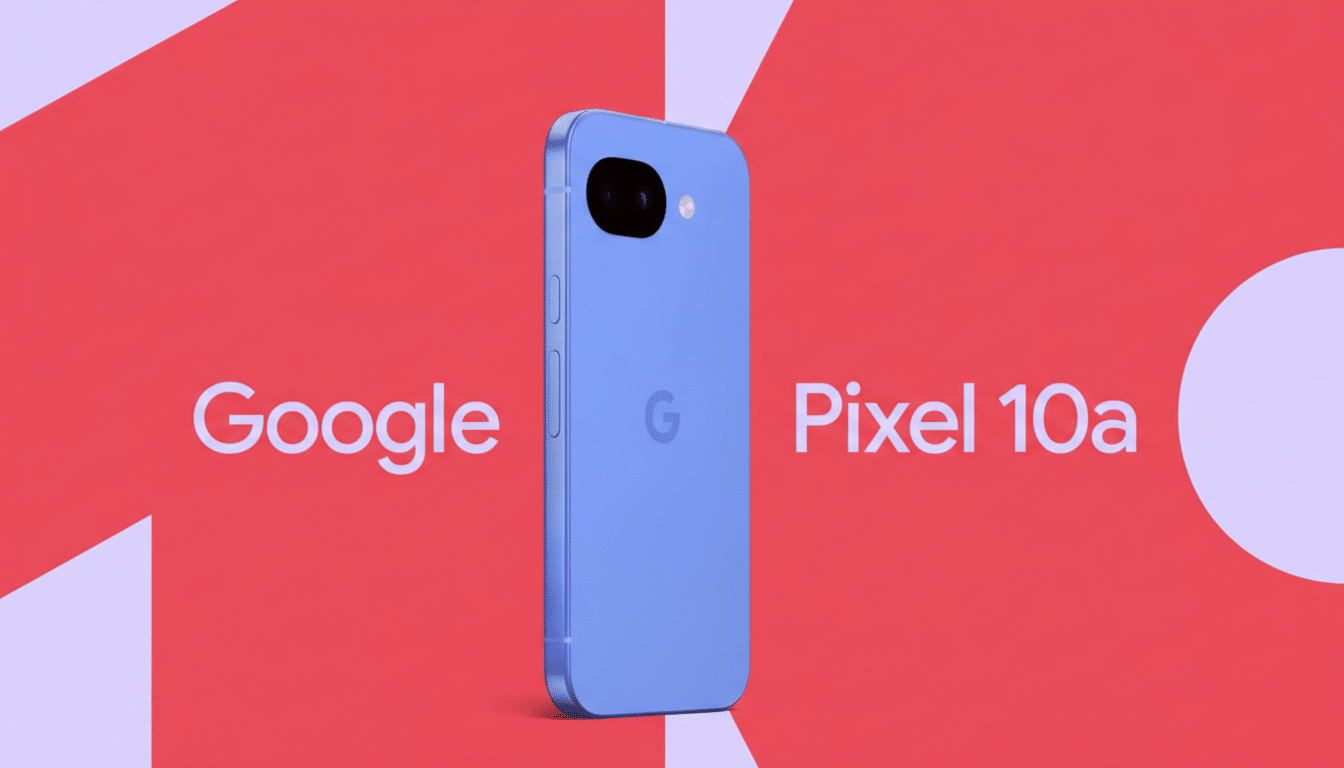
Google just gave an unusually early glimpse at the Pixel 10a in a brief official teaser, flashing a powder blue finish and the promise of “a phone with more in store.” With the midrange phone now stepping into view, the case for upgrading will hinge on whether Google nails the fundamentals that matter day to day — not just flashy AI sizzle.
The A-series consistently wins for clean software and reliable cameras, but rivals like the iPhone 16e and Samsung’s Galaxy A56 5G have sharpened their price-to-performance pitch. Here are five things the Pixel 10a must deliver to earn a spot in more pockets.
Hold the Line on Price and Value in a Crowded Midrange
Early chatter out of Europe points to higher pricing — roughly $640 for the base model and $755 for an upgraded variant — which could squeeze the 10a out of the sweet spot. If US pricing mirrors that trend, the iPhone 16e at $599 and Galaxy A56 5G at $499 become very tempting alternatives.
Component costs have climbed, but value is still the category’s North Star. Analyst firms like Counterpoint Research and IDC have repeatedly flagged the $400–$600 bracket as the engine of smartphone volume, with long upgrade cycles making affordability pivotal. The ask: keep the entry model aggressive, include generous trade-ins on day one, and avoid charging a premium just to get more storage.
Deliver Real Performance Gains That Users Can Feel Daily
On-device AI is only as good as the hardware behind it. The last wave of midrange phones commonly shipped with 8GB of RAM; for the 10a, a 10–12GB option would future-proof everyday multitasking and on-device features like Gemini Nano, Call Assist, and live transcription. Storage speed matters too — UFS 4.0 on higher-capacity models would cut app load times and improve sustained performance.
Equally important is thermal behavior. Tensor chips have made strides in intelligence, but sustained workloads — navigation, video capture, games, and AI tasks — can throttle if heat isn’t managed well. MLCommons’ mobile benchmarks show on-device inference is sensitive to memory bandwidth and thermals. A more efficient silicon package, better heat dissipation, and a tuned scheduler would translate into smoother performance that stays smooth.
Battery Life and Charging That Truly Last All Day and Night
Rumors point to a 5,100mAh cell, which sets the right tone, but capacity alone won’t win. The 10a needs all-day-plus endurance with 5G, GPS, and camera use in the mix, not just standby bragging rights. Google’s adaptive features help, yet efficiency from the chip and modem will decide whether heavy users reach bedtime with power to spare.
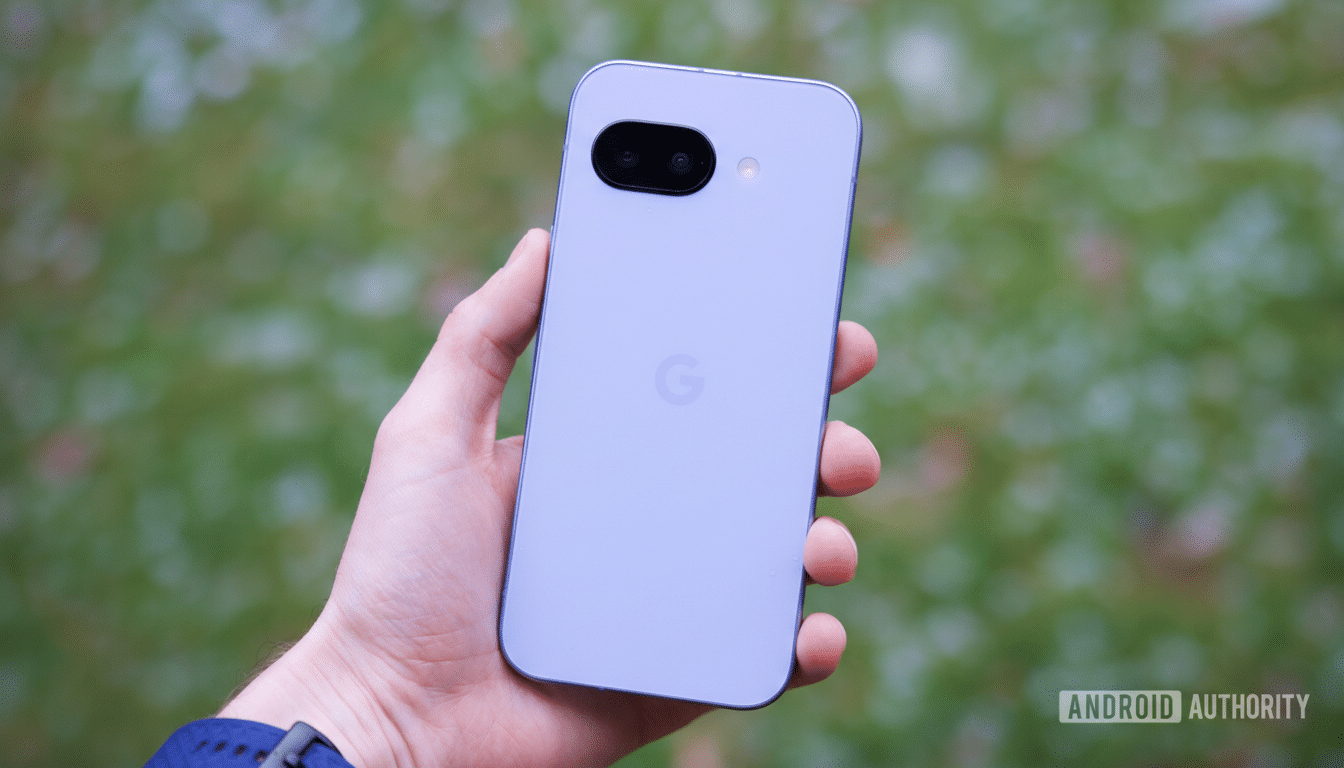
Charging speed is overdue for a step-up. Target at least 30W wired with robust thermal safeguards, and offer meaningful wireless charging — 15W would be ideal — so daily top-ups are quick and cool. Battery health matters over the long haul, so ship with charge caps, smarter overnight charging, and clear service pathways for affordable battery replacements. iFixit’s high-profile parts partnerships showed there’s demand; midrange buyers care about longevity.
Camera Consistency and Speed for Photos and Reliable Video
Pixels are known for stills, but the differentiator should be consistency — fast capture with minimal shutter lag, accurate skin tones, and reliable focus in backlit or low-light scenes. Computational pipelines can crush noise but also texture; a gentler touch on denoising and better motion handling would keep photos looking natural.
Video needs attention too. Aim for 4K60 with dependable stabilization, clean audio, and fewer rolling-shutter artifacts. A high-quality 2x in-sensor zoom would cover everyday framing without an extra lens, and Night Sight should lock faster and render with less flicker from mixed lighting. In blind tests run by prominent reviewers, Pixel A-series phones routinely punch above their price; the 10a should protect that lead, not coast on it.
Seven-year Support and Feature Parity Across the Lineup
Google set a new bar by committing its flagship line to seven years of Android OS and security updates. The 10a should match that policy outright. Consumers are keeping phones longer — Strategy Analytics and IDC have documented replacement cycles stretching past three years — and extended support is now a deciding factor, not a perk.
Equally important is parity for headline features. If Gemini Live, advanced Call Assist, Recorder summaries, and on-device translation are the pitch, they shouldn’t be paywalled behind pricier Pixels. Round it out with travel-ready connectivity (dual eSIM with dual active capability), Wi-Fi 7 for crowded networks, and USB 3.2 for faster data and video-out. Long-term usability comes from both software and I/O choices.
Bottom line: the teaser hints at polish, but winning the midrange will come down to price discipline, tangible performance gains, battery and charging that outlast the day, camera consistency, and long-term support without compromises. If Google hits those five notes, the Pixel 10a becomes the default recommendation — and a worthy upgrade.
