


Google is bringing the AI arms race to its own backyard by promoting Amin Vahdat to chief technologist for AI infrastructure, a new position that reports directly to CEO Sundar Pichai. The appointment marks a strategic pivot: the next advances in AI will not just come from breakthroughs in models, but from smelting infrastructure — which is to say, concentrating chips, networks, and data centers so as to make work happen at an industrial scale. It also arrives as Alphabet signals accelerating capital spending, guiding to tens of billions for compute and facilities to handle exploding demand.
Why Infrastructure Is the New Front Line in AI
For the moment at least, it’s scarcity of talent, not of algorithms, that is throttling AI. The training and serving of large models depend on compute density, memory bandwidth, and data-center throughput. GPUs — the new oil — are bashing against the shores of supply-constrained advanced packaging and high-bandwidth memory. Cloud rivals are racing to dominate more of their stack: Amazon is pushing Trainium and Inferentia, Microsoft has announced Azure’s Maia AI accelerators and Cobalt CPUs, and Meta has formally announced plans for a vast deployment of AI systems. In that regard, Google’s decision to elevate an infrastructure architect into the C-suite is as much about execution as it is about vision.
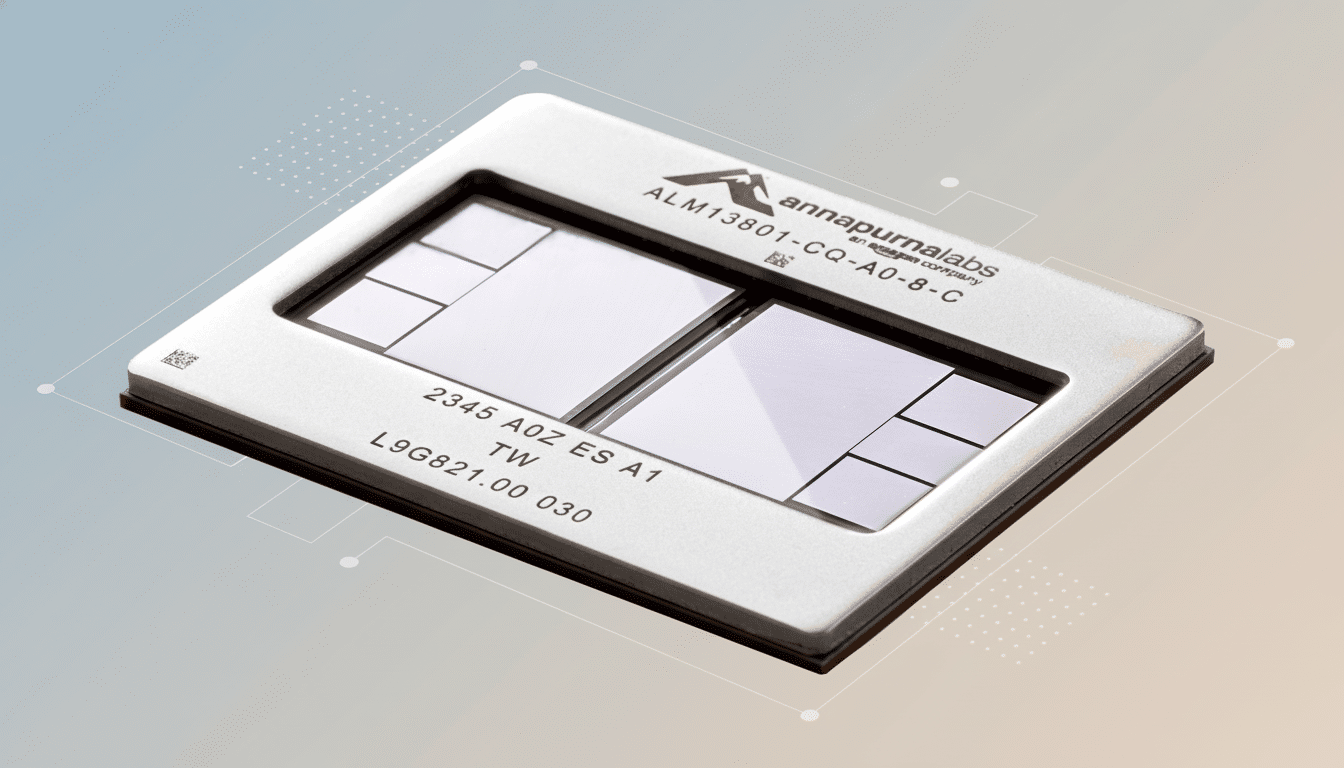
Industry analysts have been red-flagging the bottlenecks: TrendForce has warned of constricted HBM supply, while news from the TOP500 community includes traditional supercomputers left in the dust by AI-specialized clusters. The common-sense conclusion is that whoever brings together the fastest, most efficient, and reliable fleet winds up winning the economics of AI.
The Engineer Behind Google’s AI Backbone
Vahdat isn’t a splashy SVP brought in from the outside. He is a career systems researcher who earned his PhD at UC Berkeley and got his start at Xerox PARC before stints as a professor at Duke and UC San Diego. He has worked inside Google since 2010, and in 15 years at the company, he has turned academic ideas into production infrastructure that spans the planet. He has hundreds of publications on distributed systems and networking — precisely the areas that determine how quickly models train, how consistently they run, and how cost-effectively inference can be scaled.
What He Built: TPUs, Jupiter, Borg, and Axion
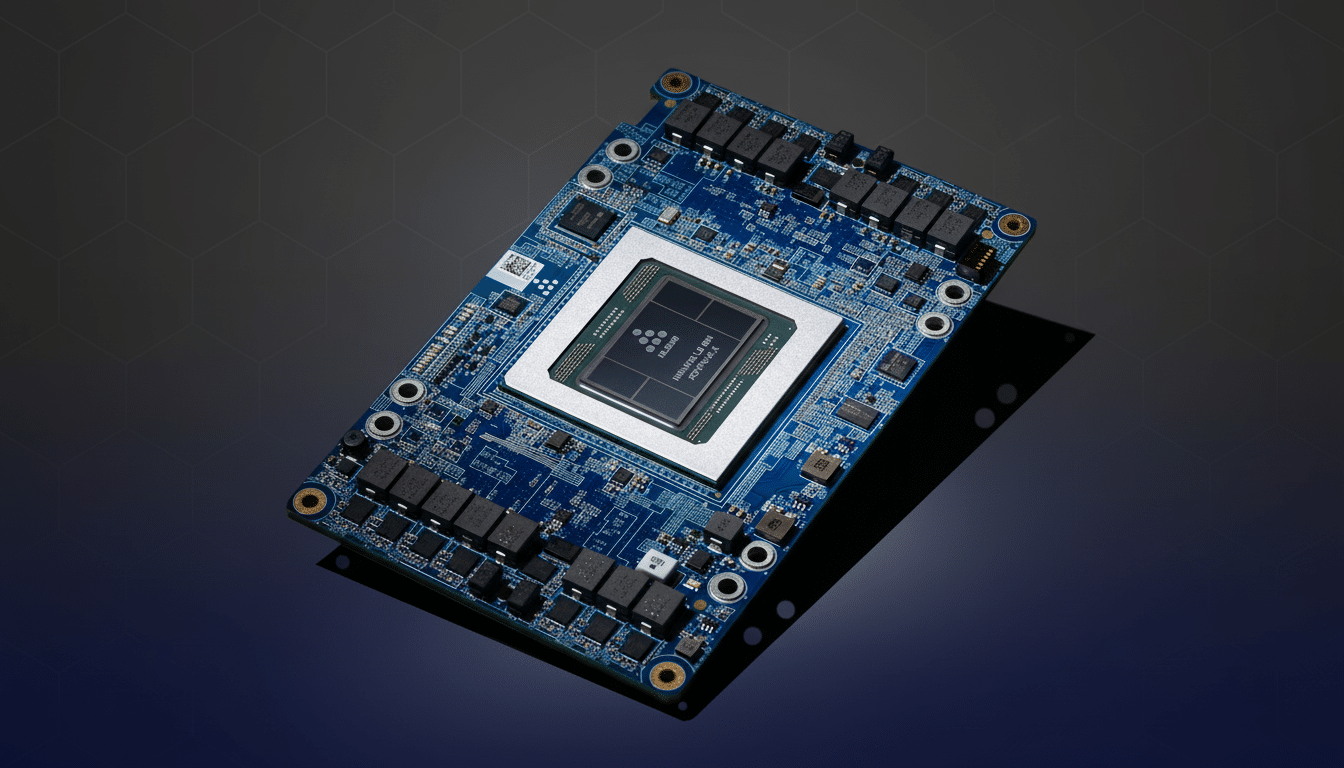
Vahdat unveiled the seventh generation of TPU — Ironwood — at Google Cloud Next. One of those pods includes more than 9,000 chips and, according to Google’s numbers, offers 42.5 exaflops of compute (Vahdat noted that was more than 24 times the size of the world’s fastest supercomputer at the time). He also pointed out that demand for AI compute has increased by 100 million in eight years, a data point which helps explain the company’s capital intensity.
Behind the stagecraft are systems that users ever see, but without which nothing would work. Jupiter, Google’s internal data-center network, can now be scaled to about 13 petabits per second — enough for every person in Maryland to make a video call simultaneously, according to a technical blog penned by Vahdat. Google’s Borg cluster manager arranges workloads across the fleets to, in effect, keep the hardware hot and models well fed. And then there’s Axion, Google’s custom Arm-based general-purpose CPU for data centers, meant to be an accelerator offloader and reduce the cost of serving models at scale.
The connective tissue is the design philosophy: own the bottlenecks. Custom silicon for training and inference, purpose-built network fabric, and scheduler tuning for heterogeneous fleets have provided Google with a lever to squeeze more useful performance (per dollar and per watt) from its hardware than the generic setup.
The Capex and Energy Equation for AI Expansion
Alphabet has telegraphed extraordinary capital spending, with internal guidance suggesting it will pour in as much as $93 billion through the end of the year and more to follow. That money is intended to fund data-center footprint expansion, chip supply safeguarding (between a collection of in-house and out-of-house suppliers), and to wire real estate with higher-density power and cooling. The International Energy Agency is forecasting the world’s data-center electricity demand to nearly double in the mid-2020s, propelled by AI and digital services, whereas the Uptime Institute remains concerned about availability of power and cooling for high-density racks.
Google has committed to running on 24/7 carbon-free energy by 2030, and to replenishing more water than it uses. Those goals run headlong into AI’s voracious appetite for resources. Vahdat’s purview will have to include breakthroughs that make the fleet not just faster but also more efficient — think training jobs placed according to real-time renewable availability, liquid cooling at scale, or model-serving architectures that stretch every watt and every dollar.
What This Means for Google’s AI Roadmap
By putting Vahdat into a companywide role, Google is formalizing a truth inside the company: to maintain an edge in AI, the stack matters. For developers, this might mean faster training times on TPUs, lower-latency inference paths, and closer integration between models like Gemini and the underlying hardware. For customers, it’s a guarantee of more predictable cost-performance curves as demand scales.
It’s also a harbinger on the talent front. The move helps ensure continuity in a market where top infrastructure leaders are constantly poached. Google has spent 15 years building Vahdat into a central cog in its AI strategy; promoting him is a bet that the next big improvements to AI will be engineered as much on data-hall floors as in research labs.
The scoreboard will be public: who has overcapacity of TPUs, who can train models on MLPerf-style benchmarks faster than everyone else, and a tour de table as they share carbon-impact intuitions. If Google can continue bending those curves under Vahdat’s purview, the company won’t just keep up in the AI race — it’ll own more of the track.
