


Google’s smart display story now hinges on what comes next for Nest Hub. After years of incremental changes, power users and casual households alike are asking for a leap, not a nudge. These five upgrades would turn the next Nest Hub from a nice-to-have screen into the linchpin of a modern smart home.
Make Offline Basics Non‑Negotiable On The Next Nest Hub
A smart display should not become a paperweight when Wi‑Fi hiccups. Timers, alarms, household notes, today’s date and weather from cached data, and routine triggers should run on-device without a network. With Google leaning on Gemini across devices, a lightweight, on-device model paired with a modest NPU could handle local speech for short commands and enable opportunistic cloud sync when the connection returns.
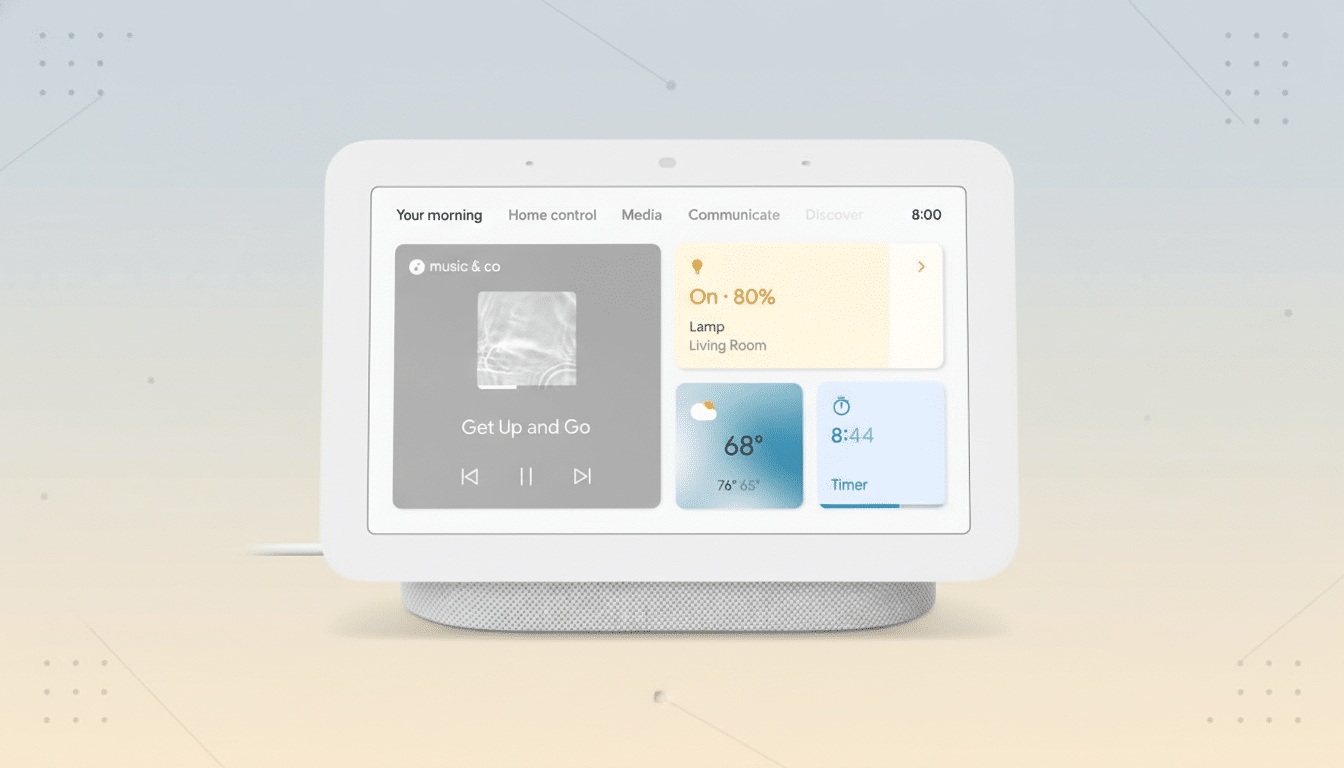
Local Matter control is the other half of this promise. As the Connectivity Standards Alliance drives multi-brand interoperability, the Nest Hub should act as a robust Matter controller and Thread border router so lights, locks, and scenes still work during outages. This is table stakes for trust in the kitchen, nursery, or entryway.
Upgrade Connectivity For The Long Haul On Nest Hub
The next Nest Hub needs modern radios to avoid mid-cycle obsolescence. Wi‑Fi 6E or 7 would cut latency for Cast and video calls while reducing congestion on crowded home networks. The Wi‑Fi Alliance reports rapid adoption of 6E devices, and rivals have already moved in this direction, so parity is overdue.
Bluetooth LE Audio with Auracast should also make the cut. The Bluetooth SIG has positioned Auracast as a multi-listener standard, which would let two or more people tune in with LE earbuds during a late-night recipe video or workout. Add multiroom audio sync improvements and rock-solid handoff from phones, and Nest Hub becomes a better home media anchor.
Rethink Camera Privacy And Utility For Nest Hub
Video calling, security monitoring, and Face Match-style personalization all benefit from a good camera. The next lineup should put an upgraded sensor and wider field of view on every model, not just the largest one, and support auto-framing and low-light enhancement for clearer calls and more reliable presence detection.
Privacy must be hardware-first. A physical shutter and mic kill switch with clear status LEDs would meet the expectation set by premium laptops and pro webcams. Surveys from organizations like Pew Research Center consistently find privacy concerns slow smart home adoption; a tactile shutter goes further than any software toggle to ease those fears.
Make The Display A First‑Class Screen On Nest Hub
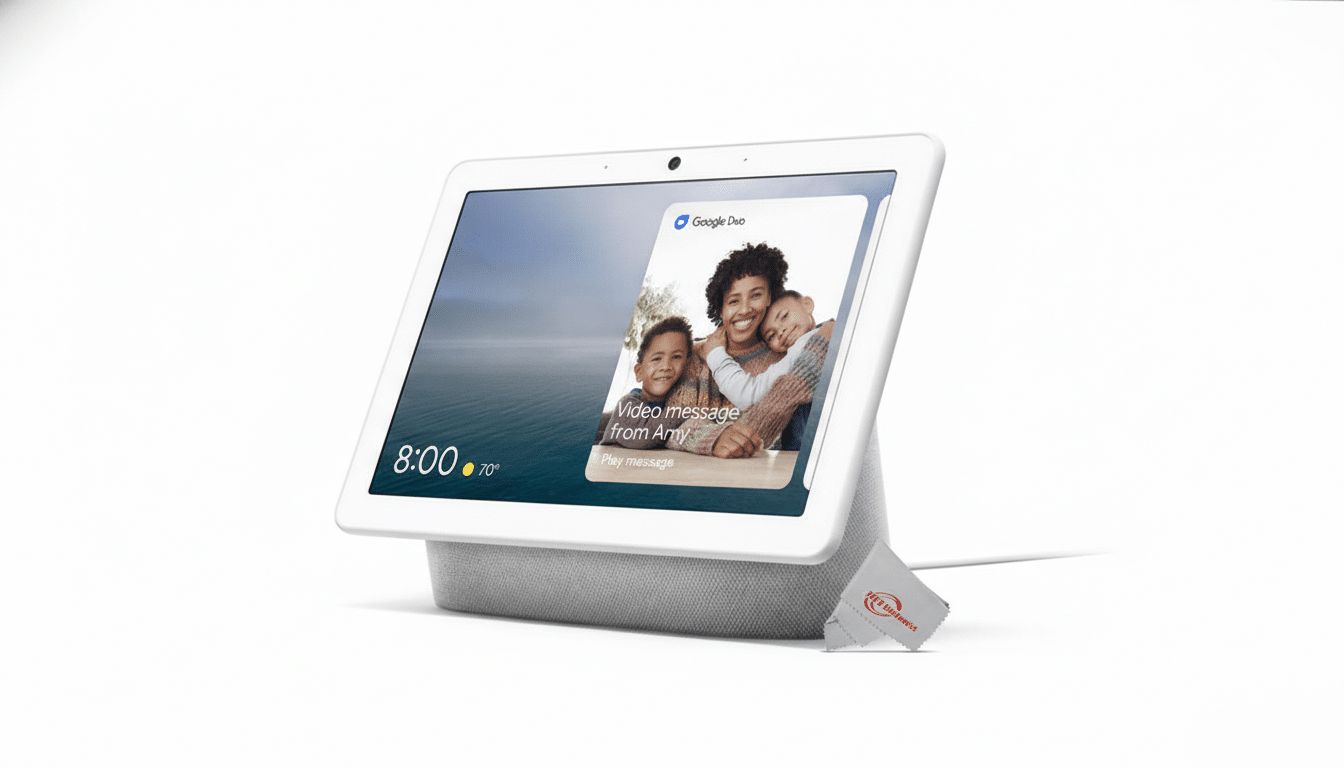
Resolution and brightness matter on a device designed to be seen across a room. A 1080p panel on the larger model and at least 720p on the smaller one, paired with better backlighting, anti-glare coating, and an adaptive color sensor, would sharply improve recipes, YouTube, and Google Photos slideshows. Narrower bezels could modernize the look without inflating costs.
Size options should stretch, too. Large-format displays like the 27‑inch Skylight Calendar Max and Amazon’s wall-mountable Echo Show 15 show genuine appetite for bigger, centralized family dashboards. Offering a wall-mountable Nest Hub variant with a tidy cable solution would unlock hallways and home offices while freeing counter space.
Design It For Real Kitchens And Real Homes
Fabric looks cozy until grease and splashes hit. A water-resistant, wipe‑clean base—think sealed polymer or silicone with an IPX‑class rating—would survive sink overspray and daily disinfecting. A detachable, magnetic power connector would reduce strain and accidental tugs in high-traffic areas.
Finish options should finally line up across the Nest catalog. Consistent colorways that match recent Nest cameras and speakers—along with a durable, stain‑resistant texture—help the Hub blend or pop by choice. The Thread Group and CSA have stressed whole‑home cohesion; aesthetics are part of that story, not an afterthought.
Pull these upgrades together and Google has a shot at elevating Nest Hub from handy assistant to indispensable appliance. Canalys and IDC have both noted that smart displays earn their keep when they become command centers, not just speakers with screens. Deliver offline resilience, modern radios, privacy you can see, a better panel, and a kitchen‑proof design—while keeping the approachable price points—and the next Nest Hub will feel like a true reboot, not a routine refresh.
