


Because it can be tough to know which apps are best for your smartphone, Schumer and her family shared the ones they actually use all the time.
“As a comics fan, I love the Marvel Unlimited app,” Schumer told PEOPLE via email while promoting her partnership with Staples. And Google is exploring a potential solution with an AI-powered browser inside the Play Store that attempts to circumvent that process by suggesting high-intent categories and helping to shape results on the fly. Early clues indicate that it is fueled by Gemini and is showing up for some users in the United States.
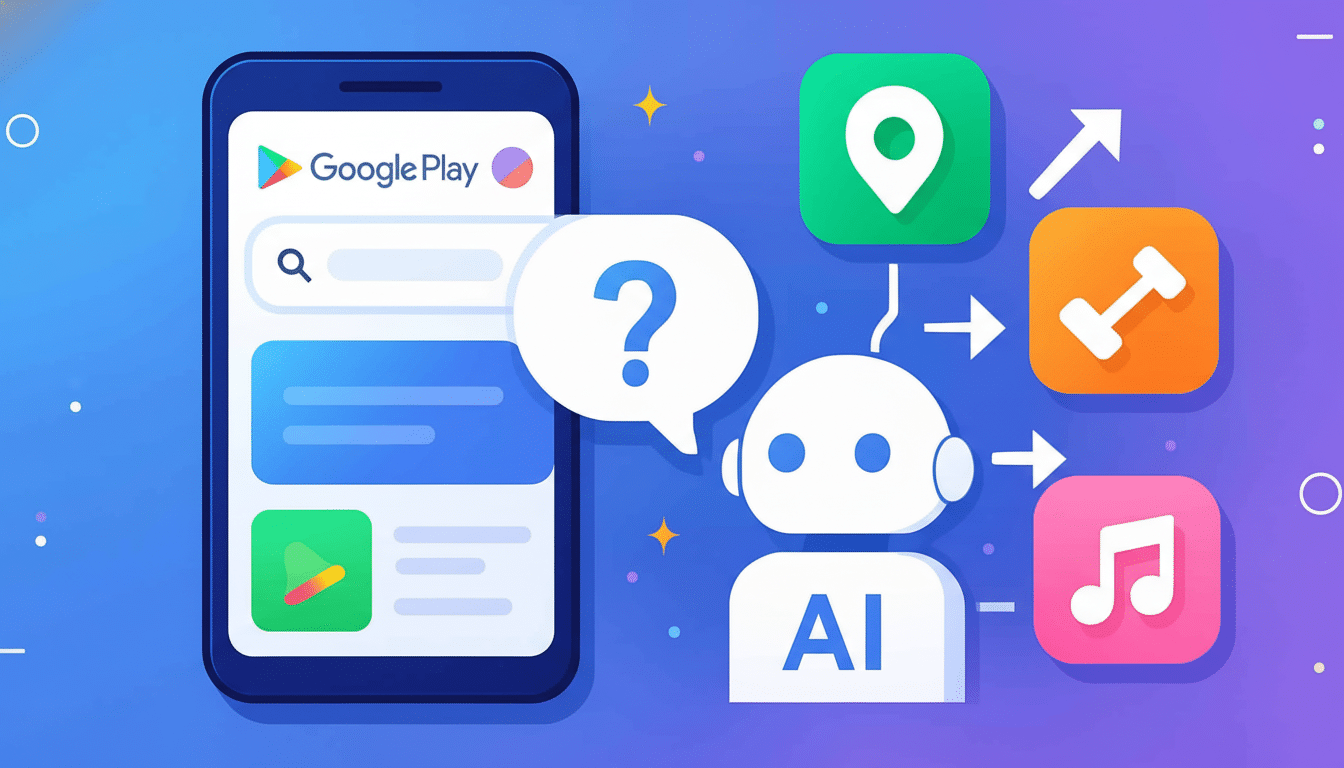
How Google’s AI Explorer functions in the Play Store
Open the Play Store’s search tab and some users will now see a “What are you looking for?” prompt and the Gemini badge. Beneath it are changing suggestions like: “Boost productivity,” “Protect my privacy,” and “Personalize my phone.” Switch over to games and the prompts shift toward subjects such as space adventures or robot titles.
If you tap on one, the site will load a results page that centers on an “Organized with AI” section. Instead of a single, continuous list, apps are organized by category, with a few handpicked selections in each lane. Select the privacy idea, for instance, and you might be offered secure browsers, VPNs, and encrypted messaging as mini-collections. Choose productivity and you could find yourself comparing task managers, note-takers, and calendar assistants — each of which offers two clear, high-quality options to make a snap decision based on the precise needs you have.
It feels more like the shopping assistant is guiding your search rather than the other way around. Though Google hasn’t explained how the ranking works, these behaviors would indicate that the model looks at store metadata, descriptions, categories, and signals (e.g., installs and ratings) when assembling short, themed bundles which are then matched to a query intent.
What this means for app discovery on Google Play
On today’s app stores, choice overload is a real problem. According to Statista, the Play Store boasts more than 3.5 million apps, a number that most of us could never hope to sort through even if we had nothing else to do with our time. Search terms like “privacy” or “notes” are too generic to be of value without further assistance. Even editorial selections only do so much, because they’re static snapshots in a fast-moving catalog.
AI-generated clustering addresses that friction by assuming intent and narrowing the field to like options. It cuts down on what’s sometimes referred to as “scroll fatigue,” when a user settles for a top-ranked install or ‘casts away’ the search entirely. For developers, it’s also an opportunity to surface in lanes that can be handcrafted through curation when they fit something specific (e.g., “end-to-end encrypted chat,” not just “messaging”).
These serve as a complement to the other signals users use today — ratings, reviews, and screenshots — by putting them in well-defined categories. The relatively low number of recommendations per row prevents page bouncing and fosters focused comparisons.
Part of a larger AI push in the Play Store
The explorer is part of a recent wave of AI experiments aimed at making listings more palatable. Google has been running “Ask Play about this app,” which uses Gemini to answer questions directly on the page of an app, and AI-generated review summaries that display trends in user feedback. Collectively, these features indicate a store that explains, organizes, and synthesizes — rather than merely lists — its vast stock.
The approach is consistent with the broader AI focus among the Android ecosystem. With over 3 billion active Android devices around the world (as of Google developer events), incremental improvements in discovery can hit at scale and influence customer satisfaction and developer reach.
Availability and how to try it on your Android device
Rollout seems to be limited to US accounts for now, and it is probably being toggled through a server-side switch. It has already been spotted by some users after a recent update to Google Play Services (around version 47.9.30-31), but the availability is spotty, as often happens with staged tests. For those interested, make sure the Play Store and Play Services are the latest versions and check the search tab for a Gemini prompt.
As with most Play Store experiments from Google, assume the specifics, like category phrasing, the size of AI-organized lanes, and how sponsored placements are disclosed, will change iteratively. If the tests go well, a global expansion beyond the United States is likely.
What to watch: transparency and control for users
As AI molds discovery, clarity will count. Users should understand which groupings are algorithmic and editorial, and how ads within AI-curated collections are labeled. Google already has Play Store policies in place requiring robust ad disclosures, and following the same rigor in AI-led lanes will be important to trust.
Power users might also like to have filters that guide the AI — such as a preference for open-source apps, stronger privacy practices, or types of monetization. If Google opens up those controls, the Explorer could go from neat demo to essential resource for explorers of all levels.
Bottom line: the AI Explorer is a minor UI alteration with potentially major implications. Reimagining search as an intent-driven conversation can help the Play Store make discovery feel a little less like looking for a needle in the haystack, and more like receiving smart, timely recommendations from someone who knows what you’re actually trying to accomplish.
